Skeletons
Published September 27, 2026
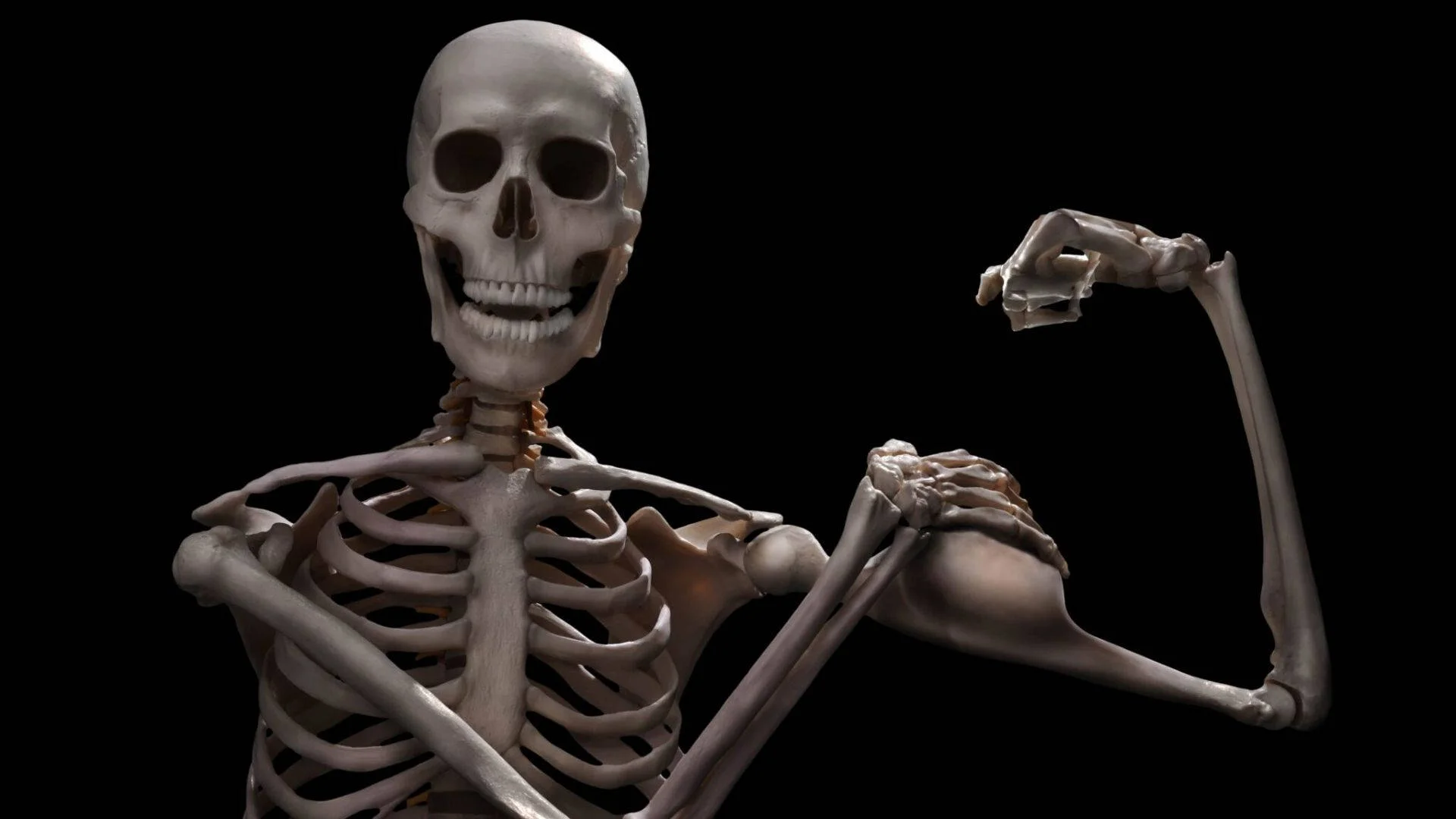
Skeletons became a stealth internet mainstay through a stack of unrelated YouTube hits and a self-organizing Tumblr scene, with prop-skeleton pranks, dancing-skeleton animations, and skeleton reaction GIFs piling up between 2005 and 20141. The Halloween-adjacent format grew into a full micro-community under the '420sc' Tumblr tag and spawned single-topic blogs devoted to skeleton content in every form imaginable5.
Overview
Skeleton memes stretch across formats rather than one template. Common variants include plastic prop skeletons dropped into everyday scenes, looping GIFs of dancing or crumbling skeletons, image macros that layer spooky text over stock skeleton art, and 3D-modeled skeleton reenactments of pop culture moments, like the Tumblr blog Jerry Seinfeld's Skeleton, which restages Seinfeld scenes with rendered bones5.
The tone runs from earnest kids' content, like Super Simple Songs' animated skeleton dance video2, to full shitpost energy, like the Halloween prop that YouTuber lethaledge25 rigged into a street-performer puppet routine1. On Tumblr, the '420sc' tag, short for 420 Skeleton Collective, collected the whole spread under one banner, with users trading spooky reaction images year-round rather than only in October6. The bit works because a skeleton is aggressively literal: everyone has one, it does nothing on its own, and dropping it into any situation makes that situation funnier.
Gallery
Origin & Background
How It Spread
Timeline
How to Use This Meme
There is no strict template. The common convention is to pair a plastic Halloween skeleton, a rendered skeleton, or a skeleton GIF with a scenario that has nothing to do with death: skeletons at fast food drive-thrus4, skeletons dancing in living rooms2, skeletons standing in for TV characters5. Posts often use the '#420sc' tag on Tumblr as shorthand for 'this is a skeleton post'6.
Frequently Asked Questions
References (6)
- 1
- 2
- 3
- 4
- 5
- 6