Spam
Published September 29, 2026
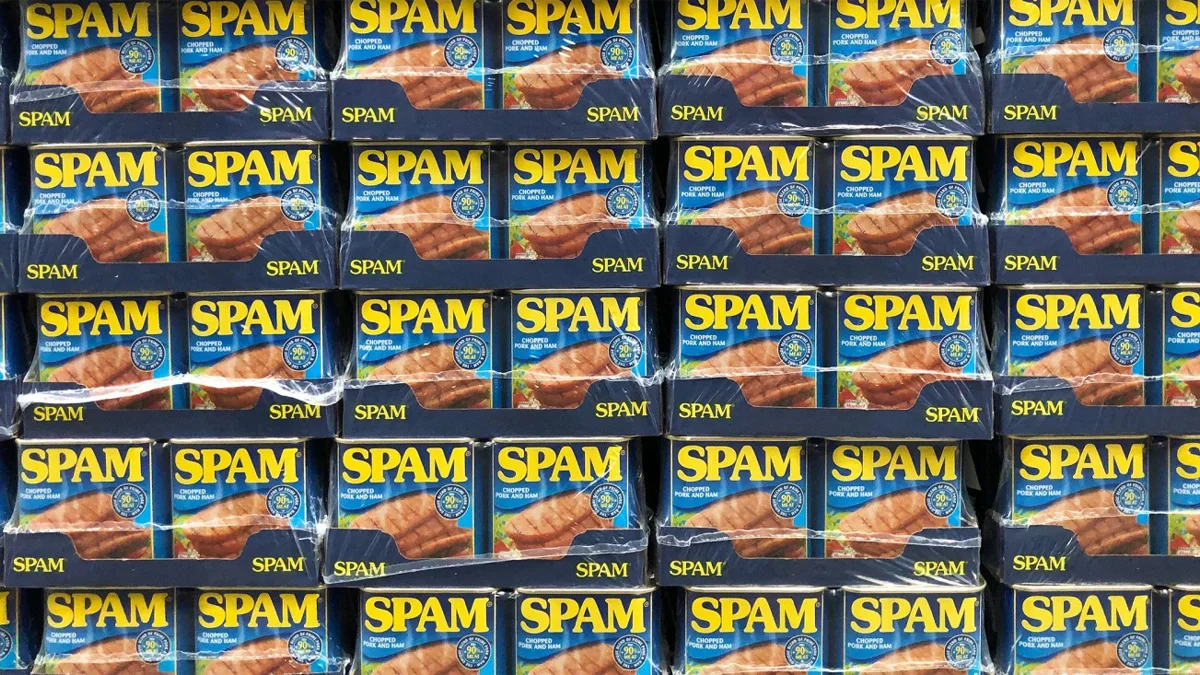
Spam is internet slang for unsolicited bulk messages, borrowed by early 1990s Usenet posters from a Monty Python sketch where a cafe menu is overrun with the canned meat3. The label stuck as junk email began flooding ARPANET inboxes, becoming one of the oldest pieces of online vocabulary still used daily.
Overview
The word doubles as a noun for unwanted mail and a verb for sending it in bulk. In the Python bit, a waitress reads off dish after dish containing spam while a chorus of Vikings shouts the word until real conversation is impossible. Netizens on early IRC channels and Usenet groups picked up that image to describe posts swamping threads with repeated garbage.
Over time the label widened to cover any high-volume digital nuisance, from bulk pitches promising to enlarge male anatomy to bot-driven forum floods4. Automated spambots do most of the sending today, which is why volume can spike overnight. On image boards, spam is used deliberately as a raid weapon, and 'sagebomb' floods bury target threads by keeping them from being bumped3.
Gallery
Origin & Background
How It Spread
Timeline
1970-12-05
The Monty Python 'Spam' sketch airs, with Vikings shouting the word until it drowns out the cafe menu.
1978-05-03
DEC marketer Gary Thuerk sends an ARPANET-wide product announcement about the DEC-20, widely cited as the first bulk online message.
1993
Usenet and IRC users adopt 'spam' as a term for repetitive unwanted posts, referencing the Python sketch.
1997
The court decision in CompuServe Inc. v. Cyber Promotions treats bulk commercial email as trespass to chattels, embedding 'spam' into US law.
2003-04-30
Brad Templeton publishes a 25th anniversary reflection on the 1978 DEC blast, later updated for the 30th, preserving reactions to the original message.
How to Use This Meme
Spam works as a noun ('my inbox is full of spam') and a verb ('stop spamming the channel'). Common conventions include tagging any repeated, off-topic, or bulk-commercial posting as spam, whether it comes from a bot or a human trying to drown out other voices. On forums and image boards, users often call for mods when a thread is being spammed with sage posts, promotional links, or copy-paste floods.