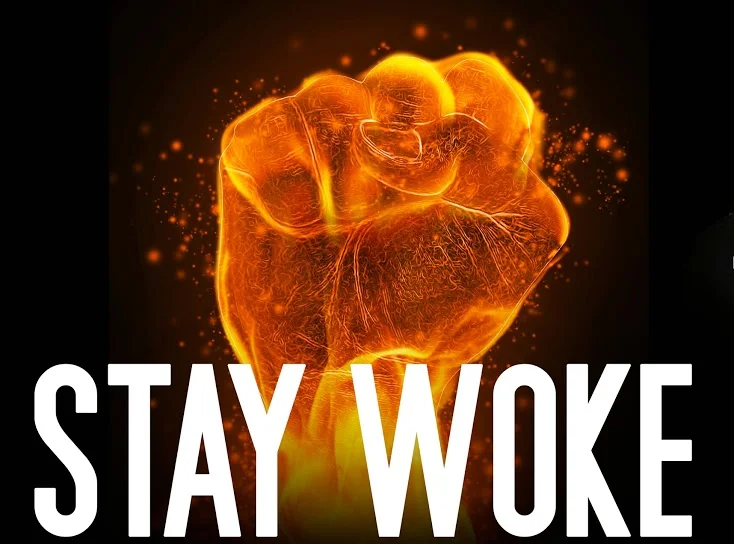
Woke
Published November 21, 2026
Woke started as Black American slang for being alert to racism and injustice, with the earliest attested use in a 1962 New York Times Magazine essay. After the 2014 Ferguson protests, the hashtag #staywoke spread across Twitter and Tumblr, and the word went mainstream. MTV named woke a teen slang word of 2016, and the Oxford English Dictionary added the adjective in June 2017.
Overview
On social media, woke works in two opposite registers. Earnest posts tag protest photos, news about police violence, and threads on systemic racism with #staywoke, while ironic posts mock that same awareness in the style of Wake Up, Sheeple4. Urban Dictionary's early entry defined it plainly as being informed about censored or edited histories of other cultures6.
A later Urban Dictionary entry flipped the meaning, calling woke "fake awareness of issues that don't exist" and labeling it a political insult aimed at left-leaning speakers6. That split, sincere on one side and sarcastic on the other, is still how the word travels online, with the same hashtag attached to a sober Black Lives Matter post and a joke about niche grievances4.
Gallery
Origin & Background
How It Spread
Timeline
How to Use This Meme
Posts typically pair #staywoke with a statement meant to wake up a reader, whether that is a Black Lives Matter headline, a historical fact that schools glossed over, or a conspiracy post played for laughs. The sincere version calls out a specific injustice. The ironic version uses the same hashtag on a trivial observation to mock someone who treats every topic as a civil rights fight6.
Frequently Asked Questions
References (7)
- 1
- 2
- 3
- 4
- 5
- 6
- 7