You Know What? I'm Just Gonna Say It
Published November 25, 2026
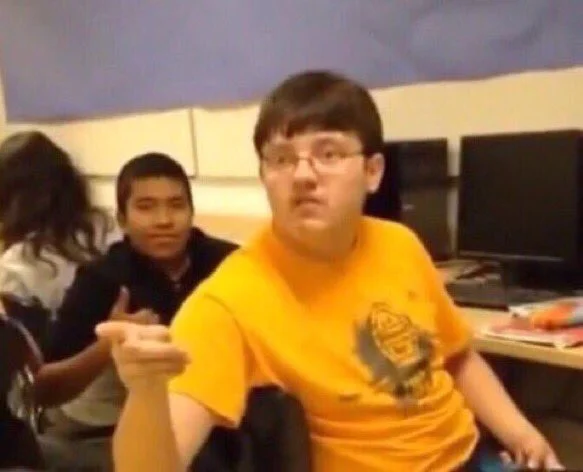
Andrew Proctor's June 2015 Vine captured a high school kid declaring 'You know what? I'm about to say it. I don't care that you broke your elbow,' a six-second clip that gained nearly 50 million loops. In March 2017, Twitter users began screenshotting the kid's expression and captioning it with their own hot takes, turning the Vine still into a template for introducing unpopular opinions.
Overview
Two uses emerged for the screenshot. Some posters attach it as a plain reaction image to signal an incoming controversial take, while others caption it as an image macro with 'You know what? I'm about to say it' or 'I'm just gonna say it' on top and the opinion underneath3. Dancing With the Stars opinions, sports gripes, and TV show critiques all appeared during the March 2017 rollout.
A wholesome variant inverts the setup. Instead of a contrarian take, posters write something kind, such as a compliment for a friend or an appreciation line about a pet, playing against the confrontational face in the image3. Both strains ran side by side on Twitter during the format's initial week.
Gallery
Origin & Background
On June 28, 2015, Andrew Proctor posted a six-second Vine of a high school classmate looking into the camera and saying, 'You know what? I'm about to say it. I don't care that you broke your elbow'1. The clip earned 111,900 likes, 61,700 revines, and 49.6 million loops on Vine3. A YouTube re-upload preserved the video after Vine shut down2.
How It Spread
Timeline
2015-06-28
Andrew Proctor posts the original Vine of a high school kid saying he doesn't care that someone broke their elbow.
2017-03-20
Twitter user @pfharcyde posts the first known image version, captioned about Dancing With the Stars.
2017-03-28
Twitter Moments covers the trend in a roundup titled 'You know what? Don't be afraid to say it.'
How to Use This Meme
Posters typically open with 'You know what? I'm just gonna say it,' then share an opinion they expect pushback on. Common conventions include trailing the line with ellipses before the actual take, or captioning the still image directly as an image macro with the top text intact.