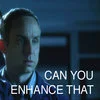
Zoom And Enhance
Published March 30, 2026
Also known as: Enhance! · Enhance Button · CSI Enhance · Zoom In and Enhance
"Zoom and Enhance" is a catchphrase meme mocking the fictional ability of TV and movie characters to extract impossibly clear details from blurry, low-resolution footage by barking commands like "Enhance!" at a computer screen. The trope traces back to Ridley Scott's 1982 film *Blade Runner* and exploded across crime procedurals like *CSI* throughout the 2000s, becoming one of the most widely ridiculed Hollywood tech clichés online4. In an ironic twist, advances in machine learning and super-resolution imaging have started to make limited versions of the trope actually possible2.
Overview
The "Zoom and Enhance" meme revolves around a scene structure repeated across decades of television: a detective stands behind a forensic technician, stares at a grainy surveillance image on a monitor, and says some version of "Zoom in. Now... enhance." The image magically sharpens to reveal a suspect's tattoo, a license plate number, or an identifiable face reflected in someone's eyeball4. Online, the trope is mocked both for its absurdity and for Hollywood's baffling insistence on repeating it.
The joke works because the real-world mechanics of digital imaging make this impossible. A blurry, pixelated image simply doesn't contain the data needed to generate sharp details. As the *Futurama* parody puts it: "That's all the resolution we have. Making it bigger doesn't make it clearer"1. The comedy comes from the gap between what TV writers think computers can do and what they actually can.
Origin & Background
How It Spread
How to Use This Meme
The "Zoom and Enhance" meme typically appears in a few common formats:
The direct parody: Share or reference a blurry image and add the command "Enhance!" as a caption or comment, usually followed by an even blurrier image or something completely absurd appearing in the "enhanced" version.
The trope callout: When watching any show that uses the technique unironically, screenshot or clip the moment and share it with commentary mocking the impossibility.
The ironic application: Apply the phrase to real-life situations where someone is trying to get information from insufficient data, like squinting at a restaurant menu across the room or trying to read a street sign in Google Maps.
The reversal: Post an AI-upscaled image and caption it with "We finally have the technology" or similar, acknowledging that the meme's premise is becoming less absurd over time.
Cultural Impact
Fun Facts
In *Ghost in the Shell: Stand Alone Complex*, the enhancement actually doesn't help. Togusa's breakthrough comes from noticing a mirror that *doesn't* reflect a camera, not from anything the zoom revealed1.
Jenkins and Kerr's corneal reflection images were 30,000 times smaller than the main photo subject, yet people could still identify faces from them5.
A journal reviewer who peer-reviewed the Jenkins and Kerr study spontaneously recognized one of the researchers from a tiny corneal reflection image included in the paper3.
The Duke super-resolution team competed against groups that had been working in the field for decades, despite having only two months of experience2.
The word "pupil" comes from the Latin *pupilla*, meaning "young girl," because of the tiny reflection of an onlooker visible in someone's eye5.
Derivatives & Variations
"Let's Enhance" YouTube supercut:
A compilation montage of the trope across dozens of films and TV shows, later remastered in HD as a meta-joke[1].
TV Tropes "Enhance Button" page:
One of the site's most extensive trope pages, cataloging examples from *Blade Runner* to *Bubblegum Crisis* to *Case Closed*[1].
Super-resolution AI demos:
Multiple academic and corporate projects explicitly branded as real-life "zoom and enhance," including Duke University's NTIRE entry and Intel's open-source notebook[2][1].
Anime references:
*Ghost in the Shell: Stand Alone Complex* recreated the *Blade Runner* enhancement scene nearly shot-for-shot, complete with matching voice commands[1].
*Futurama* parody:
Zapp Brannigan's exchange with Kif about image resolution directly lampoons the trope's persistence on television[1].
Frequently Asked Questions
References (7)
- 1
- 2
- 3
- 4Dramatic Chipmunkencyclopedia
- 5
- 6
- 7Enhance Button - TV Tropesarticle