2015 Charlie Hebdo Terrorist Attack
Published August 15, 2026
The January 2015 attack on French satirical weekly Charlie Hebdo killed 12 people and sparked the viral #JeSuisCharlie hashtag, one of the fastest-spreading solidarity slogans in social media history. The online response included a Google Doodle tribute, Anonymous cyberattacks on jihadist sites, and mass profile-picture changes across Facebook and Twitter.
Overview
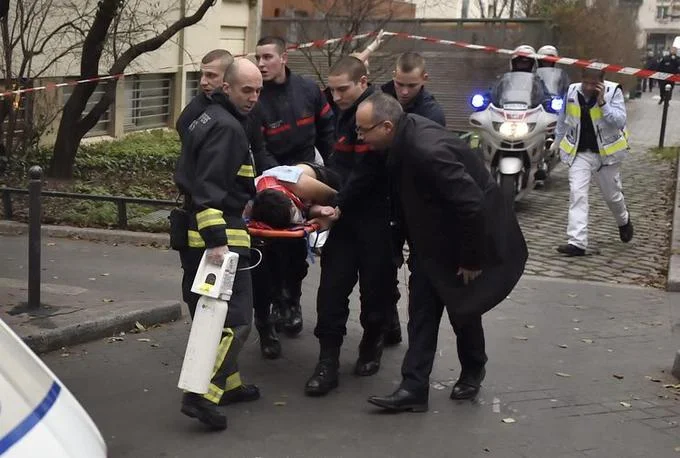
The 2015 Charlie Hebdo Terrorist Attack refers to the mass shooting on January 7th, 2015 at the Paris headquarters of the French satirical weekly Charlie Hebdo, and the massive online reaction that followed1. Twelve people died in the attack, including senior cartoonists Cabu, Georges Wolinski, Charb and Tignous, along with two police officers1.
Within hours, the event turned into one of the largest coordinated social-media solidarity waves ever recorded up to that point. The hashtag #JeSuisCharlie ("I am Charlie"), a Facebook page of the same name, black-ribbon avatars, and a Google tribute image all spread within a single day26. The response also included a companion tag, #JeSuisPolicier, honoring the two officers killed on duty7.
The attackers were identified as brothers Saïd and Chérif Kouachi, who fled and were killed two days later after a hostage standoff at a printing plant in Dammartin-en-Goële8. A related attack by Amedy Coulibaly on a kosher deli in Porte de Vincennes killed four more people before French RAID forces stormed the shop3.
Gallery
Origin & Background
How It Spread
How to Use This Meme
The "Je suis ___" construction became a reusable solidarity template after this event. Users typically swap the final word for the name of a victim, city, or group after a tragedy (e.g. "Je suis Paris", "Je suis Bruxelles") and set it as a profile image or hashtag, following Joachim Roncin's original black-background, sans-serif visual convention2.
Frequently Asked Questions
References (9)
- 1
- 2
- 3
- 4
- 5
- 6
- 7
- 8
- 9