Bonsai Kitten

2000hoax website / shock sitedead

Also known as: Bonsai Kitty · BonsaiKitten.com

Bonsai Kitten was a hoax website launched in December 2000 that claimed kittens could be grown inside glass jars to mold them into specific shapes, like bonsai trees. Created by an MIT graduate student using the alias "Dr. Michael Wong Chang," the site triggered FBI investigations, mass email campaigns, and outrage from animal rights organizations, making it one of the early internet's most infamous examples of a successful troll.

Overview

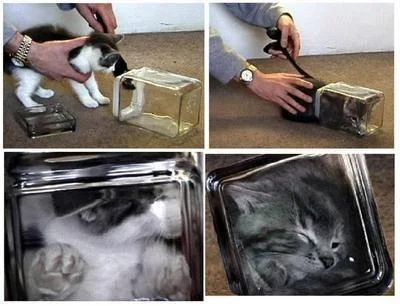
BonsaiKitten.com presented itself as a guide to the "long lost art" of growing kittens inside glass containers3. The homepage opened with orientalist language about Western fascination with Far Eastern customs like tattoos, martial arts, and miniature sculpture, then pitched the idea that bonsai techniques could be applied to living animals3.

The site featured several sections: a "Method" page explaining that week-old kittens have skeletons soft enough to "bounce if thrown" and would conform to the shape of a glass bottle; a "Gallery" with four images of supposed bonsai kittens at various stages; and a "Sales" page offering live bonsai kittens and DIY supplies, with no actual way to buy anything3. A guestbook collected visitor reactions, many of which were outraged complaints, though plenty were clearly jokes3. Later updates added fake "research" claiming cat litter causes brain damage3.

The concept drew a loose parallel to real-world practices. Japan's square watermelons, grown inside glass boxes to make them easier to store and ship, showed that living things can be molded by containers1. The site's homepage also referenced Chinese foot binding as an example of reshaping living organisms3. But unlike watermelons, cramming a kitten in a jar would kill it long before any "molding" could occur, as Snopes pointed out3.

BonsaiKitten.com went live in December 2000, built by an unnamed graduate student at the Massachusetts Institute of Technology3. The student operated under the pseudonym "Dr. Michael Wong Chang" and hosted the site on MIT's own servers, running off his campus computer3. Beyond the website, Chang organized satirical in-person events at MIT, including attempts to "convert" people to "Team Bonsai Kitten" and tutorials on stuffing kittens into jars3.

The name riffed on bonsai, the Japanese art of growing miniature trees in small containers and shaping them as they grow3. Chang later admitted he expected people to recognize the satire immediately, adding that "from our incoming mail, it seems far fewer than 1 percent of respondents understand"3.

Origin & Background

Platform
BonsaiKitten.com (MIT student server)
Key People
"Dr. Michael Wong Chang"
Date
2000

BonsaiKitten.com went live in December 2000, built by an unnamed graduate student at the Massachusetts Institute of Technology3. The student operated under the pseudonym "Dr. Michael Wong Chang" and hosted the site on MIT's own servers, running off his campus computer3. Beyond the website, Chang organized satirical in-person events at MIT, including attempts to "convert" people to "Team Bonsai Kitten" and tutorials on stuffing kittens into jars3.

The name riffed on bonsai, the Japanese art of growing miniature trees in small containers and shaping them as they grow3. Chang later admitted he expected people to recognize the satire immediately, adding that "from our incoming mail, it seems far fewer than 1 percent of respondents understand"3.

How It Spread

The backlash was almost instant. Visitors forwarded the URL to animal rights organizations, begging them to intervene. The Humane Society of the United States couldn't determine if the site was real but called for it to be shut down regardless3. The ASPCA said it was "horrified," and PETA called the joke "inappropriate and certainly not funny"3. Even groups that identified it as a hoax wanted it removed, fearing it could inspire copycat animal abuse3.

In early 2001, the Massachusetts Society for the Prevention of Cruelty to Animals subpoenaed MIT for information about the site's owners and sent an armed investigator to campus, as the MSPCA is deputized with arrest authority under state law3.

Spam email chains amplified the outrage massively. These forwarded pleas often targeted non-English speakers who spread them without fully understanding the content3. By February 2001, the site had received "tens of thousands" of hate emails3. Some hate mail was explicitly racist, with one person writing to Chang, "you are probably Chinese, the most perverse of the Asians"3. At least one spam email claimed the site was run by "a Japanese" and that bonsai kittens were a popular fashion item in Asia3.

The site sat alongside other notorious early-2000s shock sites like Rotten.com in the public conversation about internet content and free speech2. Chang's own defense of the site echoed arguments made by other provocateurs of the era: that mainstream media exploits the same kind of disturbing content for entertainment while wrapping it in the "guise of information"2.

Platforms

Websiteemailearly forums

Timeline

2000

Bonsai Kitten website launches

2000-2001

Website spreads across early internet

2001-2002

Generates outrage and animal welfare concerns

2002-2003

Reaches mainstream media attention

2003-present

Website offline, becomes internet legend

2005-01-01

Bonsai Kitten entered the broader pop culture conversation

View on Google Trends

How to Use This Meme

Bonsai Kitten isn't a meme template people remix or reuse. It typically comes up in conversations about classic internet shock sites, hoaxes, and early web trolling. The usual format is someone sharing the URL (or describing the concept) to get a reaction out of an unsuspecting person, similar to other shock site link-drops like Goatse or Tubgirl4. The site is often mentioned in lists of "things you should never Google" or discussions about the wildest early internet content.

Create Your Own

Cultural Impact

BonsaiKitten.com was a flashpoint in early-2000s debates about internet censorship and free speech. The FBI investigation made it one of the first hoax websites to trigger a federal law enforcement response3. The case tested a then-new animal cruelty depictions law and raised questions about whether satirical content fell under its scope3.

The site also exposed how quickly misinformation spreads through email chains, particularly when the content triggers strong emotions3. The spam email campaigns that spread false claims about the site's origins, including racist fabrications about Asian involvement, foreshadowed later patterns of viral misinformation on social media3.

Alex Boese's inclusion of BonsaiKitten.com in *Hippo Eats Dwarf* helped cement it in the academic and popular history of internet hoaxes3. The site is still frequently cited in discussions about early web culture, sitting in the same category as other infamous shock and troll sites of the era like Rotten.com2.

Full History

The FBI got involved in February 2001, when the Boston field office issued a grand jury subpoena to MIT3. They cited a 1999 law signed by President Clinton that prohibited possessing commercially released animal cruelty depictions distributed across state lines3. The Humane Society praised the investigation, but civil liberties advocates pushed back hard. Defense attorney Harvey Silvergate accused the FBI of trying to burnish its public image, saying "they massively run rampant over Americans' liberties but they want to be seen as nice fuzzy guys who want to protect kittens"3.

Some of the site's defenders pointed out double standards in how platforms and authorities handled offensive content. Andrew Smith of The Register noted that Yahoo linked to and categorized multiple crush fetish websites while simultaneously censoring a discussion group about Bonsai Kitten3. Chang himself drew direct parallels to mainstream media, arguing that "lurid details of human fault and misery are published in the 'mainstream' media for exactly the same reason that certain people exchange this material informally, to titillate the viewer"2.

Free speech organizations sided with Chang. Cindy Cohn, legal counsel for the Electronic Frontier Foundation, argued that "people who have unpopular speech are the vanguards of protecting the rest of our speech," adding that "just because it's in bad taste doesn't mean you get to censor it"2.

The hoax analysis community picked Bonsai Kitten apart over time. Several red flags were obvious in retrospect: the "Sales" page had no actual purchase mechanism, the listed NYC phone number never worked, and an ASPCA spokesperson confirmed the number was not legitimate3. Author Alex Boese, in his book *Hippo Eats Dwarf*, classified BonsaiKitten.com as a "gross-out hoax," a practical joke designed to disturb. Boese argued it fooled so many people because real animal cruelty exists, giving the premise "built-in credibility"3.

The site eventually went offline but left a lasting mark on how people think about internet hoaxes, troll culture, and the gap between satirical intent and public interpretation. MIT ultimately complied with the various subpoenas, but no criminal charges were ever filed against the creator3.

Fun Facts

The site's creator held real-life satirical events on MIT's campus, including "converting" passersby to "Team Bonsai Kitten"3.

The concept of growing things in shaped containers is real: Japanese farmers have been growing square watermelons in glass boxes since the early 1980s, selling them for around 10,000 yen (about $83) each1.

Less than 1% of people who emailed the site understood it was satire, according to its creator3.

The MSPCA sent an armed investigator to MIT's campus as part of their inquiry into the site3.

The site's guestbook became a spectacle of its own, with a mix of genuine outrage and people clearly in on the joke3.

Frequently Asked Questions