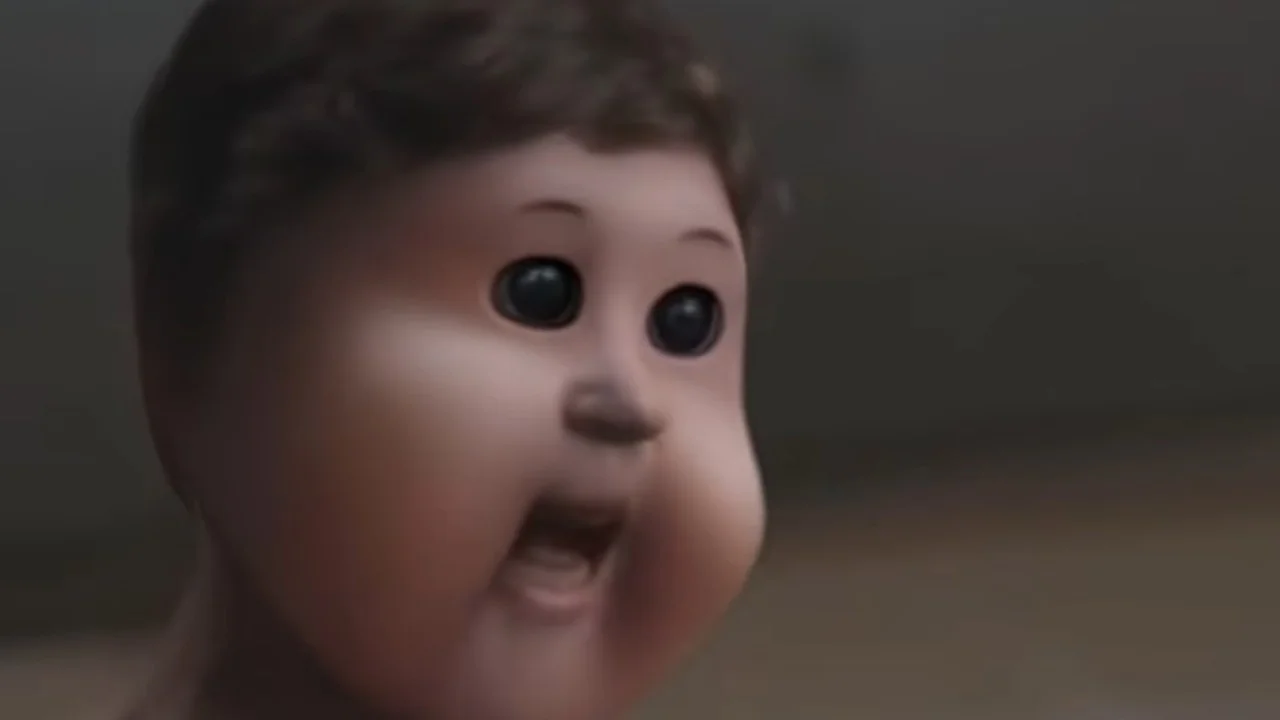
Cabbage Patch Kid
Published November 19, 2026
Cabbage Patch Kid, also known as Baby Face Filter, is a Snapchat lens by Do !! that reshapes faces into doll-like features such as beady eyes, round cheeks and a flat nose, often with a sped-up voice track to match. TikTokers made it a trend in November 2026 by pointing their phones at movie and TV scenes to morph characters into the plush dolls. By November 16th, the lens also fed a reaction format that mocks real people with baby faces when they get angry.
Overview
Beyond the character edits, two different flavors of the trend run side by side. Movie and TV versions typically freeze on a dramatic shot, a villain monologue or a tense standoff, and when the lens snaps on, the actor's face shrinks into chubby cheeks and tiny eyes, with the vocal track shifted up an octave3. Snapchat lists the lens as 'ggg11' by Do !!, the version TikTokers screen-record straight into their edits4.
A second branch aims the filter at ordinary people. @edwin_2cold's take applied the doll face to clips of someone yelling, playing on the idea that a baby-faced person's anger looks funnier when their features are exaggerated into literal doll territory5. Comments on these edits pile onto the subject's resemblance to a Cabbage Patch Kids doll, and creators often time the voice-pitch spike to the loudest moment in the source clip.
Origin & Background
How It Spread
Timeline
2026-11-09
TikToker @kal6969697 posted one of the earliest known trend videos using the 'ggg11' Snapchat lens, drawing over 380,000 views in a week[1].
2026-11-11
@etmg_123 ran the filter over a scene from the film Obsession, pulling more than 434,000 views in six days[2].
2026-11-11
@tristanthetyranika applied the lens to the 'I Am A Surgeon' meme and hit 4.8 million views in six days[3].
2026-11-16
@edwin_2cold posted a doll-face bit about people with baby faces getting mad, hitting 650,000 views in under a day[5].
How to Use This Meme
Creators typically open the Snapchat 'ggg11' lens and screen-record while a film, cartoon or TV clip plays on another screen, so the filter warps the on-screen character's face in real time. The common convention is to pick a scene with strong emotion, a villain monologue, a surgery drama, a tense argument, so the doll transformation lands against the seriousness of the original. Real-person versions often include a yelling or crying clip and let the filter's pitched-up voice sell the gag.
Frequently Asked Questions
References (5)
- 1
- 2
- 3
- 4
- 5