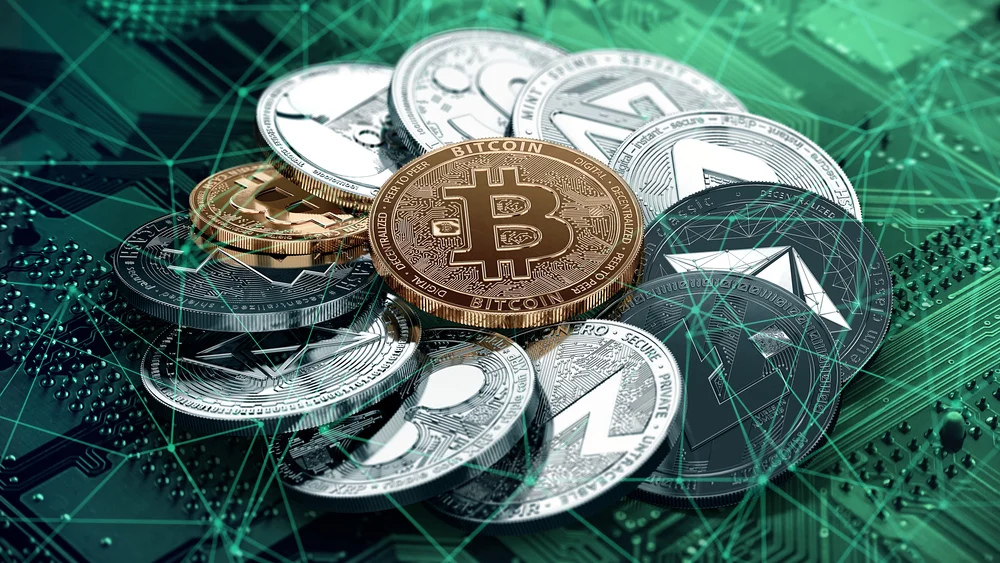
Cryptocurrency
Published August 17, 2026
Cryptocurrency is digital money secured by cryptographic techniques and moved across peer-to-peer networks rather than banks. The concept jumped from academic proposal to working code with Bitcoin's 2009 launch, then spawned a wave of meme-linked coins like Dogecoin, Coinye, and NyanCoin through the 2010s.
Overview
Cryptocurrency describes digital money secured by cryptographic techniques and moved across peer-to-peer networks rather than through traditional banks. The concept jumped from academic proposal to working software with the 2009 launch of Bitcoin, a peer-to-peer digital coin secured by cryptographic proof of work1. Any transfer only needs the sender's private key and the recipient's public address; exchanges then let holders swap tokens for other coins or for national currencies8.
Online, cryptocurrency sits at the crossroads of finance, technology, and meme culture. Coins tied to specific memes such as Dogecoin, Coinye, and NyanCoin treat their tokens as inside jokes and brand tie-ins rather than serious stores of value3. Around them grew a shared vocabulary of miners, wallets, hard forks, and gas fees, plus a nonstop news cycle of scams, forks, and price spikes covered by outlets like The Verge6.
Gallery
Origin & Background
How It Spread
How to Use This Meme
Owning a cryptocurrency typically means holding a private key in a digital wallet, either a software wallet you run yourself or a hosted wallet on an exchange8. A transaction is created by signing it with the private key and broadcasting it to the network; miners then include it in a block and confirm it as valid. On Ethereum the same wallet also runs smart contracts, small programs that automatically move ether or tokens when specific conditions are met2.
Cultural Impact
Fun Facts
- Satoshi Nakamoto's PGP key was created only months before the Bitcoin genesis block, and no non-Bitcoin posts from him appear on the cryptography mailing list, suggesting the identity was set up specifically to release the project4
- The Register's early write-up of NyanCoin called Nyan Cat "the most annoying internet meme since the Hampster Dance," giving the joke coin surprise mainstream tech press attention3
- Vitalik Buterin once tweeted satirically that if users sent him 0.1 ether he would send them nothing "because I am too lazy"; scammers took the joke seriously and started replying to his tweets pretending to run giveaways6
- Two rival NyanCoins launched on the same day in January 2014, but one was quickly abandoned after accusations that its founders had premined a large portion of the supply before the public release3
- Nakamoto's genesis block message referencing the UK Chancellor's bank bailout tied Bitcoin's launch directly to the 2008 financial crisis4
Derivatives & Variations
Bitcoin, the peer-to-peer cryptocurrency launched in January 2009 by Satoshi Nakamoto[1]
Ethereum, a blockchain platform for programmable smart contracts, and its native coin ether[2]
NyanCoin, endorsed by Nyan Cat creator Chris Torres for what backers called the first officially licensed cryptocurrency[3]
CryptoKitties and Bitcoin Cash, two 2017-era offshoots of the Ethereum and Bitcoin lineages respectively, one a blockchain breeding game and the other a hard fork with larger block sizes[5]
Frequently Asked Questions
References (8)
- 1
- 2
- 3
- 4
- 5
- 6
- 7
- 8