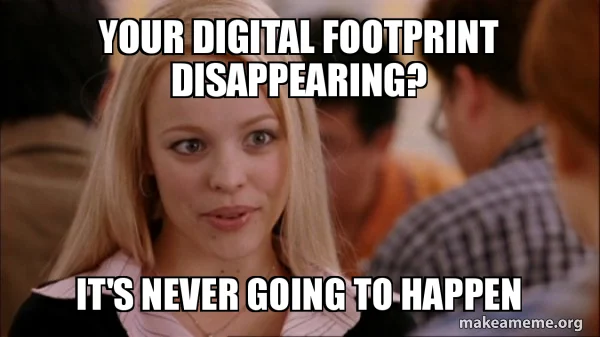
Digital Footprint

2007Slang term / concept memesemi-active

Published March 10, 2026 · Updated March 23, 2026

Also known as: Online footprint · internet footprint

Digital Footprint is a slang term and meme concept describing the trail of data a person leaves behind through their internet activity. The term dates back to at least the mid-2000s and gained traction as a subject of online humor throughout the 2010s2. By the early 2020s, TikTok users turned "digital footprint" into both a punchline and a genuine callout, tagging embarrassing posts with the phrase to warn others about their permanent online record2.

Overview

"Digital footprint" refers to the sum of traceable online activity tied to a person, from social media posts and comments to search history and account registrations. The metaphor draws from the idea of physical footprints, similar to how "environmental footprint" describes a person's ecological impact2. Unlike footprints in sand, digital ones stick around long after someone hits "delete," since cached pages, screenshots, and archived databases keep that data alive1.

As a meme, the phrase works on two levels. Some people use it sincerely, warning others that what they post today could haunt them during job interviews or background checks3. Others lean into it ironically, tagging cringe-worthy or unhinged content as damaging to someone's "digital footprint" as a joke2.

The exact coining of "digital footprint" is unclear, but the concept was already circulating online by the mid-2000s2. One of the earliest formal treatments came from Pew Research Center, which published a major study titled "Digital Footprints" in December 20071. That study found 47% of internet users had searched for their own name online, up from 22% in 20021. The research highlighted a growing awareness that online activity creates a lasting, searchable record.

The Pew study also broke users into categories based on how worried they were about their online presence. Fully 60% of internet users at the time said they weren't concerned about how much info was available about them, and 61% hadn't taken steps to limit it1. Only 38% had made any effort to reduce their digital trail1. The term itself likely evolved from earlier metaphorical uses of "footprint" in environmental and social contexts2.

Origin & Background

Platform
General web (earliest documented academic use: Pew Research, 2007)
Creator
Unknown
Date
Mid-2000s

The exact coining of "digital footprint" is unclear, but the concept was already circulating online by the mid-2000s2. One of the earliest formal treatments came from Pew Research Center, which published a major study titled "Digital Footprints" in December 20071. That study found 47% of internet users had searched for their own name online, up from 22% in 20021. The research highlighted a growing awareness that online activity creates a lasting, searchable record.

The Pew study also broke users into categories based on how worried they were about their online presence. Fully 60% of internet users at the time said they weren't concerned about how much info was available about them, and 61% hadn't taken steps to limit it1. Only 38% had made any effort to reduce their digital trail1. The term itself likely evolved from earlier metaphorical uses of "footprint" in environmental and social contexts2.

How It Spread

The digital footprint concept moved from privacy discussions into meme territory over the course of the 2010s. On January 12th, 2016, the YouTube channel Internet Society posted an explainer video on why people should care about their digital footprint, which picked up over 200,000 views2. That same year, YouTuber GDST published a similar educational video that pulled in over 356,000 views2.

Reddit picked up the concept as meme material by late 2019. On December 16th, user parleyvoo posted an "I May Not Show It" meme to r/INTP about wanting to erase their digital footprint and disappear into the woods, captioned "Bear tracks >>> digital footprints." The post earned over 656 upvotes2. Twitter user @reactjpg posted a similar meme on October 3rd, 20202.

The real explosion happened on TikTok. Starting around 2020, creators began using the platform to explain the concept, share tips on cleaning up one's footprint, and post embarrassing examples of people who clearly weren't thinking about theirs2. On July 2nd, 2021, TikToker @kenziecait shared a story about being cast on a singing show where producers reviewed her "entire digital footprint" and handed her a multi-page list of posts to delete before she could appear. That video hit 1.7 million views2.

By January 2022, the phrase had become a go-to callout tool on TikTok. On January 16th, TikToker @oddeyemayhem posted a video captioned "DIGITAL. FOOTPRINT." showing a user repeatedly leaving embarrassing comments on a suggestive post, the joke being that person should really think about their online trail2. The hashtag #digitalfootprint became a regular tag for this kind of content. On January 30th, TikToker @merelyashley posted cleanup tips that earned over 700,000 views2. On February 9th, Instagram user parasocialism posted a meme about ruining one's digital footprint that pulled 12,300 likes in a week2.

Platforms

TwitterTwitter

Timeline

2023-01-15

First appears

2024-01-01

Digital Footprint started spreading across social media platforms

2025-01-01

Digital Footprint is still actively used and shared across platforms

View on Google Trends

How to Use This Meme

Digital footprint memes typically fall into a few patterns:

- The callout: Screen-record or screenshot someone posting something embarrassing, cringe, or regrettable, then add "digital footprint" as text or a caption. The implication is that this content will follow them forever. - The anxiety joke: Post about wanting to delete your entire online presence, escape to the wilderness, or pretend the internet doesn't exist. Often pairs with reaction images or the "I May Not Show It" format. - The cleanup PSA: Share tips on scrubbing old posts, deleting unused accounts, or Googling yourself. These range from genuinely helpful to ironic, depending on the creator. - The ironic embrace: Post something intentionally unhinged with a caption like "adding to the digital footprint" or "my future employer is gonna love this."

The humor often comes from the gap between knowing you should be careful online and posting recklessly anyway.

Create Your Own

Cultural Impact

The Pew Research study in 2007 was one of the first large-scale efforts to quantify how people thought about their online data trails1. The finding that nearly half of internet users had ego-searched themselves gave the concept mainstream credibility. The study also revealed that people with higher education and income were more likely to monitor their online identities, while most users remained largely indifferent to how much personal data was publicly accessible1.

Urban Dictionary entries for the term range from straightforward definitions to darkly comic takes, with one entry describing a digital footprint as "a fine line between life and death"3. The term's shift from serious privacy concept to meme punchline tracks with broader internet culture trends where safety warnings get absorbed into humor. Teachers and parents spent years telling kids to watch their digital footprints, and the generation that grew up hearing those warnings turned it into a joke format.

The concept also gained practical weight as stories surfaced of real consequences. TikToker @kenziecait's account of TV producers scrutinizing her entire posting history before a show appearance gave the abstract concept a concrete, relatable example with real stakes2.

Fun Facts

The Pew Research study found that 74% of people who had searched their own name online only did it once or twice, not as a regular habit1.

Only 3% of self-searchers in 2007 made checking their digital footprint a regular practice1.

60% of people who Googled themselves actually found relevant results, while 38% came up empty1.

About one in ten internet users in 2007 had a job that required them to actively promote their name online1.

The TikTok hashtag #digitalfootprint became a regular tag for calling out embarrassing posts, with the misspelling "#ditialfootprint" also appearing in popular videos2.

Frequently Asked Questions