Authenticator App Lost
Published March 10, 2026 · Updated March 23, 2026
Also known as: Lost My Authenticator · 2FA Locked Out · Google Authenticator Panic
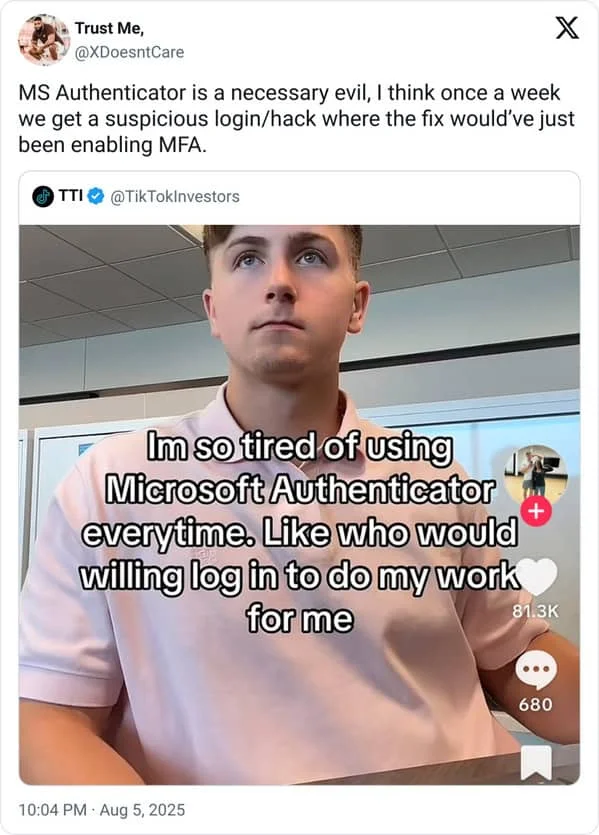
"Authenticator App Lost" refers to memes about the panic and frustration of losing access to a two-factor authentication (2FA) app after switching phones, factory resetting a device, or having a phone break unexpectedly. The jokes center on the specific dread of realizing you're permanently locked out of dozens of accounts because your authenticator codes are gone. The format spread across Twitter, Reddit, and tech communities as two-factor authentication became standard practice in the late 2010s and early 2020s.
Overview
The meme captures a very specific modern tech nightmare: you set up two-factor authentication on all your important accounts using an app like Google Authenticator or Microsoft Authenticator, and then something happens to your phone. Because many authenticator apps historically stored codes only locally with no cloud backup, losing the device meant losing access to every linked account. The memes typically take the form of text posts, image macros, or multi-panel comics showing escalating panic as someone realizes the scope of their lockout.
Common formats include "stages of grief" applied to account recovery, screenshots of endless "account locked" pages, and jokes about the irony of security measures making your own accounts inaccessible to you.
Gallery
Origin & Background
How It Spread
Platforms
Timeline
2023-01-15
First appears
2024-01-01
Authenticator App Lost started spreading across social media platforms
2025-01-01
Authenticator App Lost is still actively used and shared across platforms
How to Use This Meme
The meme typically follows one of several patterns:
- The realization post: A text post or tweet describing the moment of discovering your authenticator is gone, usually escalating from mild concern to existential crisis - The list format: Listing all the accounts you're now locked out of, each one worse than the last - The irony frame: Pointing out that you secured your accounts so well that even you can't access them - The advice-too-late format: Someone smugly explaining backup codes to a person who has already lost everything
The humor works best when it captures the specific, creeping dread of remembering yet another account that used that authenticator. Delivery is usually deadpan or escalating panic.
Cultural Impact
Fun Facts
Google Authenticator went over a decade (2010-2023) without cloud backup, making it the single most-cited app in authenticator loss memes
Some users reported being locked out of cryptocurrency wallets worth thousands of dollars after losing their authenticator, adding real financial stakes to what started as relatable humor
The meme inadvertently served as a public service announcement, with many people discovering backup codes existed only after seeing lockout jokes online
Security researchers have noted the tension between the meme's message ("2FA is annoying") and the actual importance of two-factor authentication, calling it "the best unintentional anti-security campaign"1
Derivatives & Variations
Backup codes in a drawer:
Jokes about printing backup codes and then losing the paper, or finding them years later in a random drawer[1]
"Just use SMS":
Ironic suggestions to abandon app-based 2FA entirely, usually met with security community outrage[1]
Recovery key tattoo:
Exaggerated solutions like tattooing recovery codes on your body
IT department lockout:
Workplace-specific variants about getting locked out of company systems and having to explain to IT that you factory reset your phone
Frequently Asked Questions
References (1)
- 14chanencyclopedia