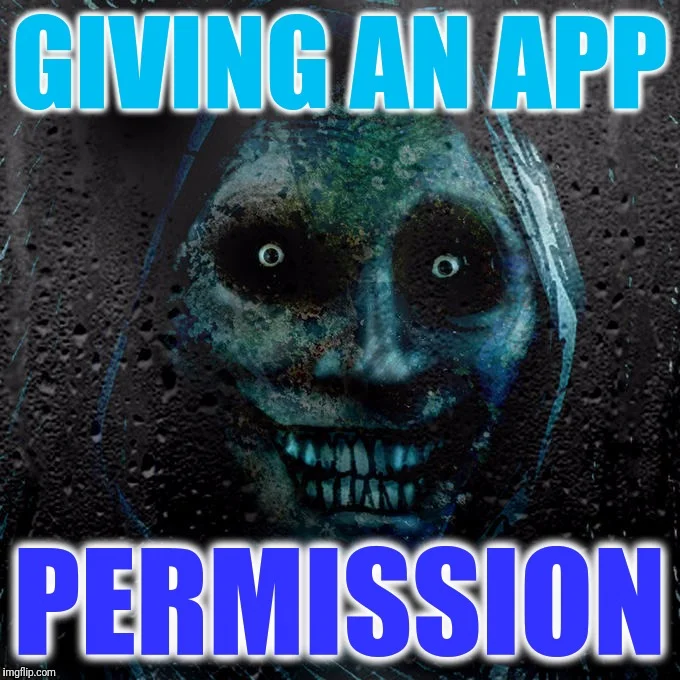
App Permission Request
Published March 10, 2026 · Updated March 23, 2026
Also known as: App Permissions Meme · "Why Does This App Need Access To..."
App Permission Request is an internet meme format that mocks the absurd, excessive, or suspiciously invasive permissions that mobile apps demand during installation. Rooted in the smartphone era's growing privacy anxieties, the meme typically presents a mundane app (like a flashlight or calculator) requesting access to contacts, camera, location, microphone, and other sensitive data for no apparent reason. The format taps directly into real frustrations about mobile data collection practices that companies like TikTok have faced intense scrutiny over1.
Overview
The App Permission Request meme takes the familiar mobile permission dialog box and exaggerates it for comedic effect. The standard format shows a seemingly simple app, often a flashlight, calculator, or weather app, requesting an absurd list of permissions: access to contacts, photos, camera, microphone, location, call history, and sometimes escalating to ridiculous fictional permissions like "your soul" or "your firstborn child."
The humor works on two levels. First, it's grounded in a real and widely shared experience: most smartphone users have encountered apps requesting permissions that seem wildly out of scope. Second, it plays on genuine privacy fears. As major apps and platforms came under fire for aggressive data harvesting, the joke hit closer to home. TikTok, for instance, faced sustained criticism over data privacy violations and the sheer volume of user information its app collected1.
Gallery
Origin & Background
How It Spread
Platforms
Timeline
2023-01-15
First appears
2024-01-01
App Permission Request started spreading across social media platforms
2025-01-01
App Permission Request is still actively used and shared across platforms
How to Use This Meme
The most common approach:
Pick a simple, boring app category (flashlight, calculator, notepad, weather)
Present it as requesting wildly excessive permissions (contacts, camera, location, browsing history)
Escalate to absurd or fictional permissions for comedic effect ("access to your dreams," "permission to watch you sleep")
Often presented as a screenshot mockup of an actual OS permission dialog
Cultural Impact
Fun Facts
Android didn't introduce granular runtime permissions until Android 6.0 Marshmallow (2015). Before that, users saw the full permission list at install time, which made the problem (and the meme) much more visible.
TikTok's parent company ByteDance was founded in Beijing and originally launched the app as Douyin in China in 2016 before creating the international TikTok version in 20171.
The meme format is one of the few that directly influenced real product design: both Apple and Google redesigned their permission flows partly in response to user frustration that the meme captured.
Derivatives & Variations
"This app would like to access your..." edits
— Users create fake iOS-style permission popups with absurd requests, often shared as standalone images[1]
Video permission skits
— TikTok and Instagram Reels creators act out conversations between a user and an app demanding excessive access[1]
Corporate permission memes
— Variants targeting specific companies (Facebook, Google, TikTok) rather than generic apps, usually timed to privacy news[1]
Frequently Asked Questions
References (1)
- 1TikTokencyclopedia