High Altitude Balloon Videos

2007viral videosemi-active

Published August 28, 2026

High Altitude Balloon Videos are amateur clips shot from weather balloons drifting into the stratosphere, showing the curve of the Earth and the pitch-black sky of near-space1. What started as a niche amateur radio hobby in the 1980s exploded into a DIY viral genre in the late 2000s after MIT undergrads reached the edge of space using a $150 rig built around a consumer point-and-shoot camera.

Overview

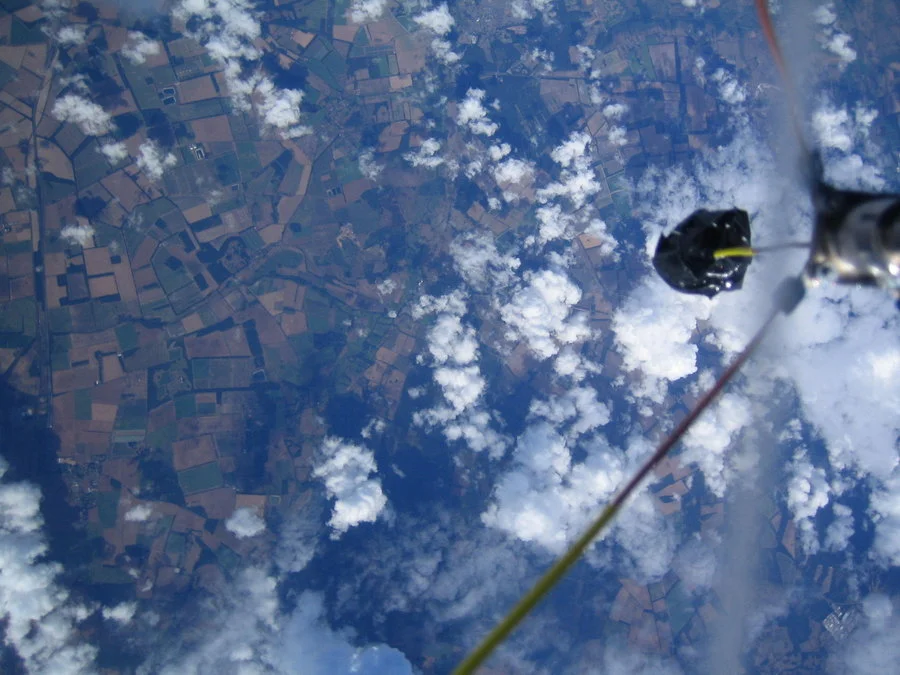
A typical flight lasts about two to three hours, cutting from a shaky ground release to a slow reveal of the curved horizon and a chaotic descent under parachute2. Rigs almost always pair a latex weather balloon with an insulated foam cooler holding a consumer camera and a GPS tracker for the recovery hike3. The signature shot is the moment the sky above the payload turns black while the horizon below stays bright blue, because at roughly 25 kilometers the air is too thin to scatter sunlight1.

Amateur uploaders lean into that raw look, keeping the wide-angle lens distortion, the sudden pop at burst altitude and the tumbling parachute descent that follows5.

Origin & Background

Platform
Amateur radio (source origin) / YouTube (viral spread)
Creator
Bill Brown
Date
2007

Amateur high altitude ballooning traces back to American radio hobbyist Bill Brown, callsign WB8ELK, who flew the first modern amateur radio balloon on August 15, 19874. Through the 1990s the hobby stayed small and radio-focused, mostly a few amateur radio clubs in North America using the balloons as low-cost scientific test beds1.

Bill Brown himself began publishing his own balloon footage on YouTube in January 2007, giving a wide public audience its first look at raw video from a full amateur mission and pulling the hobby beyond its ham radio origins2.

How It Spread

Toronto engineer Alexei Karpenko flew a full GPS, camera and sensor package to about 30 kilometers in October 2007, and less than two years later MIT students Justin Lee and Oliver Yeh's Project Icarus reached near-space using a Canon A470 point-and-shoot in a beer cooler for a total build cost of about $1504. That price point turned amateur high altitude balloon videos into a copycat viral trend, with clone launches appearing on YouTube and Vimeo5.

Idaho teacher Paul Verhage, one of roughly 200 US hobbyists profiled by Universe Today, had personally launched about 50 balloons since 1996 carrying weather stations, Geiger counters and cameras, keeping per-flight costs under a thousand dollars1. By August 2012 the two video sites together hosted around 1,400 amateur uploads, and the aesthetic had been picked up by brands including Toshiba, Google's Droid line and Natural Ice beer for viral marketing spots4.

Frequently Asked Questions