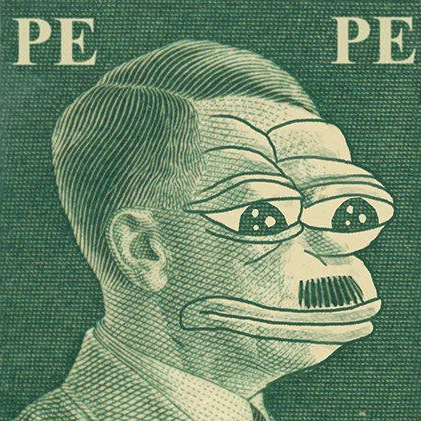
Nazi Pepe Controversy
Published September 8, 2026
In the summer of 2016, the Hillary Clinton campaign and major news outlets declared Pepe the Frog a white supremacist symbol after Donald Trump Jr. shared a 'Deplorables' meme featuring the cartoon amphibian. The claim, seeded by a Daily Beast article built on interviews with two self-described trolls, snowballed into an Anti-Defamation League hate symbol designation and one of the strangest media episodes of that election cycle.
Overview
The Nazi Pepe Controversy is the summer-and-fall 2016 media panic in which Pepe the Frog, an innocuous cartoon character from Matt Furie's Boy's Club comic, was reclassified as a white nationalist icon. The label came through a chain of events that started with two anonymous Twitter accounts feeding a reporter, escalated with a photoshopped movie poster from Donald Trump Jr., and ended with the Anti-Defamation League adding a cartoon frog to its official hate symbol database16.
What made the story so weird was the mismatch between the claim and the meme itself. Pepe had spent years as a shape-shifting mood board on 4chan and Tumblr, appearing as Batman, Nicki Minaj, a supermarket clerk, or a jack-o-lantern2. A subset of /pol/ users had drawn Nazi Pepes, but so had people drawing every other conceivable version. The controversy hardened one fringe use into the definition of the whole character, and then set off a public tug-of-war between Furie, the ADL and 4chan posters over who actually owned him78.
By the end of 2016 the label had stuck in mainstream coverage. The BBC devoted paragraphs of a pre-election explainer to Pepe, Italy's Corriere della Sera ran him next to swastikas under the headline 'Trump e la rana simbolo d'odio' (translated from Italian), and Apple would go on to reject a mobile game specifically for containing Pepe imagery1.
Gallery
Origin & Background
How It Spread
How to Use This Meme
'Nazi Pepe' isn't a template so much as a talking point. In practice, people invoke the controversy two ways: sincere posters share screenshots of the Clinton campaign explainer or the ADL entry as shorthand for media overreach, while ironic posters keep drawing Pepe in every conceivable non-political costume to argue the character was never one thing. When making the case one way or the other, a common convention is to pair a mainstream 2016 headline with a bland, apolitical Pepe drawing to show the gap between the two.
Cultural Impact
Fun Facts
The Anti-Defamation League itself noted in its own hate symbol listing that most uses of Pepe the Frog were non-bigoted1.
The two 'white nationalists' quoted in the Daily Beast article later told the Daily Caller they had fabricated the story as a prank1.
Apple banned the mobile game Pepe Scream in June 2017 specifically because it contained Pepe imagery, citing 'objectionable content'1.
Italy's Corriere della Sera ran a Trump Pepe next to Nazi Pepes under the headline 'Trump e la rana simbolo d'odio' (translated from Italian, 'Trump and the frog, symbol of hate')1.
Matt Furie 'killed' Pepe in a May 2017 comic showing the frog in a casket, and fans responded by drawing Pepe as Jesus risen from the dead1.
Frequently Asked Questions
References (9)
- 1
- 2
- 3
- 4
- 5
- 6
- 7
- 8
- 9