Polybius

1998Urban legend / internet hoaxclassic
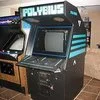
Polybius is a 1998 internet urban legend about a mysterious arcade game supposedly released in 1981 Portland that caused nightmares and seizures while men in black collected player data.

Polybius is an urban legend about a mysterious arcade game that supposedly appeared in Portland, Oregon in 1981 and caused players to experience nightmares, amnesia, and seizures while men in black suits collected data from the machines. First posted to the arcade game database Coinop.org in 19981, the story grew into one of the internet's most enduring gaming myths, weaving Cold War paranoia and early video game culture into a conspiracy that still captivates gamers and skeptics.

TL;DR

Polybius is an urban legend about a mysterious arcade game that supposedly appeared in Portland, Oregon in 1981 and caused players to experience nightmares, amnesia, and seizures while men in black suits collected data from the machines.

Overview

Polybius is a supposed 1981 arcade game that appeared briefly in a handful of Portland, Oregon arcades before vanishing without a trace. According to the legend, the game featured abstract, psychedelic graphics and was so addictive that kids lined up for hours to play2. Players allegedly suffered severe psychological effects including nightmares, memory loss, insomnia, hallucinations, and in some versions, even death3. Men in black suits supposedly visited the arcades to extract data from the machines, not quarters, fueling theories that Polybius was a government mind control experiment1.

The game's title screen allegedly displayed "© 1981 Sinneslöschen," a not-quite-correct German compound roughly meaning "sense delete" or "sensory deprivation"2. No original cabinet, circuit board, or ROM dump has ever been verified3. The legend draws its power from a perfect cocktail of real-world ingredients: the golden age of arcades, genuine government surveillance programs like MKUltra, and the moral panic around video games in the early 1980s4.

The earliest known reference to Polybius appeared on Coinop.org, an arcade game database, on August 3, 19985. The entry described an abstract puzzle/space shooter named after the Greek historian Polybius, who developed the Polybius square cipher2. It claimed the game had appeared in only "one or two arcades outside of Portland" and was regularly visited by men in black coats who collected "records" from the machines1. The listing noted they "were not interested in quarters or anything, they just collected information about how the game was played"1.

The Coinop.org entry included a screenshot of a title screen reading "© 1981 Sinneslöschen" and referenced mysterious reports of children suffering amnesia and sleeping disorders after playing1. It also tantalizingly noted: "Until the ROM showed up," implying someone had found a copy of the game's data, though no verified ROM ever surfaced1.

The first known inquiry about the game outside Coinop.org appeared on the Usenet group rec.games.video.arcade.collecting on February 27, 20005. In a later thread on April 11, 2001, a poster named Al Kossow claimed the legend was created by Christian Oliver Windler, known by his Usenet handle CyberYogi5. Windler, a German computer enthusiast who collects historical video games and pursues interests in "neuronomy" and electronic music, never publicly admitted to creating the story.

Origin & Background

Platform
Coinop.org
Creator
Unknown
Date
1998 (legend set in 1981)

The earliest known reference to Polybius appeared on Coinop.org, an arcade game database, on August 3, 1998. The entry described an abstract puzzle/space shooter named after the Greek historian Polybius, who developed the Polybius square cipher. It claimed the game had appeared in only "one or two arcades outside of Portland" and was regularly visited by men in black coats who collected "records" from the machines. The listing noted they "were not interested in quarters or anything, they just collected information about how the game was played".

The Coinop.org entry included a screenshot of a title screen reading "© 1981 Sinneslöschen" and referenced mysterious reports of children suffering amnesia and sleeping disorders after playing. It also tantalizingly noted: "Until the ROM showed up," implying someone had found a copy of the game's data, though no verified ROM ever surfaced.

The first known inquiry about the game outside Coinop.org appeared on the Usenet group rec.games.video.arcade.collecting on February 27, 2000. In a later thread on April 11, 2001, a poster named Al Kossow claimed the legend was created by Christian Oliver Windler, known by his Usenet handle CyberYogi. Windler, a German computer enthusiast who collects historical video games and pursues interests in "neuronomy" and electronic music, never publicly admitted to creating the story.

How It Spread

The legend spread slowly through early 2000s message boards. In July 2003, a discussion about Polybius appeared on the Snopes message board, where researchers concluded it was not a real game. A month later, another thread appeared on the Above Top Secret conspiracy forum. In May 2004, the Museum of Hoaxes featured the story, calling it a "pretty good story" while acknowledging it was probably a hoax. That same year, a member of the Guru3D forums claimed to possess an emulator of the game found via eMule, but later admitted it was just an.exe file that simulated a Windows directory deletion.

The first known print mention came in GamePro's September 2003 issue, where the feature story "Secrets and Lies" declared the game's existence "inconclusive," sparking fresh curiosity and spreading the story to a mainstream gaming audience.

The story got its biggest mainstream boost on September 24, 2006, when The Simpsons referenced it in the episode "Please Homer, Don't Hammer 'Em". In a scene set in "Captain Blip's Zapateria," a rundown arcade, a cabinet labeled Polybius sits marked as "property of the U.S. Government". The nod brought the legend to nearly 10 million viewers who may never have heard of it.

Also in March 2006, a figure named Steven Roach posted what he claimed was the true story behind Polybius on the Coinop.org page. Roach said he was a Czech Republic-based programmer who had been part of Sinneslöschen, a small company that produced printed circuit boards. According to his account, a South American company hired them to develop a puzzle-based arcade game with cutting-edge graphics. The game received a limited release, but a thirteen-year-old boy in Portland suffered an epileptic seizure while playing, and all cabinets were quickly pulled. Roach's story fell apart under scrutiny. His account contained inconsistencies, with parts apparently lifted from the Wikipedia article on the game. In September 2007, it was revealed that Roach and several other accounts that posted in related forum threads were all dummy accounts created by the same individual.

In July 2007, freeware developer Rogue Synapse published a downloadable game titled Polybius at sinnesloschen.com, featuring cabinet artwork and gameplay designed around contested descriptions of the alleged original. Since then, YouTube creators have uploaded hundreds of videos claiming to show Polybius gameplay through remakes, emulators, or "found" cabinets, with over 1,890 video results by July 2012.

How to Use This Meme

Polybius isn't a meme template in the traditional image macro sense. It functions as a reference point and cultural shorthand, typically invoked in a few ways:

- Conspiracy humor: When discussing government surveillance, mind control theories, or suspiciously addictive technology, dropping a Polybius reference signals awareness of the legend's paranoid overtones. - Retro gaming nods: Referencing Polybius in lists of "cursed," "lost," or "banned" games, often alongside real obscure titles to blur the line between fact and fiction. - Easter egg placement: Game developers, filmmakers, and TV shows place Polybius cabinets in background art as a nod to gaming culture. This works best in arcade scenes or retro settings. - Creepypasta context: Polybius often gets cited alongside other internet horror legends as one of the original gaming creepypastas, predating the term "creepypasta" by years.

The most common usage is simply name-dropping Polybius when a piece of technology feels eerily manipulative or when something mysterious vanishes without explanation.

Cultural Impact

The Simpsons' 2006 Polybius cameo in "Please Homer, Don't Hammer 'Em" was the legend's biggest crossover moment, placing a government-labeled cabinet in a fictional arcade for a prime-time audience. The reference helped push the story from niche gaming forums into mainstream pop culture awareness.

The legend attracted coverage from outlets including Cracked, Den of Geek, Motherboard, and SkepticBlog. The Museum of Hoaxes added it to their collection of notable internet-age myths. Multiple fan-made recreations were developed, most notably the 2007 Rogue Synapse version released as freeware through sinnesloschen.com, which featured original cabinet artwork and gameplay loosely based on reported descriptions.

Polybius replica cabinets regularly appear at retro gaming expos and conventions, tapping into the same mix of nostalgia and unease that made the original legend compelling. The story also became a frequent reference point in discussions about the relationship between government agencies and the technology industry, often invoked half-jokingly alongside real programs like MKUltra.

Full History

What makes the Polybius legend so durable is how it maps onto real events in early 1980s Portland. Skeptic and author Brian Dunning traced the myth's possible roots to two incidents on the same day in 1981. One Portland player collapsed with a migraine headache after playing Tempest, while another suffered stomach pain after playing Asteroids for 28 straight hours in a filmed attempt to break a world record, both at the same arcade. Just ten days later, the FBI raided several video arcades in the Portland area on suspicion the owners were using machines for illegal gambling. Agents had been monitoring arcade cabinets for evidence of tampering and recording high scores for days beforehand.

These three real elements, sick kids, a Tempest prototype known to cause motion sickness, and government agents poking around arcade machines, align almost perfectly with the Polybius myth. Real news coverage in 1981 documented teenagers collapsing after marathon sessions, and epileptic seizures triggered by flashing graphics in games like Asteroids and Space Invaders made national headlines. To anxious parents in the early 1980s, video games already seemed dangerous. A game that caused hallucinations and obsessive behavior was simply the worst-case scenario made concrete.

The arcade culture of the era provides further context. Between 1981 and 1982, there were at least two confirmed instances when government agents confiscated specific arcade cabinets as evidence for crimes that occurred in arcades. When less serious incidents happened, authorities routinely examined high-score leaderboards to identify potential witnesses. Workers also inspected cabinet interiors for illegal modifications designed to cheat players. Arcades in that era were major social hubs that attracted drug dealers and other participants in illicit activities, making the presence of plainclothes agents a common occurrence. In this environment, one more group of suited men collecting data from machines would barely raise an eyebrow.

Investigative journalist Cat DeSpira attempted to verify Sinneslöschen's existence by contacting the Gewerbeamt (German Trade Office), finding no record of the company as an officially licensed business. She acknowledged the possibility that it operated illegally, but the name itself points to a non-native speaker. The compound word doesn't follow standard German grammar. "Sinnlöschen" would be more correct, and the clumsy construction looks like an English speaker using a German dictionary.

Internet writer Patrick Kellogg proposed a different angle: players who claimed to remember Polybius may actually have been recalling Cube Quest, a 1983 laserdisc-based arcade game with visuals described as "revolutionary" and far ahead of anything else at the time. Laserdisc games broke down frequently and were often removed from arcades, which would explain both the striking visual memories and the sudden disappearance.

The connection to MKUltra, the CIA's real mind control experiments from the 1950s through the 1970s, gave the conspiracy theory just enough historical grounding to stick. A secret government program that used arcade games to test psychological manipulation on unsuspecting children wasn't a wild leap for anyone who knew about MKUltra's documented history of experimenting on unknowing subjects.

Despite decades of searching by arcade collectors, retro gaming journalists, and dedicated investigators, no authentic Polybius cabinet has ever been produced for public examination. The game almost certainly never existed. But its staying power reflects anxieties about technology, surveillance, and hidden manipulation that feel just as relevant in the age of algorithmic feeds and data harvesting as they did in the age of coin-op machines. Ripley's Believe It or Not! called Polybius "the most dangerous video game to never exist".

Fun Facts

The name Polybius comes from an ancient Greek historian (c. 200–118 BC) who was famous for insisting historians should only report what they can verify through interviews with eyewitnesses, an ironic choice for a completely unverifiable legend.

"Sinneslöschen" is grammatically incorrect German. A native speaker would use "Sinnlöschen," suggesting the name was coined by someone working from a dictionary.

The Coinop.org listing added a 2009 update claiming "one of us is flying to the Kyiv, Ukraine area tomorrow" for information related to Polybius, then went silent with no follow-up.

Real FBI agents raided Portland arcades in 1981, just ten days after two players fell ill at the same arcade, providing a factual foundation that maps eerily well onto the myth.

The title screen screenshot included in the original legend shows pixel-based graphics, which contradicts claims that Polybius was a vector game, since vector monitors of that era could not display pixel graphics.

Derivatives & Variations

Rogue Synapse's Polybius (2007):

A free downloadable Windows game published at sinnesloschen.com, partly based on contested descriptions of the alleged original gameplay, including cabinet artwork[2].

YouTube "found footage" videos:

Since 2007, creators have uploaded hundreds of videos claiming to show original Polybius gameplay through remakes, emulators, or "found" cabinets, with over 1,890 results by 2012[5].

The Simpsons Easter egg (2006):

A Polybius cabinet marked as "property of the U.S. Government" appears in Season 18's "Please Homer, Don't Hammer 'Em"[8].

Guru3D "emulator" prank (2004):

A forum member claimed to have a Polybius emulator found via eMule, which turned out to be a program that simulated deleting Windows directories[9].

The Polybius Theory website (2004):

A dedicated website created to collect all available information and theories about the game[5].

Frequently Asked Questions

Polybius

1998Urban legend / internet hoaxclassic
Polybius is a 1998 internet urban legend about a mysterious arcade game supposedly released in 1981 Portland that caused nightmares and seizures while men in black collected player data.

Polybius is an urban legend about a mysterious arcade game that supposedly appeared in Portland, Oregon in 1981 and caused players to experience nightmares, amnesia, and seizures while men in black suits collected data from the machines. First posted to the arcade game database Coinop.org in 1998, the story grew into one of the internet's most enduring gaming myths, weaving Cold War paranoia and early video game culture into a conspiracy that still captivates gamers and skeptics.

TL;DR

Polybius is an urban legend about a mysterious arcade game that supposedly appeared in Portland, Oregon in 1981 and caused players to experience nightmares, amnesia, and seizures while men in black suits collected data from the machines.

Overview

Polybius is a supposed 1981 arcade game that appeared briefly in a handful of Portland, Oregon arcades before vanishing without a trace. According to the legend, the game featured abstract, psychedelic graphics and was so addictive that kids lined up for hours to play. Players allegedly suffered severe psychological effects including nightmares, memory loss, insomnia, hallucinations, and in some versions, even death. Men in black suits supposedly visited the arcades to extract data from the machines, not quarters, fueling theories that Polybius was a government mind control experiment.

The game's title screen allegedly displayed "© 1981 Sinneslöschen," a not-quite-correct German compound roughly meaning "sense delete" or "sensory deprivation". No original cabinet, circuit board, or ROM dump has ever been verified. The legend draws its power from a perfect cocktail of real-world ingredients: the golden age of arcades, genuine government surveillance programs like MKUltra, and the moral panic around video games in the early 1980s.

The earliest known reference to Polybius appeared on Coinop.org, an arcade game database, on August 3, 1998. The entry described an abstract puzzle/space shooter named after the Greek historian Polybius, who developed the Polybius square cipher. It claimed the game had appeared in only "one or two arcades outside of Portland" and was regularly visited by men in black coats who collected "records" from the machines. The listing noted they "were not interested in quarters or anything, they just collected information about how the game was played".

The Coinop.org entry included a screenshot of a title screen reading "© 1981 Sinneslöschen" and referenced mysterious reports of children suffering amnesia and sleeping disorders after playing. It also tantalizingly noted: "Until the ROM showed up," implying someone had found a copy of the game's data, though no verified ROM ever surfaced.

The first known inquiry about the game outside Coinop.org appeared on the Usenet group rec.games.video.arcade.collecting on February 27, 2000. In a later thread on April 11, 2001, a poster named Al Kossow claimed the legend was created by Christian Oliver Windler, known by his Usenet handle CyberYogi. Windler, a German computer enthusiast who collects historical video games and pursues interests in "neuronomy" and electronic music, never publicly admitted to creating the story.

Origin & Background

Platform
Coinop.org
Creator
Unknown
Date
1998 (legend set in 1981)

The earliest known reference to Polybius appeared on Coinop.org, an arcade game database, on August 3, 1998. The entry described an abstract puzzle/space shooter named after the Greek historian Polybius, who developed the Polybius square cipher. It claimed the game had appeared in only "one or two arcades outside of Portland" and was regularly visited by men in black coats who collected "records" from the machines. The listing noted they "were not interested in quarters or anything, they just collected information about how the game was played".

The Coinop.org entry included a screenshot of a title screen reading "© 1981 Sinneslöschen" and referenced mysterious reports of children suffering amnesia and sleeping disorders after playing. It also tantalizingly noted: "Until the ROM showed up," implying someone had found a copy of the game's data, though no verified ROM ever surfaced.

The first known inquiry about the game outside Coinop.org appeared on the Usenet group rec.games.video.arcade.collecting on February 27, 2000. In a later thread on April 11, 2001, a poster named Al Kossow claimed the legend was created by Christian Oliver Windler, known by his Usenet handle CyberYogi. Windler, a German computer enthusiast who collects historical video games and pursues interests in "neuronomy" and electronic music, never publicly admitted to creating the story.

How It Spread

The legend spread slowly through early 2000s message boards. In July 2003, a discussion about Polybius appeared on the Snopes message board, where researchers concluded it was not a real game. A month later, another thread appeared on the Above Top Secret conspiracy forum. In May 2004, the Museum of Hoaxes featured the story, calling it a "pretty good story" while acknowledging it was probably a hoax. That same year, a member of the Guru3D forums claimed to possess an emulator of the game found via eMule, but later admitted it was just an.exe file that simulated a Windows directory deletion.

The first known print mention came in GamePro's September 2003 issue, where the feature story "Secrets and Lies" declared the game's existence "inconclusive," sparking fresh curiosity and spreading the story to a mainstream gaming audience.

The story got its biggest mainstream boost on September 24, 2006, when The Simpsons referenced it in the episode "Please Homer, Don't Hammer 'Em". In a scene set in "Captain Blip's Zapateria," a rundown arcade, a cabinet labeled Polybius sits marked as "property of the U.S. Government". The nod brought the legend to nearly 10 million viewers who may never have heard of it.

Also in March 2006, a figure named Steven Roach posted what he claimed was the true story behind Polybius on the Coinop.org page. Roach said he was a Czech Republic-based programmer who had been part of Sinneslöschen, a small company that produced printed circuit boards. According to his account, a South American company hired them to develop a puzzle-based arcade game with cutting-edge graphics. The game received a limited release, but a thirteen-year-old boy in Portland suffered an epileptic seizure while playing, and all cabinets were quickly pulled. Roach's story fell apart under scrutiny. His account contained inconsistencies, with parts apparently lifted from the Wikipedia article on the game. In September 2007, it was revealed that Roach and several other accounts that posted in related forum threads were all dummy accounts created by the same individual.

In July 2007, freeware developer Rogue Synapse published a downloadable game titled Polybius at sinnesloschen.com, featuring cabinet artwork and gameplay designed around contested descriptions of the alleged original. Since then, YouTube creators have uploaded hundreds of videos claiming to show Polybius gameplay through remakes, emulators, or "found" cabinets, with over 1,890 video results by July 2012.

How to Use This Meme

Polybius isn't a meme template in the traditional image macro sense. It functions as a reference point and cultural shorthand, typically invoked in a few ways:

- Conspiracy humor: When discussing government surveillance, mind control theories, or suspiciously addictive technology, dropping a Polybius reference signals awareness of the legend's paranoid overtones. - Retro gaming nods: Referencing Polybius in lists of "cursed," "lost," or "banned" games, often alongside real obscure titles to blur the line between fact and fiction. - Easter egg placement: Game developers, filmmakers, and TV shows place Polybius cabinets in background art as a nod to gaming culture. This works best in arcade scenes or retro settings. - Creepypasta context: Polybius often gets cited alongside other internet horror legends as one of the original gaming creepypastas, predating the term "creepypasta" by years.

The most common usage is simply name-dropping Polybius when a piece of technology feels eerily manipulative or when something mysterious vanishes without explanation.

Cultural Impact

The Simpsons' 2006 Polybius cameo in "Please Homer, Don't Hammer 'Em" was the legend's biggest crossover moment, placing a government-labeled cabinet in a fictional arcade for a prime-time audience. The reference helped push the story from niche gaming forums into mainstream pop culture awareness.

The legend attracted coverage from outlets including Cracked, Den of Geek, Motherboard, and SkepticBlog. The Museum of Hoaxes added it to their collection of notable internet-age myths. Multiple fan-made recreations were developed, most notably the 2007 Rogue Synapse version released as freeware through sinnesloschen.com, which featured original cabinet artwork and gameplay loosely based on reported descriptions.

Polybius replica cabinets regularly appear at retro gaming expos and conventions, tapping into the same mix of nostalgia and unease that made the original legend compelling. The story also became a frequent reference point in discussions about the relationship between government agencies and the technology industry, often invoked half-jokingly alongside real programs like MKUltra.

Full History

What makes the Polybius legend so durable is how it maps onto real events in early 1980s Portland. Skeptic and author Brian Dunning traced the myth's possible roots to two incidents on the same day in 1981. One Portland player collapsed with a migraine headache after playing Tempest, while another suffered stomach pain after playing Asteroids for 28 straight hours in a filmed attempt to break a world record, both at the same arcade. Just ten days later, the FBI raided several video arcades in the Portland area on suspicion the owners were using machines for illegal gambling. Agents had been monitoring arcade cabinets for evidence of tampering and recording high scores for days beforehand.

These three real elements, sick kids, a Tempest prototype known to cause motion sickness, and government agents poking around arcade machines, align almost perfectly with the Polybius myth. Real news coverage in 1981 documented teenagers collapsing after marathon sessions, and epileptic seizures triggered by flashing graphics in games like Asteroids and Space Invaders made national headlines. To anxious parents in the early 1980s, video games already seemed dangerous. A game that caused hallucinations and obsessive behavior was simply the worst-case scenario made concrete.

The arcade culture of the era provides further context. Between 1981 and 1982, there were at least two confirmed instances when government agents confiscated specific arcade cabinets as evidence for crimes that occurred in arcades. When less serious incidents happened, authorities routinely examined high-score leaderboards to identify potential witnesses. Workers also inspected cabinet interiors for illegal modifications designed to cheat players. Arcades in that era were major social hubs that attracted drug dealers and other participants in illicit activities, making the presence of plainclothes agents a common occurrence. In this environment, one more group of suited men collecting data from machines would barely raise an eyebrow.

Investigative journalist Cat DeSpira attempted to verify Sinneslöschen's existence by contacting the Gewerbeamt (German Trade Office), finding no record of the company as an officially licensed business. She acknowledged the possibility that it operated illegally, but the name itself points to a non-native speaker. The compound word doesn't follow standard German grammar. "Sinnlöschen" would be more correct, and the clumsy construction looks like an English speaker using a German dictionary.

Internet writer Patrick Kellogg proposed a different angle: players who claimed to remember Polybius may actually have been recalling Cube Quest, a 1983 laserdisc-based arcade game with visuals described as "revolutionary" and far ahead of anything else at the time. Laserdisc games broke down frequently and were often removed from arcades, which would explain both the striking visual memories and the sudden disappearance.

The connection to MKUltra, the CIA's real mind control experiments from the 1950s through the 1970s, gave the conspiracy theory just enough historical grounding to stick. A secret government program that used arcade games to test psychological manipulation on unsuspecting children wasn't a wild leap for anyone who knew about MKUltra's documented history of experimenting on unknowing subjects.

Despite decades of searching by arcade collectors, retro gaming journalists, and dedicated investigators, no authentic Polybius cabinet has ever been produced for public examination. The game almost certainly never existed. But its staying power reflects anxieties about technology, surveillance, and hidden manipulation that feel just as relevant in the age of algorithmic feeds and data harvesting as they did in the age of coin-op machines. Ripley's Believe It or Not! called Polybius "the most dangerous video game to never exist".

Fun Facts

The name Polybius comes from an ancient Greek historian (c. 200–118 BC) who was famous for insisting historians should only report what they can verify through interviews with eyewitnesses, an ironic choice for a completely unverifiable legend.

"Sinneslöschen" is grammatically incorrect German. A native speaker would use "Sinnlöschen," suggesting the name was coined by someone working from a dictionary.

The Coinop.org listing added a 2009 update claiming "one of us is flying to the Kyiv, Ukraine area tomorrow" for information related to Polybius, then went silent with no follow-up.

Real FBI agents raided Portland arcades in 1981, just ten days after two players fell ill at the same arcade, providing a factual foundation that maps eerily well onto the myth.

The title screen screenshot included in the original legend shows pixel-based graphics, which contradicts claims that Polybius was a vector game, since vector monitors of that era could not display pixel graphics.

Derivatives & Variations

Rogue Synapse's Polybius (2007):

A free downloadable Windows game published at sinnesloschen.com, partly based on contested descriptions of the alleged original gameplay, including cabinet artwork[2].

YouTube "found footage" videos:

Since 2007, creators have uploaded hundreds of videos claiming to show original Polybius gameplay through remakes, emulators, or "found" cabinets, with over 1,890 results by 2012[5].

The Simpsons Easter egg (2006):

A Polybius cabinet marked as "property of the U.S. Government" appears in Season 18's "Please Homer, Don't Hammer 'Em"[8].

Guru3D "emulator" prank (2004):

A forum member claimed to have a Polybius emulator found via eMule, which turned out to be a program that simulated deleting Windows directories[9].

The Polybius Theory website (2004):

A dedicated website created to collect all available information and theories about the game[5].

Frequently Asked Questions