The Singularity

1993Concept / discussion topic / catchphraseactive

Also known as: The Technological Singularity · The Rapture for Nerds

The Singularity is Vernor Vinge's 1993 concept depicting superintelligent AI triggering exponential self-improvement, debated online as both sincere prediction and ironic meme.

The Singularity is a hypothetical future event where artificial intelligence surpasses human intelligence and triggers an uncontrollable, irreversible feedback loop of self-improvement1. First discussed by mathematician John von Neumann in the 1950s and popularized online by science fiction writer Vernor Vinge's 1993 essay, the concept became a major internet discussion topic and meme through Ray Kurzweil's 2005 book *The Singularity Is Near*2. Online, "the singularity" functions as both sincere futurist discourse and an ironic punchline, with communities ranging from r/singularity on Reddit to 4chan threads debating whether superintelligent AI will save or destroy humanity6.

TL;DR

The Singularity is a hypothetical future event where artificial intelligence surpasses human intelligence and triggers an uncontrollable, irreversible feedback loop of self-improvement.

Overview

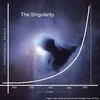
The Singularity describes a theoretical tipping point where technological progress, specifically in artificial intelligence, accelerates beyond human comprehension or control. The core idea: once machines can improve their own design, each generation of AI creates a smarter successor, faster and faster, until intelligence hits a vertical asymptote1. Think of it as the moment the line on a graph stops being a gentle curve and shoots straight up.

Online, "the singularity" lives a double life. In communities like r/singularity and tech forums, it's the subject of serious, often heated debate about timelines, AI safety, and the future of the species6. In meme culture, it's shorthand for absurd techno-optimism, usually delivered with a wink. "When the singularity comes, I won't need to leave my bed" is a common joke format, especially in Korean internet culture where "the singularity has come" became slang for anything bizarre or futuristic4.

The concept draws from Moore's law, the observation that transistor counts on integrated circuits double roughly every two years10. Singularity proponents argue this exponential trajectory will eventually produce machine intelligence that dwarfs our own. Critics point out that technological improvement tends to follow S-curves, accelerating and then leveling off, not shooting to infinity7.

The earliest known use of "singularity" in this context traces back to Hungarian-American mathematician John von Neumann. Physicist Stanislaw Ulam recalled in 1958 that a conversation with von Neumann "centered on the ever accelerating progress of technology and changes in the mode of human life, which gives the appearance of approaching some essential singularity in the history of the race beyond which human affairs, as we know them, could not continue"1.

In 1965, British mathematician I.J. Good formalized the "intelligence explosion" idea. He wrote that an ultraintelligent machine "could design even better machines; there would then unquestionably be an 'intelligence explosion,' and the intelligence of man would be left far behind"7. Good called it "the last invention that man need ever make"1.

The term truly entered the internet lexicon through Vernor Vinge, a computer scientist, mathematician, and science fiction author. At a NASA-sponsored symposium in March 1993, Vinge delivered "The Coming Technological Singularity: How to Survive in the Post-Human Era," published on his San Diego State University faculty page1. He opened with a declaration that became widely quoted: "Within thirty years, we will have the technological means to create superhuman intelligence. Shortly after, the human era will be ended"1. Vinge said he'd "be surprised if this event occurs before 2005 or after 2030"1.

Origin & Background

Platform
NASA symposium / SDSU faculty website (Vinge's essay), Reddit / 4chan / forums (internet spread)
Key People
Vernor Vinge, John von Neumann, I.J. Good, Ray Kurzweil
Date
1993

The earliest known use of "singularity" in this context traces back to Hungarian-American mathematician John von Neumann. Physicist Stanislaw Ulam recalled in 1958 that a conversation with von Neumann "centered on the ever accelerating progress of technology and changes in the mode of human life, which gives the appearance of approaching some essential singularity in the history of the race beyond which human affairs, as we know them, could not continue".

In 1965, British mathematician I.J. Good formalized the "intelligence explosion" idea. He wrote that an ultraintelligent machine "could design even better machines; there would then unquestionably be an 'intelligence explosion,' and the intelligence of man would be left far behind". Good called it "the last invention that man need ever make".

The term truly entered the internet lexicon through Vernor Vinge, a computer scientist, mathematician, and science fiction author. At a NASA-sponsored symposium in March 1993, Vinge delivered "The Coming Technological Singularity: How to Survive in the Post-Human Era," published on his San Diego State University faculty page. He opened with a declaration that became widely quoted: "Within thirty years, we will have the technological means to create superhuman intelligence. Shortly after, the human era will be ended". Vinge said he'd "be surprised if this event occurs before 2005 or after 2030".

How It Spread

Vinge's essay circulated through early internet communities, Usenet groups, and sci-fi fan networks throughout the 1990s. The concept attracted a dedicated following among technologists and futurists who saw exponential computing trends as evidence that the singularity wasn't science fiction but a near-term probability.

In 2000, AI researcher Eliezer Yudkowsky, along with Internet entrepreneurs Brian and Sabine Atkins, founded the Singularity Institute for Artificial Intelligence (later renamed the Machine Intelligence Research Institute) to research safe paths toward superintelligence. The organization's early community, centered around an email list called SL4 (Shock Level 4), drew Transhumanists, Extropians, and AGI researchers into a small but vocal online culture.

Ray Kurzweil's 2005 book *The Singularity Is Near: When Humans Transcend Biology* brought the concept to a mass audience. Kurzweil predicted the singularity would arrive by 2045 and laid out his "Law of Accelerating Returns," arguing that technological progress follows exponential, not linear, curves. The book generated intense online discussion and turned "the singularity" into a household phrase in tech circles.

On December 28, 2007, Something Awful published "The Lie of the Technological Singularity," poking fun at various futurist predictions. On January 29, 2008, the /r/singularity subreddit launched on Reddit, creating a permanent home for discussion of AI progress, transhumanism, and human enhancement. On July 6, 2008, Singularity Hub began publishing as a science news blog covering robotics, longevity, and related topics.

On February 10, 2011, *Time* magazine ran a cover story titled "2045: The Year Man Becomes Immortal," covering Kurzweil's predictions and the broader singularity movement. The piece described Singularitarianism with a now-famous line: "even though it sounds like science fiction, it isn't... while the Singularity appears to be, on the face of it, preposterous, it's an idea that rewards sober, careful evaluation".

How to Use This Meme

The singularity typically appears in online discourse in a few common patterns:

1

Sincere prediction: "AGI by 2029, singularity by 2045" style posts in tech forums and subreddits, debating timelines with varying degrees of evidence.

2

Ironic comfort: "When the singularity comes, I won't need [thing I currently lack]." Popular in gaming, anime, and tech communities as a half-joking way to express dissatisfaction with present reality.

3

Punchline format: Setting up a mundane AI failure (smart speaker misunderstanding a command, chatbot giving bad advice) and contrasting it with singularity hype. "They said the singularity was near. My Roomba just got stuck under the couch again".

4

Korean internet usage: "[Thing] that reached a singularity" applied to anything novel, bizarre, or impressively futuristic.

5

Dismissive retort: "The singularity isn't coming" or "always has been" astronaut meme format, used to deflate techno-utopian hype.

Cultural Impact

The singularity concept shaped both Hollywood and Silicon Valley in measurable ways. Films like *The Terminator* and *The Matrix* depicted post-singularity scenarios where machines enslave humanity, making the concept accessible to audiences who'd never read Vinge or Kurzweil. Isaac Asimov's *I, Robot* stories explored similar themes decades earlier.

*Time* magazine's 2011 cover story on the singularity marked a turning point, taking the idea from tech blogs to mainstream news. Singularity University, founded with NASA and Google backing in 2009 at NASA's Research Park, trained leaders in exponential thinking and made "singularity" a buzzword in corporate boardrooms.

IEEE Spectrum published a feature where ten prominent technologists shared their views on the singularity, ranging from enthusiastic to deeply skeptical. Critics like Paul Allen, Steven Pinker, and Roger Penrose argued that AI improvement would hit diminishing returns, not accelerate to infinity. Stuart Russell and Peter Norvig observed that most technologies follow S-curves: accelerating, then leveling off.

In South Korea, the 2016 AlphaGo match against Lee Sedol made "singularity" a household term overnight, spawning the Korean internet slang usage that persists today. The word jumped from futurist jargon to everyday Korean internet vocabulary, applied to everything from VR school ceremonies to absurd restaurant menus.

Full History

The singularity concept's journey from academic hypothesis to internet meme happened in distinct phases, each shaped by the online platforms of its era.

The Forum Years (2000-2007): After Yudkowsky founded the Singularity Institute, the online singularity community was tiny but intense. The SL4 mailing list and associated forums hosted philosophical debates about Friendly AI, the paperclip maximizer thought experiment (a superintelligence optimized for paperclip production that might rearrange all matter, including humans, into paperclips), and existential risk. Science fiction author Ken MacLeod described the singularity as "the Rapture for nerds" in his novel *The Cassini Division*, and the phrase stuck as shorthand for both the concept's appeal and its quasi-religious overtones. The singularity community's early discourse already contained what one observer called the "quasi-schizophrenic sublime element": a mix of terror and excitement at what might come.

Mainstream Breakthrough (2005-2011): Kurzweil's book pushed the singularity from niche forums into mainstream media. In 2009, Singularity University opened at the NASA Research Park in Silicon Valley, backed by NASA and Google, with the mission of preparing leaders for accelerating technological change. That same year, prominent Singularitarians participated in an AAAI conference discussing whether robots and computers might acquire autonomy. On the io9 science fiction blog, a May 2010 introduction to the singularity described it as "a point-of-no-return in history" where "every aspect of our society will be transformed". Future Timeline, a website chronicling predictions of future events, launched in October 2008 and made singularity-adjacent predictions a core feature.

The Meme Phase (2011-2020): As the concept saturated tech culture, it naturally became meme material. 4chan threads debated transhumanism with the platform's characteristic mix of sincerity and irony. The singularity became a go-to punchline in tech humor: "the singularity is near" became a setup for jokes about mundane AI failures like bad restaurant recommendations or misbehaving smart home devices. In Korean internet culture, "singularity has come" (특이점이 왔다) took on a life of its own after the 2016 AlphaGo vs. Lee Sedol Go match sparked massive public interest in AI. Korean users began applying the phrase to anything novel or strange: "The Japanese high school that reached a singularity" (about students attending an entrance ceremony in VR headsets) or "the menu that reached a singularity" (about a pub's absurd food names).

The AI Acceleration Era (2020-present): The launch of ChatGPT in late 2022 and the rapid advancement of large language models reignited singularity discourse with new urgency. The CEO of Anthropic stated publicly that AGI might be closer than expected. In San Francisco, conversations about the singularity became so common at dinner parties and coffee shops that they inspired satirical analysis. One mathematician, Cam Pedersen, fitted hyperbolic curves to five AI progress metrics and found a specific convergence date, noting with dry humor: "I am aware this is unhinged. We're doing it anyway". His analysis found that only one metric, the count of arXiv papers about AI emergence, showed genuine hyperbolic curvature. His unsettling conclusion: "the metric that's actually going hyperbolic is human attention, not machine capability".

The concept also fed into Korean internet slang in a way its original theorists never anticipated. Users on forums and communities began using "when the singularity comes" as a hopeful, half-ironic mantra: "When the singularity comes, we'll be able to date beautiful 2D girls" or "we'll be able to travel the world from under our blankets". The phrase became a coping mechanism for socially isolated users, carrying both genuine technological hope and self-aware humor.

Fun Facts

Vernor Vinge said he'd "be surprised if this event occurs before 2005 or after 2030." As of 2026, we're inside his prediction window.

Ray Kurzweil made his predictions in part based on computing cost trends. He estimated $1,000 would buy computing power equal to a single human brain "by around 2020".

The Korean internet slang "singularity has come" got applied to a *Science Donga* magazine article about a VR experience of traveling through the human digestive system as a snack. A commenter called it "a monthly magazine that has reached a singularity".

Cam Pedersen's mathematical model found that the one metric actually showing hyperbolic growth wasn't machine capability but the volume of human-written papers about AI emergence.

The Singularity Institute's early community used a "Shock Level" scale, with SL4 being the highest, indicating someone who had fully processed the implications of superintelligence.

Derivatives & Variations

Singularitarianism:

A movement defined by the belief that a technological singularity is likely and that deliberate action should ensure it benefits humanity. Eliezer Yudkowsky's 2000 "Singularitarian Principles" formalized the ideology[8].

The Methuselarity:

A term coined by aging researcher Aubrey de Grey describing the point where life expectancy increases by more than one year per year, meaning people effectively stop aging out of reach of future medicine[13].

"The Rapture for Nerds":

Ken MacLeod's satirical label for the singularity, drawn from an early-1990s *Extropy* essay and popularized in his novel *The Cassini Division*[3].

Korean "singularity has come" slang:

The phrase "특이점이 왔다" used to describe anything bizarre, novel, or impressively futuristic, originating after the AlphaGo match[4].

Singularity countdown projects:

Various online tools and analysis attempting to calculate exact singularity dates, such as Cam Pedersen's hyperbolic curve fitting that produced a date with "millisecond precision"[5].

Paperclip maximizer:

A thought experiment from the Singularity Institute community about a superintelligent AI optimized for paperclip production that destroys humanity as a side effect. Widely memed in AI safety circles[2].

Frequently Asked Questions

TheSingularity

1993Concept / discussion topic / catchphraseactive

Also known as: The Technological Singularity · The Rapture for Nerds

The Singularity is Vernor Vinge's 1993 concept depicting superintelligent AI triggering exponential self-improvement, debated online as both sincere prediction and ironic meme.

The Singularity is a hypothetical future event where artificial intelligence surpasses human intelligence and triggers an uncontrollable, irreversible feedback loop of self-improvement. First discussed by mathematician John von Neumann in the 1950s and popularized online by science fiction writer Vernor Vinge's 1993 essay, the concept became a major internet discussion topic and meme through Ray Kurzweil's 2005 book *The Singularity Is Near*. Online, "the singularity" functions as both sincere futurist discourse and an ironic punchline, with communities ranging from r/singularity on Reddit to 4chan threads debating whether superintelligent AI will save or destroy humanity.

TL;DR

The Singularity is a hypothetical future event where artificial intelligence surpasses human intelligence and triggers an uncontrollable, irreversible feedback loop of self-improvement.

Overview

The Singularity describes a theoretical tipping point where technological progress, specifically in artificial intelligence, accelerates beyond human comprehension or control. The core idea: once machines can improve their own design, each generation of AI creates a smarter successor, faster and faster, until intelligence hits a vertical asymptote. Think of it as the moment the line on a graph stops being a gentle curve and shoots straight up.

Online, "the singularity" lives a double life. In communities like r/singularity and tech forums, it's the subject of serious, often heated debate about timelines, AI safety, and the future of the species. In meme culture, it's shorthand for absurd techno-optimism, usually delivered with a wink. "When the singularity comes, I won't need to leave my bed" is a common joke format, especially in Korean internet culture where "the singularity has come" became slang for anything bizarre or futuristic.

The concept draws from Moore's law, the observation that transistor counts on integrated circuits double roughly every two years. Singularity proponents argue this exponential trajectory will eventually produce machine intelligence that dwarfs our own. Critics point out that technological improvement tends to follow S-curves, accelerating and then leveling off, not shooting to infinity.

The earliest known use of "singularity" in this context traces back to Hungarian-American mathematician John von Neumann. Physicist Stanislaw Ulam recalled in 1958 that a conversation with von Neumann "centered on the ever accelerating progress of technology and changes in the mode of human life, which gives the appearance of approaching some essential singularity in the history of the race beyond which human affairs, as we know them, could not continue".

In 1965, British mathematician I.J. Good formalized the "intelligence explosion" idea. He wrote that an ultraintelligent machine "could design even better machines; there would then unquestionably be an 'intelligence explosion,' and the intelligence of man would be left far behind". Good called it "the last invention that man need ever make".

The term truly entered the internet lexicon through Vernor Vinge, a computer scientist, mathematician, and science fiction author. At a NASA-sponsored symposium in March 1993, Vinge delivered "The Coming Technological Singularity: How to Survive in the Post-Human Era," published on his San Diego State University faculty page. He opened with a declaration that became widely quoted: "Within thirty years, we will have the technological means to create superhuman intelligence. Shortly after, the human era will be ended". Vinge said he'd "be surprised if this event occurs before 2005 or after 2030".

Origin & Background

Platform
NASA symposium / SDSU faculty website (Vinge's essay), Reddit / 4chan / forums (internet spread)
Key People
Vernor Vinge, John von Neumann, I.J. Good, Ray Kurzweil
Date
1993

The earliest known use of "singularity" in this context traces back to Hungarian-American mathematician John von Neumann. Physicist Stanislaw Ulam recalled in 1958 that a conversation with von Neumann "centered on the ever accelerating progress of technology and changes in the mode of human life, which gives the appearance of approaching some essential singularity in the history of the race beyond which human affairs, as we know them, could not continue".

In 1965, British mathematician I.J. Good formalized the "intelligence explosion" idea. He wrote that an ultraintelligent machine "could design even better machines; there would then unquestionably be an 'intelligence explosion,' and the intelligence of man would be left far behind". Good called it "the last invention that man need ever make".

The term truly entered the internet lexicon through Vernor Vinge, a computer scientist, mathematician, and science fiction author. At a NASA-sponsored symposium in March 1993, Vinge delivered "The Coming Technological Singularity: How to Survive in the Post-Human Era," published on his San Diego State University faculty page. He opened with a declaration that became widely quoted: "Within thirty years, we will have the technological means to create superhuman intelligence. Shortly after, the human era will be ended". Vinge said he'd "be surprised if this event occurs before 2005 or after 2030".

How It Spread

Vinge's essay circulated through early internet communities, Usenet groups, and sci-fi fan networks throughout the 1990s. The concept attracted a dedicated following among technologists and futurists who saw exponential computing trends as evidence that the singularity wasn't science fiction but a near-term probability.

In 2000, AI researcher Eliezer Yudkowsky, along with Internet entrepreneurs Brian and Sabine Atkins, founded the Singularity Institute for Artificial Intelligence (later renamed the Machine Intelligence Research Institute) to research safe paths toward superintelligence. The organization's early community, centered around an email list called SL4 (Shock Level 4), drew Transhumanists, Extropians, and AGI researchers into a small but vocal online culture.

Ray Kurzweil's 2005 book *The Singularity Is Near: When Humans Transcend Biology* brought the concept to a mass audience. Kurzweil predicted the singularity would arrive by 2045 and laid out his "Law of Accelerating Returns," arguing that technological progress follows exponential, not linear, curves. The book generated intense online discussion and turned "the singularity" into a household phrase in tech circles.

On December 28, 2007, Something Awful published "The Lie of the Technological Singularity," poking fun at various futurist predictions. On January 29, 2008, the /r/singularity subreddit launched on Reddit, creating a permanent home for discussion of AI progress, transhumanism, and human enhancement. On July 6, 2008, Singularity Hub began publishing as a science news blog covering robotics, longevity, and related topics.

On February 10, 2011, *Time* magazine ran a cover story titled "2045: The Year Man Becomes Immortal," covering Kurzweil's predictions and the broader singularity movement. The piece described Singularitarianism with a now-famous line: "even though it sounds like science fiction, it isn't... while the Singularity appears to be, on the face of it, preposterous, it's an idea that rewards sober, careful evaluation".

How to Use This Meme

The singularity typically appears in online discourse in a few common patterns:

1

Sincere prediction: "AGI by 2029, singularity by 2045" style posts in tech forums and subreddits, debating timelines with varying degrees of evidence.

2

Ironic comfort: "When the singularity comes, I won't need [thing I currently lack]." Popular in gaming, anime, and tech communities as a half-joking way to express dissatisfaction with present reality.

3

Punchline format: Setting up a mundane AI failure (smart speaker misunderstanding a command, chatbot giving bad advice) and contrasting it with singularity hype. "They said the singularity was near. My Roomba just got stuck under the couch again".

4

Korean internet usage: "[Thing] that reached a singularity" applied to anything novel, bizarre, or impressively futuristic.

5

Dismissive retort: "The singularity isn't coming" or "always has been" astronaut meme format, used to deflate techno-utopian hype.

Cultural Impact

The singularity concept shaped both Hollywood and Silicon Valley in measurable ways. Films like *The Terminator* and *The Matrix* depicted post-singularity scenarios where machines enslave humanity, making the concept accessible to audiences who'd never read Vinge or Kurzweil. Isaac Asimov's *I, Robot* stories explored similar themes decades earlier.

*Time* magazine's 2011 cover story on the singularity marked a turning point, taking the idea from tech blogs to mainstream news. Singularity University, founded with NASA and Google backing in 2009 at NASA's Research Park, trained leaders in exponential thinking and made "singularity" a buzzword in corporate boardrooms.

IEEE Spectrum published a feature where ten prominent technologists shared their views on the singularity, ranging from enthusiastic to deeply skeptical. Critics like Paul Allen, Steven Pinker, and Roger Penrose argued that AI improvement would hit diminishing returns, not accelerate to infinity. Stuart Russell and Peter Norvig observed that most technologies follow S-curves: accelerating, then leveling off.

In South Korea, the 2016 AlphaGo match against Lee Sedol made "singularity" a household term overnight, spawning the Korean internet slang usage that persists today. The word jumped from futurist jargon to everyday Korean internet vocabulary, applied to everything from VR school ceremonies to absurd restaurant menus.

Full History

The singularity concept's journey from academic hypothesis to internet meme happened in distinct phases, each shaped by the online platforms of its era.

The Forum Years (2000-2007): After Yudkowsky founded the Singularity Institute, the online singularity community was tiny but intense. The SL4 mailing list and associated forums hosted philosophical debates about Friendly AI, the paperclip maximizer thought experiment (a superintelligence optimized for paperclip production that might rearrange all matter, including humans, into paperclips), and existential risk. Science fiction author Ken MacLeod described the singularity as "the Rapture for nerds" in his novel *The Cassini Division*, and the phrase stuck as shorthand for both the concept's appeal and its quasi-religious overtones. The singularity community's early discourse already contained what one observer called the "quasi-schizophrenic sublime element": a mix of terror and excitement at what might come.

Mainstream Breakthrough (2005-2011): Kurzweil's book pushed the singularity from niche forums into mainstream media. In 2009, Singularity University opened at the NASA Research Park in Silicon Valley, backed by NASA and Google, with the mission of preparing leaders for accelerating technological change. That same year, prominent Singularitarians participated in an AAAI conference discussing whether robots and computers might acquire autonomy. On the io9 science fiction blog, a May 2010 introduction to the singularity described it as "a point-of-no-return in history" where "every aspect of our society will be transformed". Future Timeline, a website chronicling predictions of future events, launched in October 2008 and made singularity-adjacent predictions a core feature.

The Meme Phase (2011-2020): As the concept saturated tech culture, it naturally became meme material. 4chan threads debated transhumanism with the platform's characteristic mix of sincerity and irony. The singularity became a go-to punchline in tech humor: "the singularity is near" became a setup for jokes about mundane AI failures like bad restaurant recommendations or misbehaving smart home devices. In Korean internet culture, "singularity has come" (특이점이 왔다) took on a life of its own after the 2016 AlphaGo vs. Lee Sedol Go match sparked massive public interest in AI. Korean users began applying the phrase to anything novel or strange: "The Japanese high school that reached a singularity" (about students attending an entrance ceremony in VR headsets) or "the menu that reached a singularity" (about a pub's absurd food names).

The AI Acceleration Era (2020-present): The launch of ChatGPT in late 2022 and the rapid advancement of large language models reignited singularity discourse with new urgency. The CEO of Anthropic stated publicly that AGI might be closer than expected. In San Francisco, conversations about the singularity became so common at dinner parties and coffee shops that they inspired satirical analysis. One mathematician, Cam Pedersen, fitted hyperbolic curves to five AI progress metrics and found a specific convergence date, noting with dry humor: "I am aware this is unhinged. We're doing it anyway". His analysis found that only one metric, the count of arXiv papers about AI emergence, showed genuine hyperbolic curvature. His unsettling conclusion: "the metric that's actually going hyperbolic is human attention, not machine capability".

The concept also fed into Korean internet slang in a way its original theorists never anticipated. Users on forums and communities began using "when the singularity comes" as a hopeful, half-ironic mantra: "When the singularity comes, we'll be able to date beautiful 2D girls" or "we'll be able to travel the world from under our blankets". The phrase became a coping mechanism for socially isolated users, carrying both genuine technological hope and self-aware humor.

Fun Facts

Vernor Vinge said he'd "be surprised if this event occurs before 2005 or after 2030." As of 2026, we're inside his prediction window.

Ray Kurzweil made his predictions in part based on computing cost trends. He estimated $1,000 would buy computing power equal to a single human brain "by around 2020".

The Korean internet slang "singularity has come" got applied to a *Science Donga* magazine article about a VR experience of traveling through the human digestive system as a snack. A commenter called it "a monthly magazine that has reached a singularity".

Cam Pedersen's mathematical model found that the one metric actually showing hyperbolic growth wasn't machine capability but the volume of human-written papers about AI emergence.

The Singularity Institute's early community used a "Shock Level" scale, with SL4 being the highest, indicating someone who had fully processed the implications of superintelligence.

Derivatives & Variations

Singularitarianism:

A movement defined by the belief that a technological singularity is likely and that deliberate action should ensure it benefits humanity. Eliezer Yudkowsky's 2000 "Singularitarian Principles" formalized the ideology[8].

The Methuselarity:

A term coined by aging researcher Aubrey de Grey describing the point where life expectancy increases by more than one year per year, meaning people effectively stop aging out of reach of future medicine[13].

"The Rapture for Nerds":

Ken MacLeod's satirical label for the singularity, drawn from an early-1990s *Extropy* essay and popularized in his novel *The Cassini Division*[3].

Korean "singularity has come" slang:

The phrase "특이점이 왔다" used to describe anything bizarre, novel, or impressively futuristic, originating after the AlphaGo match[4].

Singularity countdown projects:

Various online tools and analysis attempting to calculate exact singularity dates, such as Cam Pedersen's hyperbolic curve fitting that produced a date with "millisecond precision"[5].

Paperclip maximizer:

A thought experiment from the Singularity Institute community about a superintelligent AI optimized for paperclip production that destroys humanity as a side effect. Widely memed in AI safety circles[2].

Frequently Asked Questions