Baka

2003Catchphrase / slangactive

Also known as: Baka-yaro · Bakamono

"Baka" is a Japanese word meaning "fool" or "idiot" that became one of the most recognized loanwords in English-speaking internet culture, primarily through anime fandom. Originating as a common insult in Japanese dating back to the 14th century, the word spread online through otaku communities, Urban Dictionary definitions starting in 2003, and the iconic tsundere character trope where characters stammer "b-baka!" while blushing. The term sits at the intersection of genuine anime appreciation and ironic weeb humor, making it a staple of both sincere and satirical internet communication.

Overview

"Baka" (馬鹿 / バカ / ばか) is the most frequently used insult in the Japanese language5. In Western internet culture, the word took on a life of its own as anime fans adopted it into everyday online speech. The term is most closely associated with the "tsundere" character archetype in anime, where a girl who secretly has a crush on someone will shout "Baka!" while blushing and looking away3.

The meme version of "baka" typically appears in two forms. First, as a straightforward substitute for "idiot" or "fool" in English conversations, often used by fans signaling their anime knowledge2. Second, and more memetically potent, as part of the stuttering tsundere impression: "I-it's not like I like you or anything... b-baka!" This second form is frequently paired with photoshopped images of animals or people given anime-style blushing cheeks and large eyes3.

The word "baka" has ancient roots. The earliest known written usage appears in the historical epic *Taiheiki*, where "bakamono" (馬鹿者) was used as an insult in 1342 during Japan's Nanboku-chō period5. The Ashikaga commander Toki Yoritō reportedly used the term while drunkenly refusing to dismount for retired Emperor Kōgon5.

Two competing etymologies exist for the word. The oldest theory traces it to a Chinese idiom about the Qin dynasty traitor Zhao Gao (died 207 BCE), who presented a deer to the emperor but called it a horse to test which officials would contradict him5. The characters 馬鹿 literally translate to "horse deer," reflecting this story. The second, more linguistically supported theory suggests Buddhist priests borrowed the word from Sanskrit, where "moha" means "bewilderment" or "folly" and "mahallaka" means "senile" or "stupid"5.

The modern definition used today was thought to be established around 1663-1733, when Edo-period scholar Amano Sadakage connected the word to its Sanskrit roots35.

Origin & Background

Platform
Urban Dictionary (English-language adoption), anime fan communities (cultural origin)
Creator
Unknown
Date
2003 (online spread)

The word "baka" has ancient roots. The earliest known written usage appears in the historical epic *Taiheiki*, where "bakamono" (馬鹿者) was used as an insult in 1342 during Japan's Nanboku-chō period5. The Ashikaga commander Toki Yoritō reportedly used the term while drunkenly refusing to dismount for retired Emperor Kōgon5.

Two competing etymologies exist for the word. The oldest theory traces it to a Chinese idiom about the Qin dynasty traitor Zhao Gao (died 207 BCE), who presented a deer to the emperor but called it a horse to test which officials would contradict him5. The characters 馬鹿 literally translate to "horse deer," reflecting this story. The second, more linguistically supported theory suggests Buddhist priests borrowed the word from Sanskrit, where "moha" means "bewilderment" or "folly" and "mahallaka" means "senile" or "stupid"5.

The modern definition used today was thought to be established around 1663-1733, when Edo-period scholar Amano Sadakage connected the word to its Sanskrit roots35.

How It Spread

"Baka" entered English-speaking internet culture through anime fan communities in the early 2000s. Multiple definitions appeared on Urban Dictionary starting in 2003, with users explaining the word's meaning and usage to non-Japanese speakers2. These entries ranged from simple translations to detailed explanations of regional differences between "baka" and the related insult "aho" (which carries different weight in eastern versus western Japan)4.

The word's online spread accelerated alongside the anime boom of the mid-2000s. As streaming platforms made anime more accessible to Western audiences, viewers picked up on "baka" as one of the easiest Japanese words to recognize and adopt. The term became so associated with enthusiastic Western anime fans that it was frequently cited as the most overused word by "otakus, otakets, and wapanese"4.

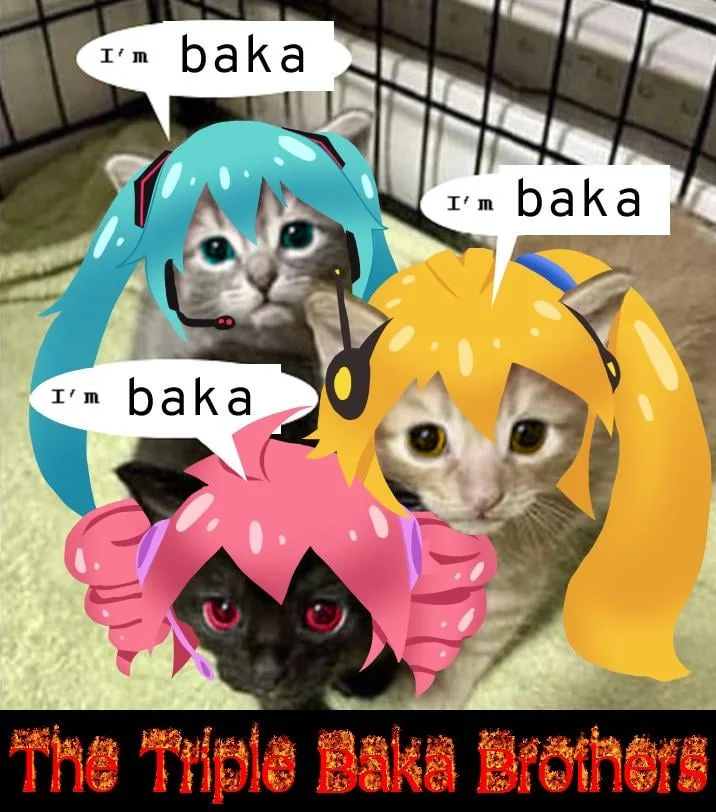
The tsundere meme format gave "baka" its strongest visual identity online. Photoshopped images of animals and people with anime-style blush marks and oversized eyes, captioned with stuttering phrases like "i-it's not like I like you, b-baka!", spread across platforms including Tumblr, Reddit, and later TikTok3. These images play on the gap between tough-talking denial and obvious affection, a dynamic central to tsundere characters in anime.

The word also appeared in popular anime titles and songs, including *Baka to Test to Shōkanjū* and the Vocaloid track "Triple Baka," which further reinforced its recognition among fans3.

Platforms

DiscordTikTokTwitterYouTubeReddit

Timeline

2020

Gains popularity in anime and gaming communities

2021

Spreads across mainstream anime culture

2022-01-01

Baka reached mainstream popularity and media coverage

2023

Remains active in anime and gaming spaces

2025-01-01

Baka is still actively used and shared across platforms

View on Google Trends

How to Use This Meme

The most common ways to use "baka" in meme contexts:

As a simple insult substitute: Drop "baka" where you'd normally say "idiot" or "fool" in a conversation, typically in anime-adjacent spaces or when being deliberately weeby. "You forgot to save your game? Baka."

The tsundere impression: Write a flustered denial with stuttering, ending in "baka." The format usually follows: "I-it's not like I [positive feeling] or anything... b-baka!" This works best with an accompanying image of something cute edited to have anime blush marks.

Image edits: Take a photo of an animal (cats and dogs work best) or person, add pink blush circles to the cheeks and large sparkly anime eyes using Photoshop or a meme editor, then caption it with a tsundere-style "baka" phrase3.

Ironic usage: Use "baka" with obvious self-awareness to poke fun at otaku culture or your own anime obsession. The humor comes from the contrast between using Japanese slang and acknowledging how cringe it is.

Create Your Own

Cultural Impact

"Baka" crossed from niche anime fan vocabulary into broader internet slang, becoming recognizable even to people who don't watch anime. The word's simplicity (two syllables, easy to remember) and its frequent appearance in dubbed and subtitled anime made it one of the most accessible Japanese loanwords in online English.

The tsundere "baka" trope influenced how Western audiences understand and parody anime character archetypes. The stuttering denial format became a template for humor far beyond anime contexts, applied to everything from political commentary to pet photos.

Linguistically, "baka" sits in an interesting space as a word with eight distinct interrelated meanings in Japanese, ranging from "ass; jerk" to "worthless" to "absurdly; extremely"5. Western internet users typically flatten this to just "idiot," losing the word's breadth but gaining a punchy, universal insult.

Fun Facts

In western Japan (including Osaka), calling someone "baka" is a serious insult, while the alternative "aho" is gentler. In eastern Japan (including Tokyo), the severity is reversed4.

The kanji 馬鹿 literally means "horse deer," and an obscure Japanese yōkai called "mumashika" is depicted as a demon with a horse's head and deer's body, based on these same characters5.

"Baka" also means "cow" in Tagalog (Filipino), leading to occasional confusion in multilingual internet spaces4.

A *Bunmei*-era dictionary from 1469-1487 recorded "baka" with alternative kanji spellings including 母嫁 ("mother bride") and 破家 ("break family")5.

The word was applied by Allied forces as a nickname for Japan's Yokosuka MXY-7 Ohka kamikaze planes during World War II1.

Derivatives & Variations

Baka reaction images

A variation of Baka

(2020)

Anime characters saying baka compilations

A variation of Baka

(2020)

Ironic baka usage in non-anime contexts

A variation of Baka

(2020)

Frequently Asked Questions

References (5)

  1. 1
    Bakaencyclopedia
  2. 2
  3. 3
  4. 4
  5. 5