Fridging
Published November 1, 2026
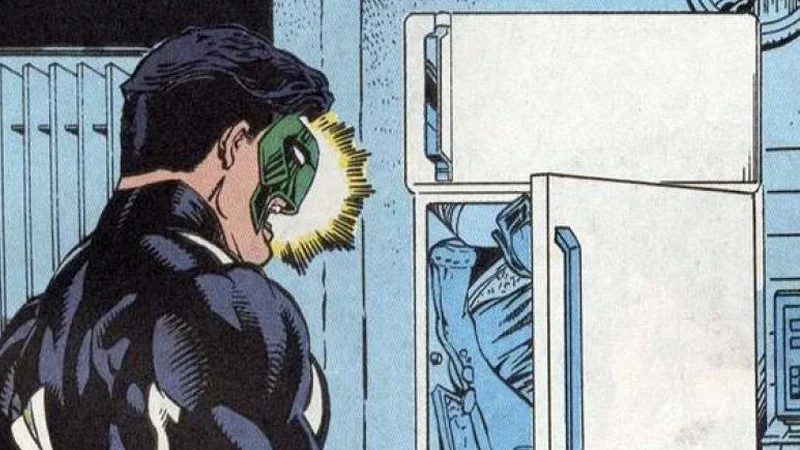
Fridging is a cultural criticism term for the trope of killing, harming or depowering a female character to motivate a male hero's story arc. Comic book writer Gail Simone coined it in March 1999 after cataloging the pattern on her site Women in Refrigerators, named for a 1994 Green Lantern issue in which the hero's girlfriend was murdered and stuffed in an appliance. By 2018, critics were applying the label to the opening of Deadpool 2.
Overview
Fridging describes a storytelling shortcut in which a female character is killed, maimed, raped or otherwise written out of her own agency so a male lead has something to be sad about or avenge1. The word points at the structural problem, not any single scene: critics use it when a woman's suffering functions as fuel for someone else's arc rather than her own2.
The reference image is literal. In Green Lantern #54, hero Kyle Rayner comes home to find his girlfriend Alexandra DeWitt murdered and stuffed inside his refrigerator by the villain Major Force2. Gail Simone's catalog treated that panel as a particularly on-the-nose example of a much wider pattern across superhero comics, and the appliance stuck as the metaphor1.
Fridging migrated out of comics discourse into film and TV criticism, where reviewers apply it to any cold-open girlfriend death or sister-in-the-morgue setup used to launch a male protagonist's revenge plot3.
Gallery
Origin & Background
How It Spread
Timeline
1994
DC Comics publishes Green Lantern #54, in which Alexandra DeWitt is murdered and left in a refrigerator for Kyle Rayner to find.
1999-03
Gail Simone launches the Women in Refrigerators website, cataloging female comic characters who were killed, depowered or assaulted.
2013-10-01
Jeffrey A. Brown discusses the trope in Dangerous Curves: Action Heroines, Gender, Fetishism, and Popular Culture.
2018-05-18
Deadpool 2 opens with the death of Vanessa, prompting widespread criticism of the scene as fridging.
How to Use This Meme
In criticism, writers apply fridging to a specific scene by naming the character killed and the male hero whose arc her death serves. A common construction is "X gets fridged in the first act so Y can go on a revenge quest." The label is strongest when the dead character had little screen time of her own, when her inner life is unexplored before the death, and when the camera lingers on the male survivor's grief rather than her story3.
Frequently Asked Questions
References (6)
- 1
- 2
- 3
- 4
- 5
- 6