Girl Math

2023Slang / Social Media Trendsemi-active

Also known as: Girl Math Meme · GIRL MATH · Girl Math · GM

Girl Math is a TikTok-born slang term describing the playful, deliberately illogical rationalizations women use to justify purchases and spending habits. The trend took off in August 2023, spinning out of the earlier "Girl Dinner" wave, and quickly spread across TikTok, Twitter/X, and mainstream media. It sparked both a massive comedic trend and serious debate about gender stereotypes and financial literacy.

Overview

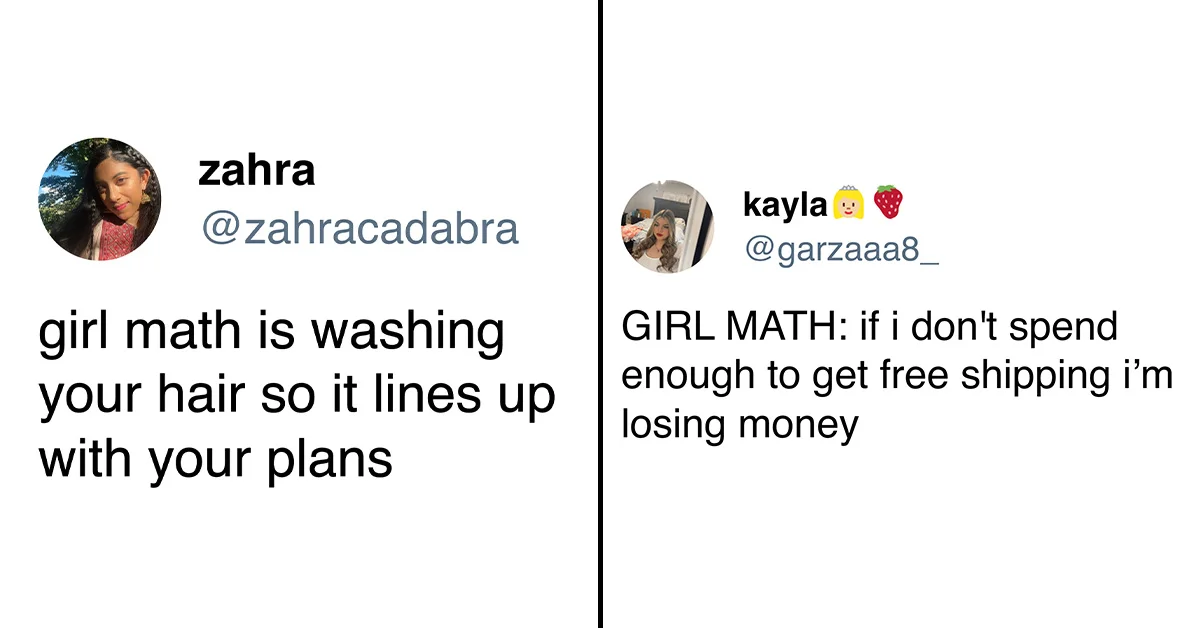
Girl Math refers to a set of humorous financial "rules" that twist basic arithmetic to make any purchase feel justified. The core joke: money already spent doesn't count, anything under five dollars is basically free, cash purchases are invisible, and refund money is bonus income. The trend plays on exaggerated consumer logic, turning everyday spending decisions into a comedic formula. People share their own Girl Math examples in short videos or tweets, usually with a knowing wink that none of it holds up to actual scrutiny3.

The format is simple. Someone states a purchase or financial situation, then applies Girl Math logic to reframe it as a deal, free money, or a smart investment. The humor comes from the gap between the confident delivery and the obviously flawed reasoning5.

The concept traces back to the New Zealand radio show *Fletch, Vaughan & Hayley* on ZM. On July 30, 2023, hosts Carl Fletcher, Vaughan Smith, and Hayley Sproull ran a segment where they helped callers justify ridiculous purchases using tongue-in-cheek math4. The bit didn't break out internationally on its own, but it planted the seed.

Three days later, on August 2, 2023, TikToker @samjamessssss posted a video encouraging the shift from "Girl Dinner" (another trending format about women's minimalist meals) to Girl Math3. She rattled off examples like "Anything under five dollars feels free" and "If you return an item for $50 and then spend $100, it's like only spending $50." The video pulled in 3.7 million views and over 630,000 likes4.

Origin & Background

Platform
ZM Radio New Zealand (concept), TikTok (viral spread)
Key People
Carl Fletcher, Vaughan Smith, and Hayley Sproull, @samjamessssss
Date
2023

The concept traces back to the New Zealand radio show *Fletch, Vaughan & Hayley* on ZM. On July 30, 2023, hosts Carl Fletcher, Vaughan Smith, and Hayley Sproull ran a segment where they helped callers justify ridiculous purchases using tongue-in-cheek math4. The bit didn't break out internationally on its own, but it planted the seed.

Three days later, on August 2, 2023, TikToker @samjamessssss posted a video encouraging the shift from "Girl Dinner" (another trending format about women's minimalist meals) to Girl Math3. She rattled off examples like "Anything under five dollars feels free" and "If you return an item for $50 and then spend $100, it's like only spending $50." The video pulled in 3.7 million views and over 630,000 likes4.

How It Spread

The trend moved fast after @samjamessssss's video. By mid-August 2023, TikTokers were flooding the app with their own Girl Math takes. On August 15, @danielasotohealth posted a video that picked up over 151,000 likes in five weeks3. The format was easy to riff on: state your purchase, apply the logic, deliver it deadpan.

One of the biggest viral moments came from Marley Brown (@thebobmarleyy), a college freshman who filmed a four-part series explaining Girl Math to her increasingly exasperated father2. Part one hit 1.6 million views. Part three, where she told her dad that "anything less than $5 is free" and that Starbucks app money "doesn't count," exploded to 11.5 million views2. Her father's reactions ("No. What if you buy a hundred things that are $4?" / "No. It's $400, which is obviously not free.") made the series a fan favorite.

On September 7, TikToker @casandra.mazzucco posted a video about justifying purchases with a friend using Girl Math logic, racking up over 2 million likes in three weeks3.

The trend jumped to Twitter/X almost immediately. By August 16, 2023, users were already riffing on a male counterpart. @BowTieBernard joked that "Boy Math" was about buying items in bulk to save money long-term3. By mid-September, Boy Math had taken on a sharper edge, with tweets about men inflating their height to 6 feet and dodging child support gaining thousands of retweets3.

Major publications picked up the story through August and September 2023. BuzzFeed, The Washington Post, and The Independent all ran explainers12. Brown told The Independent that Girl Math was "a way of rationalizing purchases and spending money, so that people can spend without guilt," adding that "it's not a correct way of thinking, nor is it financially responsible, but as long as people understand it's a joke, then I don't see how any harm could come from it"2.

Platforms

RedditTwitterTikTokInstagram

Timeline

2023

Girl Math first appears online

2023

Gains traction on social media

2024

Reaches peak popularity

View on Google Trends

How to Use This Meme

Girl Math works as a comedic formula anyone can apply:

1

State your purchase or financial situation. ("I bought $300 shoes.")

2

Apply twisted logic to reframe the cost. ("That's less than a dollar a day if I wear them for a year.")

3

Declare the purchase justified, free, or a net positive. ("Basically free.")

Create Your Own

Cultural Impact

Girl Math landed squarely in mainstream conversation. Beyond TikTok and Twitter, the trend drew attention from behavioral economists and financial experts. The Wikipedia entry on Girl Math connects the trend to established cognitive biases like the "cashless effect," where people spend more freely with digital payments because the "pain of payment" is lower than handing over physical cash4. The "cost-per-use" rationalization, a Girl Math staple, maps directly onto the framing effect studied in behavioral economics4.

Financial experts flagged real concerns beneath the jokes. Rationalizing purchases through Girl Math logic can add up over time and interfere with saving plans4. One TikTok commenter pushed back: "Girl math only applies to girls who never had money problems. I can assure you that when [my] bank account is empty we don't think like that"2.

The trend also drew criticism for reinforcing stereotypes about women and math. Critics argued that labeling illogical spending calculations as "girl" math, even as a joke, trivializes women's mathematical abilities and feeds into long-standing biases about gendered reasoning4. Research on stereotype threat suggests that exposure to these messages can shape girls' self-perception and performance on quantitative tasks4.

Still, many women embraced the format as a form of bonding humor. TikToker Samantha noted it's "still important to practice girl math within your financial means"1. The trend's self-aware tone meant most participants were laughing at the logic, not endorsing it.

Fun Facts

The original concept came from a New Zealand morning radio show, not TikTok. The ZM hosts were helping callers justify bad purchases weeks before TikTok picked it up4.

Marley Brown, whose dad videos went mega-viral, told Newsweek she and her father had been joking about "how dumb Girl Math is" for years before she ever filmed a TikTok about it2.

The "cost-per-wear" Girl Math move is actually a recognized marketing technique that companies use in product advertising5.

Girl Math's core rationalizations map onto at least three named cognitive biases: the cashless effect, the framing effect, and mental accounting4.

Derivatives & Variations

Boy Math:

The male counterpart that emerged on Twitter/X in August 2023. Early versions joked about bulk-buying logic, but by September it shifted to mocking men who round up their height, overstate body counts, or avoid financial responsibilities like child support[3].

Girl Dinner:

The precursor trend about women's minimalist solo meals (a plate of cheese and crackers, snacks as dinner). Girl Math directly spun off from the Girl Dinner wave in summer 2023[3].

Frequently Asked Questions