Homestar Runner

2000Web cartoon series / internet subcultureclassic

Also known as: H*R · HSR · Homestar

Homestar Runner is an American animated web series created by brothers Mike and Matt Chapman (The Brothers Chaps) that became one of the most popular Flash cartoon destinations of the early 2000s. Launched on January 1, 2000, the site spread entirely through word of mouth and became a defining example of early internet animation culture3. Its breakout character Strong Bad and his email-answering segments turned the site into a cultural touchstone for a generation of internet users who grew up trading links via email and instant messaging1.

Overview

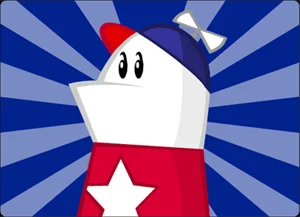
Homestar Runner is a web-based cartoon universe set in "Free Country, USA," populated by a cast of armless, limbless, and otherwise anatomically unusual characters3. The titular character is a well-meaning but dim athlete with a speech impediment that turns his R's into W's, known for his love of "Fluffy Puff Marshmallows" and "Melonade"4. He wears a propeller beanie and a red shirt with a white star on it.

The series blends surreal humor with heavy references to 1970s, 80s, and 90s pop culture, particularly video games, classic television, and popular music3. Matt Chapman described the cast as "a world full of weird, sort-of-human characters that are missing a lot of limbs"2. While Homestar is the title character, the site's most popular feature by far was Strong Bad Email (or "SBEmails"), where the wrestling-mask-wearing villain Strong Bad answered viewer emails with elaborate animated responses.

The whole thing started in Atlanta in 1996 when University of Georgia students Mike Chapman and Craig Zobel wrote a picture book called *The Homestar Runner Enters the Strongest Man in the World Contest* while working summer jobs during the 1996 Olympics3. The name "Homestar Runner" came from an inside joke between the Chapman brothers and their childhood friend James Huggins. James had seen a local grocery store commercial featuring the Atlanta Braves and, knowing nothing about baseball positions, did an old-timey radio impression calling a player a "homestar runner for the Braves"3.

Mike and Craig printed only five to ten copies of the book to share with friends. Their father secretly sent the manuscript to about 80 publishers, but every response was a rejection3. The project sat dormant until around 1999, when Mike noticed how popular Flash animation was getting online. He and his younger brother Matt taught themselves Macromedia Flash and used the old children's book characters as practice material3. The website homestarrunner.com launched on New Year's Day 2000, with Mike handling animation, Matt voicing the male characters, and Mike's then-girlfriend (now wife) Missy Palmer voicing Marzipan3.

Origin & Background

Platform
HomestarRunner.com (dedicated website)
Key People
Mike Chapman, Matt Chapman, Craig Zobel
Date
2000

The whole thing started in Atlanta in 1996 when University of Georgia students Mike Chapman and Craig Zobel wrote a picture book called *The Homestar Runner Enters the Strongest Man in the World Contest* while working summer jobs during the 1996 Olympics3. The name "Homestar Runner" came from an inside joke between the Chapman brothers and their childhood friend James Huggins. James had seen a local grocery store commercial featuring the Atlanta Braves and, knowing nothing about baseball positions, did an old-timey radio impression calling a player a "homestar runner for the Braves"3.

Mike and Craig printed only five to ten copies of the book to share with friends. Their father secretly sent the manuscript to about 80 publishers, but every response was a rejection3. The project sat dormant until around 1999, when Mike noticed how popular Flash animation was getting online. He and his younger brother Matt taught themselves Macromedia Flash and used the old children's book characters as practice material3. The website homestarrunner.com launched on New Year's Day 2000, with Mike handling animation, Matt voicing the male characters, and Mike's then-girlfriend (now wife) Missy Palmer voicing Marzipan3.

How It Spread

The site grew slowly at first, spreading entirely through word of mouth with zero advertising2. By 2001 the Chapmans were selling "a few dozen" T-shirts. The breakthrough came when Mike moved to New York in mid-2001 and the brothers launched Strong Bad Email, intended as a weekly feature. The first SBEmail, "some kinda robot," kicked off a series that quickly became the site's main draw3. When new episodes were late, fans sent angry emails demanding them. Matt later said it was "a cool feeling to know you're as important as a cup of coffee or morning crossword to some folks"3.

Their father suggested Matt quit his full-time job to focus on Homestar Runner, and both brothers eventually worked on the cartoons full time3. The site sustained itself through merchandise sales from an online store2. A spike in traffic around 2004 coincided with the site being featured on NPR, where the Houston Chronicle's Dwight Silverman described the phenomenon of parents discovering their kids trading links to animation sites by email and instant messaging1. At its peak, homestarrunner.com was one of the most-visited Flash cartoon sites on the web3.

The Brothers Chaps turned down offers to develop a television series, keeping Homestar Runner as an independent web property3. After years of regular updates, the site went on a four-year hiatus starting in 2010. It returned with a new cartoon on April Fools' Day 2014, and Matt Chapman announced plans for semi-regular updates3. When Flash support ended globally on December 31, 2020, the site transitioned to the Flash emulator Ruffle to keep its entire archive functional3. New cartoons still appear occasionally on both the website and the Homestar Runner YouTube channel, usually tied to holidays3.

Platforms

RedditTwitterTikTokInstagram

Timeline

2000

Homestar Runner first appears online

2000

Gains traction on social media

2001

Reaches peak popularity

2002-01-01

Homestar Runner reached mainstream popularity and media coverage

2003-01-01

Brands and companies started using Homestar Runner in marketing

2005-01-01

Homestar Runner entered the broader pop culture conversation

2025-01-01

Homestar Runner is still actively used and shared across platforms

View on Google Trends

How to Use This Meme

Homestar Runner isn't a single meme template but rather an entire universe that generated countless quotable moments, catchphrases, and reference points. Fans typically:

- Quote Strong Bad's email responses in conversation ("The system is down," "Trogdor," "Teen Girl Squad") - Reference character-specific humor like Homestar's speech impediment ("Homestaw Wunnow") or Strong Bad's typing with boxing gloves4 - Share clips or GIFs from specific cartoons as reaction content - Draw fan art of characters like Trogdor the Burninator, Strong Bad, or The Cheat - Reference the broader Homestar Runner universe as a cultural shorthand for early 2000s internet nostalgia

The series works best as shared reference humor. If someone says "burninating the countryside," either you get it or you don't.

Create Your Own

Cultural Impact

Homestar Runner was a pioneer of web-only entertainment at a time when most content creators were trying to get on television. The Brothers Chaps proved that a self-sustaining creative operation could thrive on the internet without ads, network backing, or corporate sponsorship3. NPR covered the broader trend in 2004, framing Homestar Runner alongside other web animations as evidence that "offbeat Internet animation is making its way into mainstream popular culture"1.

The site's word-of-mouth distribution model was a case study in what Dwight Silverman of the Houston Chronicle called "viral entertainment," driven largely by children and teenagers sharing links through email and instant messaging1. This pattern predated social media sharing by years and anticipated how content would later spread on platforms like YouTube and Reddit.

Strong Bad Email in particular influenced a generation of internet comedy. The format of answering audience questions with elaborate, tangential animated sketches set a template that echoed through later YouTube creators and web series. The Chapmans' decision to reject television deals and keep full creative control on the web was unusual for the era and foreshadowed the independent creator economy that would emerge in the 2010s3.

The site's survival past the death of Flash in 2020 through the Ruffle emulator also made it a notable case in digital preservation, keeping over two decades of web cartoons accessible when most Flash content disappeared from the internet3.

Fun Facts

The Chapman brothers' father secretly sent the original Homestar Runner children's book to about 80 publishers without telling them. Every submission was rejected3.

They created their first cartoon featuring the characters using the Super NES game Mario Paint, before they ever learned Flash3.

The site never ran a single advertisement. All revenue came from merchandise sales through their online store3.

Homestar Runner's propeller beanie has hydraulics, a light, and a built-in song that plays when the propeller spins, according to fan lore4.

Matt Chapman voices all male characters, while Mike's wife Missy Palmer provides the sole female voice as Marzipan3.

Derivatives & Variations

Trogdor the Burninator

— A dragon drawn by Strong Bad in the SBEmail "dragon" that became one of the site's most iconic standalone memes, complete with its own heavy metal theme song[3].

Teen Girl Squad

— A recurring cartoon-within-a-cartoon featuring stick figure characters, drawn and narrated by Strong Bad[3].

Strong Bad Email (SBEmails)

— The weekly email-response series that overtook the main cartoons in popularity, with Strong Bad becoming a breakout character who eclipsed the title character[3].

Fluffy Puff Marshmallows commercials

— In-universe fake ads starring Homestar and Marshie that fans quote regularly[4].

Frequently Asked Questions