Happy Tree Friends

2000Web animation series / internet subculturesemi-active

Also known as: HTF

Happy Tree Friends is an American-Canadian adult Flash-animated web series created by Aubrey Ankrum, Rhode Montijo, and Kenn Navarro for Mondo Media, first released online in 20002. The show pairs adorable, Care Bears-style woodland animal characters with extreme graphic violence, dismemberment, and death played for dark comedy1. At its peak, the series pulled over 15 million views per month and built a devoted cult following across the early internet, expanding into a TV series on G4 and international broadcasts on MTV2.

Overview

Happy Tree Friends is a web cartoon built on one core gag: cute forest creatures meet horrifying, gory ends. The characters look like they belong in a preschool show, with pie-shaped eyes, heart-shaped noses, and mitten hands deliberately modeled after Care Bears1. Each episode opens with the animals going about normal, peaceful activities before some trigger sets off a chain of cartoonishly brutal violence. Limbs fly, intestines spill, and by the episode's end most of the cast is dead. Everyone resets by the next episode, alive and ready for another round1.

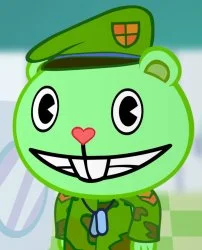
The show was produced by Mondo Mini Shows (later Mondo Media) and ran for 132 segments across web episodes and a television series1. Characters like Cuddles the yellow rabbit, Giggles the pink chipmunk, and Flippy the war-veteran bear each have distinct personality quirks and signature death styles. The series intentionally mimics the look of children's edutainment, with opening and closing sequences styled after Little Golden Books, making the violent payoff hit harder for unsuspecting first-time viewers1.

The concept started when Rhode Montijo, working at Mondo Media, drew a character on scrap paper who would become Shifty. He followed that up with a yellow rabbit resembling Cuddles, writing "Resistance is futile" underneath it on a spreadsheet poster1. Montijo pinned the drawing at his workstation where coworkers could see it, and the idea eventually got pitched to Mondo Media executives1.

In 1999, Mondo gave Aubrey Ankrum, Rhode Montijo, and Kenn Navarro the green light for a short. They produced "Banjo Frenzy," featuring an early version of Lumpy (a dinosaur at this point) murdering three woodland animals, early takes on Giggles, Cuddles, and Toothy, with a banjo1. The short convinced Mondo to greenlight a full internet series, which they named Happy Tree Friends1.

Though the first episodes were produced in 1999, they went live online sometime in 2000 and became an unexpected hit1.

Origin & Background

Platform
Mondo Media website (original release), YouTube (later distribution)
Key People
Aubrey Ankrum, Rhode Montijo, Kenn Navarro
Date
2000

The concept started when Rhode Montijo, working at Mondo Media, drew a character on scrap paper who would become Shifty. He followed that up with a yellow rabbit resembling Cuddles, writing "Resistance is futile" underneath it on a spreadsheet poster1. Montijo pinned the drawing at his workstation where coworkers could see it, and the idea eventually got pitched to Mondo Media executives1.

In 1999, Mondo gave Aubrey Ankrum, Rhode Montijo, and Kenn Navarro the green light for a short. They produced "Banjo Frenzy," featuring an early version of Lumpy (a dinosaur at this point) murdering three woodland animals, early takes on Giggles, Cuddles, and Toothy, with a banjo1. The short convinced Mondo to greenlight a full internet series, which they named Happy Tree Friends1.

Though the first episodes were produced in 1999, they went live online sometime in 2000 and became an unexpected hit1.

How It Spread

The series took off quickly after its online debut, pulling 15 million hits per month and screening at film festivals1. Mondo Media CEO John Evershed credited lead animator Kenn Navarro with the show's success, comparing its staying power to Tom and Jerry: "He had a clear vision for that show and he's just a brilliant animator. He has created something that is pretty universal"1.

The show's popularity earned it a jump to television. After a preview at Comic-Con 2006, the TV series premiered on September 25, 2006, on G4's late-night block Barbed Wire Biscuit (later renamed Midnight Spank)1. Canadian channel Razer aired it in syndication, while MTV picked it up across Europe and Latin America, and Animax broadcast it in South Africa1.

The online following grew into genuine cult status. Know Your Meme documented the series as a web animation known for "combining cuddly innocuous animal characters with graphic depiction of bloodbaths, dismemberment and painful death"3. Urban Dictionary entries reflect the fan community's enthusiasm, with users describing it as a show about "adorable creatures being killed in unfortunate events"2.

Platforms

RedditTwitterTikTokInstagram

Timeline

1999

Happy Tree Friends first appears online

1999

Gains traction on social media

2000

Reaches peak popularity

2001-01-01

Happy Tree Friends reached mainstream popularity and media coverage

2002-01-01

Brands and companies started using Happy Tree Friends in marketing

2004-01-01

Happy Tree Friends entered the broader pop culture conversation

2025-01-01

Happy Tree Friends is still actively used and shared across platforms

View on Google Trends

How to Use This Meme

Happy Tree Friends isn't a meme template in the traditional sense. It's more of a cultural reference point. Online, people typically invoke HTF in a few ways:

- Reaction context: Sharing clips or screenshots when something unexpectedly violent or dark happens, especially when it contrasts with something cute or innocent. - Bait-and-switch comparisons: Describing something as "looking like Happy Tree Friends" when a seemingly wholesome situation takes a dark turn. - Nostalgia posts: Referencing HTF as a shared early-internet experience, often with "who else watched this as a kid?" energy. - Character memes: Specific characters like Flippy (the PTSD-afflicted bear who snaps into a killing rage) get used in memes about anger management or hidden dark sides.

The show itself is the meme. Mentioning it signals familiarity with a specific era of internet culture and a taste for dark humor3.

Create Your Own

Cultural Impact

Happy Tree Friends was one of the first web animations to prove that internet-original content could attract a mainstream audience. Its 15 million monthly views in the early 2000s were remarkable numbers for online video before YouTube existed1. The show earned screenings at film festivals, a cable television deal with G4, and international broadcast syndication through MTV and Animax1.

Mondo Media CEO John Evershed compared the show's potential longevity to classic cartoons: "I envision kids watching Happy Tree Friends 20 or 30 years from now the same way that they watch Tom and Jerry now"1. The comparison to Tom and Jerry is apt. Both shows mine comedy from exaggerated violence, though HTF takes the concept to extremes that traditional TV animation wouldn't touch.

The franchise produced a TV series of 13 episodes (39 segments), giving it a total catalog of 132 segments across web and television1. Its 2023 and 2024 episode releases, including a crossover with Dumb Ways to Die, showed the brand still carrying weight with both nostalgic fans and new audiences discovering it online1.

Full History

Happy Tree Friends emerged at the perfect moment in internet history. The early 2000s web was hungry for edgy Flash animation, and a show that looked like a kids' cartoon but delivered extreme violence hit a nerve with audiences who were discovering that the internet could host content too wild for TV1.

After the initial web run built a massive audience, the franchise expanded into television territory in 2006. The G4 airing brought the show to American cable viewers who might have missed the web episodes, while international distribution through MTV and Animax introduced the characters to audiences in Europe, Latin America, and South Africa1. The TV series added 39 segments across 13 episodes to the existing web catalog1.

Production slowed in the 2010s, but the show never fully disappeared. In 2014, after the episode "Dream Job" was released, Mondo Media announced plans for a feature film1. Those plans stalled. By 2016, Kenn Navarro tweeted that he was unaware of active work on any film, though his team was "in talk to do more shorts"1. When fans pressed him on the movie, Navarro clarified that "a treatment that [I] and the writers did was all the work (that [I] know of) for the movie"1.

December 22, 2016, saw a surprise release: five new episodes bundled as "Happy Tree Friends: Still Alive," available for purchase online with bonus material including background designs, animated storyboards, animation process breakdowns, and a writer's session video1. The DRM-free download model was unconventional for the time. In January 2017, Navarro gave a candid assessment on Twitter: "As I understand, sales were OK but fell below what was expected"1.

The show returned again years later. On August 17, 2023, Mondo announced a new episode titled "Too Much Scream Time," released September 27, 2023, as a tie-in with The Crackpet Show's Happy Tree Friends Edition DLC1. Then on October 18, 2024, a crossover episode called "Happy Train Friends" dropped, pairing the HTF characters with the Dumb Ways to Die franchise1. These releases showed that even two decades after its debut, the property still had commercial pull.

The show's influence on internet culture runs deep. It was one of the flagship Flash animations that proved original web content could build audiences rivaling traditional media3. Its bait-and-switch formula of cute-then-violent became a template that countless other creators would borrow. And its audience numbers in the early 2000s, at 15 million monthly views, were staggering for a time when broadband adoption was still growing1.

Fun Facts

The original 1999 prototype short was called "Banjo Frenzy" and featured a dinosaur version of Lumpy killing animals with a banjo1.

Cuddles the yellow rabbit holds the highest death count of any character in the series1.

The show's opening and closing sequences were deliberately designed to mimic Little Golden Books, maximizing the shock value of the violent content1.

Rhode Montijo's first character sketch that started it all was drawn on a piece of scrap paper at his Mondo Media workstation1.

Kenn Navarro voices Cuddles and was credited by Mondo's CEO as the single biggest reason for the show's success1.

Derivatives & Variations

Happy Tree Friends TV Series (2006):

A 13-episode television adaptation aired on G4's late-night block, later syndicated on Canadian and international networks including MTV Europe and Animax South Africa[1].

"Still Alive" Episode Bundle (2016):

Five new episodes sold as a DRM-free download package with behind-the-scenes bonus material[1].

The Crackpet Show: Happy Tree Friends Edition (2023):

A DLC crossover with the shoot 'em up game The Crackpet Show, accompanied by the new episode "Too Much Scream Time"[1].

"Happy Train Friends" Crossover (2024):

A crossover episode pairing HTF characters with the Dumb Ways to Die franchise[1].

Fan-made content:

The show inspired a large community of fan art, fan fiction, and original characters on platforms like DeviantArt and Newgrounds, keeping the fandom active between official releases[3].

Frequently Asked Questions