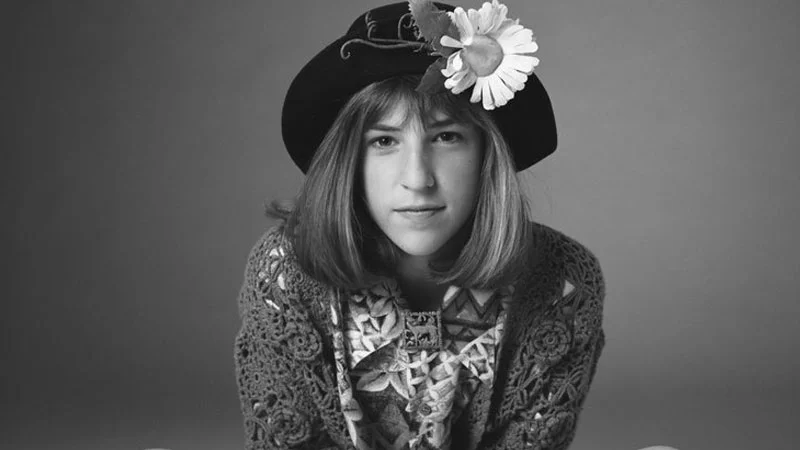
Mayim Bialik's New York Times Editorial

2017eventclassic

Published September 6, 2026

Mayim Bialik's New York Times Editorial refers to the October 2017 op-ed by the Big Bang Theory actor that drew heavy online criticism for comments about young women's dress amid the Harvey Weinstein allegations1. The piece triggered days of Twitter rebuttals, Reddit threads and a public apology, becoming one of the sharpest social media backlash cycles of the early #MeToo period2.

Overview

Mayim Bialik's New York Times Editorial is the umbrella label for the October 2017 op-ed the Big Bang Theory star wrote for the paper during the first wave of Harvey Weinstein reporting, plus the online reaction that followed1. Readers zeroed in on passages where Bialik discussed her own modest dress and reserved behavior in Hollywood, which many took as an implication that appearance factors into harassment3.

The controversy played out mostly as a Twitter pile-on, with quote-tweets of specific lines from the op-ed circulating faster than the piece itself3. Coverage from CNN, Fox News and The Chicago Tribune framed the criticism around the phrase 'victim blaming,' which stuck as the shorthand for the whole episode4.

Origin & Background

Platform
The New York Times (op-ed) / Twitter (viral backlash)
Creator
Mayim Bialik
Date
2017

On October 13th, 2017, The New York Times published Bialik's essay under the headline 'Being a Feminist in Harvey Weinstein's World'1. The piece described her experience as a young actor in Hollywood, her frustration with the industry's treatment of women, and her personal choice to dress modestly and reserve her 'sexual self' for private relationships1.

The backlash started the next day, October 14th, once readers began quoting individual paragraphs out of context on Twitter3. Bialik was not writing a meme, but the op-ed itself became the artifact people remixed, screenshotted and dunked on for the rest of the week2.

How It Spread

Actress Patricia Arquette kicked off the celebrity response on October 14th, tweeting that she had been harassed at age 12 while dressed 'non provocatively' walking home from school, adding 'It's not the clothes'2. Within two days her tweet had picked up more than 4,400 retweets and 26,000 likes2. The same day, writer Eve Ewing quote-tweeted the modesty passage and called it 'disgusting,' arguing that assault is 'about power, not about desire' — that post cleared 9,200 retweets and 26,000 likes in two days2.

Twitter's editorial team packaged the reactions into a Moments page that pulled in over 1,400 likes by October 17th2. Threads spun up on Reddit across r/TwoXChromosomes, r/GamerGhazi and r/GenderCritical, keeping the debate alive outside the Twitter timeline2. News outlets including CNN, Fox News and The Chicago Tribune covered the criticism under the 'victim blaming' framing, which pushed the story into mainstream cycles4.

On October 15th, Bialik announced a live Q&A with the Times, which she hosted on Facebook the following morning to more than 178,000 views inside the first hour2. She then issued a formal apology on October 18th across her Twitter and Facebook accounts, and international outlets from the Times of Israel to The Sydney Morning Herald and The Daily Mail picked up the apology cycle2.

How to Use This Meme

The editorial itself is not a template, but the episode is still referenced whenever a celebrity comment during the #MeToo era gets accused of victim blaming. People typically link the op-ed or quote-tweet the modesty passage as shorthand for that specific kind of misstep1.

Frequently Asked Questions