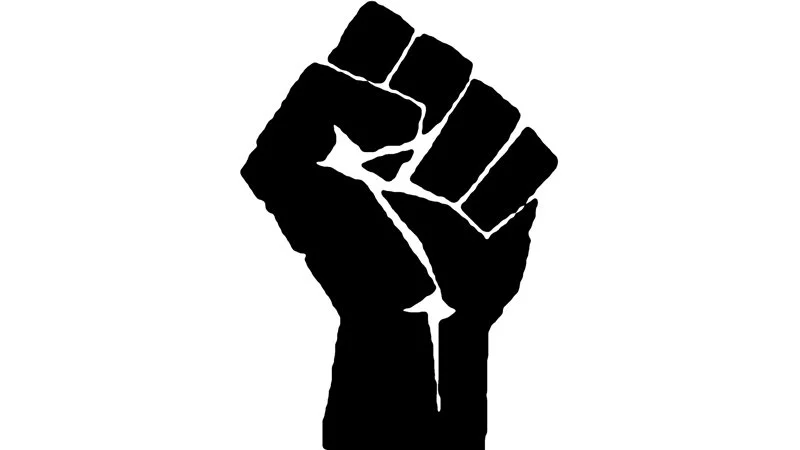
Raised Fist

1917Symbol / political gesture / emojiactive

Also known as: Power Fist · Clenched Fist · Black Power Salute · Red Salute

Raised Fist is a 1917 political gesture first illustrated by Ralph Chaplin for the IWW, depicting a clenched hand held upward, which became a ubiquitous emoji and protest symbol.

The Raised Fist, also called the Power Fist, is a clenched hand held upward that functions as one of the most repurposed symbols in modern political and internet culture. First depicted in its modern political form in a 1917 illustration by Ralph Chaplin for the Industrial Workers of the World3, the gesture has been adopted by labor movements, Black Power activists, feminists, anti-fascists, and contemporary politicians across the ideological spectrum. Online, the raised fist took on new life as a widely shared emoji, a TikTok profile picture protest tool, and a recurring subject of viral political photography5.

TL;DR

The Raised Fist, also called the Power Fist, is a clenched hand held upward that functions as one of the most repurposed symbols in modern political and internet culture.

Overview

The Raised Fist depicts an autonomous clenched hand pointing upward. As a gesture, it carries no inherent meaning, but communities across history have loaded it with significance: solidarity, defiance, resistance, celebration, and sometimes aggression4. The symbol appears on protest posters, book covers, album art, social media profiles, and as a Unicode emoji (✊). Its visual simplicity makes it endlessly adaptable. A fist combined with a Venus symbol means feminism. Paired with a hammer and sickle, it signals communism. Wrapped in black, it invokes Black Power12. This flexibility is exactly what makes the Raised Fist both powerful and slippery. As one BuzzFeed analysis put it, "The raised fist appears to mean everything and nothing at the same time"2.

The clenched fist as a human gesture goes back to ancient times. According to *Assyrian Origins*, a book on Assyrian art, artworks depicting clenched fists were associated with procreation, prayer, and physical strength2. Artwork on 2,000-to-3,000-year-old Greek vases also shows fists clenched in victory11.

The modern political raised fist traces to the early 20th century labor movement. William "Big Bill" Haywood, a founding member of the Industrial Workers of the World, used the metaphor of a fist as something greater than the sum of its parts during a speech at the 1913 Paterson silk strike12. The American magazine *Mother Earth* described the clenched fist as "symbolical of the social revolution" in 191412.

The first major visual depiction came on June 30, 1917, when IWW artist and songwriter Ralph Chaplin published the illustration "Solidarity" in the IWW newspaper of the same name3. The image depicted workers joining their fists together into one giant fist5. Chaplin, who had joined the IWW in 1913 and also wrote "Solidarity Forever," was one of the most prolific visual propagandists of the American labor movement3.

In 1924, the raised fist was adopted as a salute by the Communist Party of Germany's Roter Frontkämpferbund ("Alliance of Red Front-Fighters"). In reaction, the Nazi Party adopted the Roman salute two years later12. The gesture spread further during the Spanish Civil War (1936-1939), where Republican militias used it as the "anti-fascist salute"4. A letter from the war stated: "the raised fist which greets you in Salud is not just a gesture, it means life and liberty being fought for"12.

In 1948, the graphic symbol was popularized in print by Mexico's Taller de Gráfica Popular (People's Graphic Workshop), which used art to advance revolutionary social causes5.

Origin & Background

Platform
Political print media (IWW publications), later adopted across social media
Key People
Ralph Chaplin
Date
1917 (modern political symbol), ancient origins

The clenched fist as a human gesture goes back to ancient times. According to *Assyrian Origins*, a book on Assyrian art, artworks depicting clenched fists were associated with procreation, prayer, and physical strength. Artwork on 2,000-to-3,000-year-old Greek vases also shows fists clenched in victory.

The modern political raised fist traces to the early 20th century labor movement. William "Big Bill" Haywood, a founding member of the Industrial Workers of the World, used the metaphor of a fist as something greater than the sum of its parts during a speech at the 1913 Paterson silk strike. The American magazine *Mother Earth* described the clenched fist as "symbolical of the social revolution" in 1914.

The first major visual depiction came on June 30, 1917, when IWW artist and songwriter Ralph Chaplin published the illustration "Solidarity" in the IWW newspaper of the same name. The image depicted workers joining their fists together into one giant fist. Chaplin, who had joined the IWW in 1913 and also wrote "Solidarity Forever," was one of the most prolific visual propagandists of the American labor movement.

In 1924, the raised fist was adopted as a salute by the Communist Party of Germany's Roter Frontkämpferbund ("Alliance of Red Front-Fighters"). In reaction, the Nazi Party adopted the Roman salute two years later. The gesture spread further during the Spanish Civil War (1936-1939), where Republican militias used it as the "anti-fascist salute". A letter from the war stated: "the raised fist which greets you in Salud is not just a gesture, it means life and liberty being fought for".

In 1948, the graphic symbol was popularized in print by Mexico's Taller de Gráfica Popular (People's Graphic Workshop), which used art to advance revolutionary social causes.

How It Spread

The 1960s transformed the Raised Fist from a labor and leftist symbol into a broader emblem of resistance. American artist and activist Frank Cieciorka produced a simplified version for the Student Nonviolent Coordinating Committee, which was then picked up by Students for a Democratic Society and the Black Power movement.

The most iconic use came at the 1968 Summer Olympics in Mexico City. After winning gold and bronze in the 200-meter race, American athletes Tommie Smith and John Carlos each raised a black-gloved fist during the national anthem on the medal podium. Smith wore a black scarf for black pride; Carlos left his tracksuit unzipped for solidarity with blue-collar workers. Australian silver medalist Peter Norman, who suggested Carlos wear Smith's left-handed glove after Carlos forgot his pair, wore a human rights badge in solidarity. The International Olympic Committee expelled both American athletes from the Games, calling their action "a deliberate and violent breach of the fundamental principles of the Olympic spirit". The photograph, taken by John Dominis, became one of the most recognized protest images of the 20th century.

That same year, the fist entered feminist iconography during the 1968 Miss America protest organized by Robin Morgan. By 1970, a raised fist appeared prominently on the cover of Morgan's landmark anthology *Sisterhood is Powerful*. In 1971, Gloria Steinem and Dorothy Pitman Hughes posed with raised fists for an iconic *Esquire* photo in interracial solidarity.

While use of the political fist declined through the 1970s and 1980s, it never fully disappeared. The far right adopted its own version, with the "Aryan fist" becoming a white pride symbol in the 1980s. On the other end of the spectrum, a clenched fist was used in Northern Irish loyalist murals depicting the Red Hand of Ulster.

The mid-2000s saw commercial reappropriation. In 2005, radio DJ Howard Stern used a clenched fist as his logo when moving to SiriusXM, emphasizing his "uncensored" programming. The 2011 Occupy Wall Street movement brought the fist back to protest culture, and in Wisconsin that same year, a raised fist incorporating the state outline was designed for union protests against the rescinding of collective bargaining rights.

Online, the Raised Fist found new expression through the black fist emoji, which became widely used on social media during the Black Lives Matter movement following the 2014 Ferguson protests and the 2020 murder of George Floyd. In May 2020, the fist migrated to TikTok in a major way. Black TikTok creators, led by Lex Scott, founder of Utah's Black Lives Matter chapter, organized a virtual protest against the platform's uneven application of community guidelines. Masses of creators changed their profile pictures to a Power Fist illustration, and the May 19 Blackout led to spikes in follows and engagement for Black creators.

The 2017 Women's March saw the fist reworked into feminist imagery. Liza Donovan's poster "Hear Our Voice" depicted multihued female hands gripping a torch made of a power fist, while Victoria Garcia's "Respeta" placed a clenched fist inside the Venus symbol.

How to Use This Meme

The Raised Fist works as both a physical gesture and a digital symbol. Common uses include:

1

Physical gesture: Raise a clenched fist above head height, typically at protests, rallies, or moments of solidarity. The right fist is most common, though left-fist variants exist (John Carlos raised his left hand at the 1968 Olympics because he was wearing Smith's spare left-handed glove).

2

Emoji usage: The ✊ emoji (and its skin-tone variants) is typically used in social media posts to signal solidarity with a cause, especially in contexts related to social justice, labor rights, or political resistance.

3

Profile picture: During protest movements, users often change their social media avatar to a raised fist graphic, as seen during the 2020 TikTok Blackout.

4

Graphic design: The fist is commonly combined with other symbols to create movement-specific logos. A fist inside a Venus symbol signals feminism. A fist holding a rose is used by socialist and social democratic parties. A fist incorporating a geographic outline (like the 2011 Wisconsin union fist) signals regional solidarity.

Cultural Impact

The Raised Fist has crossed into virtually every corner of public life. Beyoncé employed it in a music video, Super Bowl performance, and promotional photo. The TV show *Empire* used it in a season opener, and FX's *The People v. O.J. Simpson* recreated the moment when a juror flashed the fist at Simpson in the courtroom.

The symbol has been studied by cognitive scientists and semioticians. German ethnologist Gottfried Korff wrote that the hand "has a closeness to manual work, and the explosive power of social issues can be represented with the clenched fist". Roland Posner, former head of the Semiotics Department at the Technical University of Berlin, noted the fist is "an ancient gesture, joining the strength of the hand and the arm" that can represent both threat and challenge.

Several related gestures exist in popular culture. The fist pump used by golfers like Tiger Woods is an expanded version, while the "Success Kid" meme showing a baby at the beach with a sandy fist could be viewed as a truncated version. The Gonzo fist emblem, used in Hunter S. Thompson's 1970 sheriff campaign in Aspen, Colorado, became a symbol of gonzo journalism.

In the Philippines, the "Tumindig" movement demonstrated how digital art can amplify the fist's meaning for a new generation, with artists, organizations, and even Greenpeace Philippines creating customized versions of Raymundo's template.

Full History

The Raised Fist's journey from labor woodcut to ubiquitous emoji spans over a century of political upheaval, making it one of the longest-running visual symbols in activist culture.

Ralph Chaplin's 1917 "Solidarity" illustration didn't emerge in a vacuum. The IWW had been building a visual culture of resistance since its founding in 1905, with cartoons by artists like Maurice Becker and the pseudonymous "Dust" Wallen, who was called "the Gustave Doré of the IWW" for his engraving-like detail. Chaplin himself had witnessed the Pullman strike of 1894 as a child in Chicago, befriended legendary Wobbly leader Big Bill Haywood in 1907, and by 1917 was editing the IWW newspaper *Solidarity*. That same year, he was arrested along with the IWW's national leadership and sentenced to twenty years in federal prison for conspiring against the war effort.

The fist's meaning shifted dramatically across the 20th century. During the Spanish Civil War, it served as a greeting among Republican fighters. In the 1960s, it became inseparable from the Black Power movement. The 1968 Olympic protest by Smith and Carlos didn't just raise fists; it raised questions about the boundary between sport and politics that still echo today. Smith later clarified in his autobiography *Silent Gesture* that his gesture was not a "Black Power" salute per se but a "human rights" salute. Both athletes faced severe consequences: they were booed by the crowd, expelled from the Games, and subjected to death threats back home. Sports journalist Brent Musburger described them as "a couple of black-skinned storm troopers". One of the few public defenders of their actions was Robert D. Clark, then-president of San Jose State University.

The gesture's transgressive power persists in institutional settings. In 2016, sixteen Black female cadets at West Point raised their fists in a graduation photo that went viral, prompting an official inquiry. West Point's superintendent wrote: "We all must understand that a symbol or gesture that one group of people may find harmless may offend others. As Army officers, we are not afforded the luxury of a lack of awareness of how we are perceived". No disciplinary action was taken.

The raised fist's ability to carry contradictory meanings reached a peak in 2017. On Inauguration Day, Donald Trump raised his right fist minutes before his swearing-in ceremony, in what BuzzFeed described as channeling the late Black Panther leader Huey P. Newton. The very next day, the Women's March used the same gesture to protest Trump's platform. At the Screen Actors Guild Awards that month, the cast of *Stranger Things* raised their fists during David Harbour's anti-bullying speech, with Winona Ryder's comically mechanical fist-pumping going viral.

Trump had been using the raised fist for decades before entering politics. He employed it at the 1990 opening of his Trump Taj Mahal casino, during a 1994 press conference threatening to sue the New York Post, and in a 2016 Christmas tweet. Cognitive scientist Roger Kreuz, writing in *The Conversation*, argued that Trump's raised fist functions like a "Rorschach inkblot," allowing supporters to see solidarity and opponents to see defiance. After being found guilty of 34 felonies in May 2024, Trump raised a clenched fist to the crowd outside the courthouse, and the image rocketed across news wires. Supporters like Kari Lake and Rep. Matt Gaetz amplified the photo on Truth Social.

The most dramatic Trump fist moment came on July 13, 2024, when Secret Service agents surrounded a bleeding Trump at a Pennsylvania rally after a would-be assassin's bullet grazed his ear. Trump raised his fist and appeared to shout "Fight! Fight!". The resulting photograph became, in the words of media analyst Erik Bucy, "an iconic image, one for the ages".

The raised fist also spread internationally in digital form. In the Philippines, artist Kevin Eric Raymundo (Tarantadong Kalbo) created the "Tumindig" digital illustration showing rows of bowed fists with one illuminated fist standing erect in dissent against the Duterte administration. The artwork sparked a massive collaborative art movement, with Raymundo releasing a blank template that netizens and organizations customized with their own designs. The illustration received over 49,800 likes on Twitter.

Perhaps the most ironic raised fist moment in recent memory belongs to U.S. Senator Josh Hawley, who on January 6, 2021, raised his fist to demonstrators converging on the Capitol, only to be later filmed sprinting away from the rioters he had helped inspire. Hawley defended the gesture and even affixed the photo onto merchandise for his 2024 reelection campaign, despite receiving a cease and desist from the photograph's copyright holder.

Fun Facts

Peter Norman, the Australian silver medalist who stood on the podium with Smith and Carlos, suggested that Carlos wear Smith's left-handed glove after Carlos forgot his own pair at the Olympic Village.

IOC president Avery Brundage, who objected to Smith and Carlos's protest, had made no objections against Nazi salutes during the 1936 Berlin Olympics, arguing those were acceptable as "national salutes".

The Unicode character for the raised fist is ✊, and skin-tone modifier variants were added as part of the emoji diversity push.

Hunter S. Thompson's "Gonzo fist" logo, featuring two thumbs and four fingers holding a peyote button, was originally created for his 1970 campaign for sheriff of Aspen, Colorado.

Donald Trump used the raised fist gesture as early as the 1990 opening of his Trump Taj Mahal casino, long before entering politics.

Derivatives & Variations

Black Power Salute:

The gloved-fist variant made famous by Smith and Carlos at the 1968 Olympics, specifically associated with the Black Power and civil rights movements[6].

Fist and Rose:

A white fist holding a red rose, used by the Socialist International and parties like the French Socialist Party and Spanish Socialist Workers' Party[12].

Tumindig Fist:

Kevin Eric Raymundo's 2021 digital illustration from the Philippines showing a single defiant fist standing among bowed ones, which spawned a massive collaborative art movement[10].

TikTok Power Fist Profile:

During the May 2020 Blackout, Black TikTok creators adopted a black-and-white Power Fist as their profile picture to protest unfair content moderation[8].

Wisconsin Union Fist:

A 2011 raised fist incorporating the outline of the state of Wisconsin, designed for union protests against the rescinding of collective bargaining[12].

Feminist Fist:

A clenched fist inside the Venus symbol, used since the 1968 Miss America protest and appearing on Robin Morgan's *Sisterhood is Powerful* (1970) and *Sisterhood Is Forever* (2003)[12].

Hawley Fist Merch:

After Sen. Josh Hawley's January 6, 2021 fist-raise photo, he put the image on coffee mugs and campaign merchandise despite legal challenges from the photographer[7].

Frequently Asked Questions

RaisedFist

1917Symbol / political gesture / emojiactive

Also known as: Power Fist · Clenched Fist · Black Power Salute · Red Salute

Raised Fist is a 1917 political gesture first illustrated by Ralph Chaplin for the IWW, depicting a clenched hand held upward, which became a ubiquitous emoji and protest symbol.

The Raised Fist, also called the Power Fist, is a clenched hand held upward that functions as one of the most repurposed symbols in modern political and internet culture. First depicted in its modern political form in a 1917 illustration by Ralph Chaplin for the Industrial Workers of the World, the gesture has been adopted by labor movements, Black Power activists, feminists, anti-fascists, and contemporary politicians across the ideological spectrum. Online, the raised fist took on new life as a widely shared emoji, a TikTok profile picture protest tool, and a recurring subject of viral political photography.

TL;DR

The Raised Fist, also called the Power Fist, is a clenched hand held upward that functions as one of the most repurposed symbols in modern political and internet culture.

Overview

The Raised Fist depicts an autonomous clenched hand pointing upward. As a gesture, it carries no inherent meaning, but communities across history have loaded it with significance: solidarity, defiance, resistance, celebration, and sometimes aggression. The symbol appears on protest posters, book covers, album art, social media profiles, and as a Unicode emoji (✊). Its visual simplicity makes it endlessly adaptable. A fist combined with a Venus symbol means feminism. Paired with a hammer and sickle, it signals communism. Wrapped in black, it invokes Black Power. This flexibility is exactly what makes the Raised Fist both powerful and slippery. As one BuzzFeed analysis put it, "The raised fist appears to mean everything and nothing at the same time".

The clenched fist as a human gesture goes back to ancient times. According to *Assyrian Origins*, a book on Assyrian art, artworks depicting clenched fists were associated with procreation, prayer, and physical strength. Artwork on 2,000-to-3,000-year-old Greek vases also shows fists clenched in victory.

The modern political raised fist traces to the early 20th century labor movement. William "Big Bill" Haywood, a founding member of the Industrial Workers of the World, used the metaphor of a fist as something greater than the sum of its parts during a speech at the 1913 Paterson silk strike. The American magazine *Mother Earth* described the clenched fist as "symbolical of the social revolution" in 1914.

The first major visual depiction came on June 30, 1917, when IWW artist and songwriter Ralph Chaplin published the illustration "Solidarity" in the IWW newspaper of the same name. The image depicted workers joining their fists together into one giant fist. Chaplin, who had joined the IWW in 1913 and also wrote "Solidarity Forever," was one of the most prolific visual propagandists of the American labor movement.

In 1924, the raised fist was adopted as a salute by the Communist Party of Germany's Roter Frontkämpferbund ("Alliance of Red Front-Fighters"). In reaction, the Nazi Party adopted the Roman salute two years later. The gesture spread further during the Spanish Civil War (1936-1939), where Republican militias used it as the "anti-fascist salute". A letter from the war stated: "the raised fist which greets you in Salud is not just a gesture, it means life and liberty being fought for".

In 1948, the graphic symbol was popularized in print by Mexico's Taller de Gráfica Popular (People's Graphic Workshop), which used art to advance revolutionary social causes.

Origin & Background

Platform
Political print media (IWW publications), later adopted across social media
Key People
Ralph Chaplin
Date
1917 (modern political symbol), ancient origins

The clenched fist as a human gesture goes back to ancient times. According to *Assyrian Origins*, a book on Assyrian art, artworks depicting clenched fists were associated with procreation, prayer, and physical strength. Artwork on 2,000-to-3,000-year-old Greek vases also shows fists clenched in victory.

The modern political raised fist traces to the early 20th century labor movement. William "Big Bill" Haywood, a founding member of the Industrial Workers of the World, used the metaphor of a fist as something greater than the sum of its parts during a speech at the 1913 Paterson silk strike. The American magazine *Mother Earth* described the clenched fist as "symbolical of the social revolution" in 1914.

The first major visual depiction came on June 30, 1917, when IWW artist and songwriter Ralph Chaplin published the illustration "Solidarity" in the IWW newspaper of the same name. The image depicted workers joining their fists together into one giant fist. Chaplin, who had joined the IWW in 1913 and also wrote "Solidarity Forever," was one of the most prolific visual propagandists of the American labor movement.

In 1924, the raised fist was adopted as a salute by the Communist Party of Germany's Roter Frontkämpferbund ("Alliance of Red Front-Fighters"). In reaction, the Nazi Party adopted the Roman salute two years later. The gesture spread further during the Spanish Civil War (1936-1939), where Republican militias used it as the "anti-fascist salute". A letter from the war stated: "the raised fist which greets you in Salud is not just a gesture, it means life and liberty being fought for".

In 1948, the graphic symbol was popularized in print by Mexico's Taller de Gráfica Popular (People's Graphic Workshop), which used art to advance revolutionary social causes.

How It Spread

The 1960s transformed the Raised Fist from a labor and leftist symbol into a broader emblem of resistance. American artist and activist Frank Cieciorka produced a simplified version for the Student Nonviolent Coordinating Committee, which was then picked up by Students for a Democratic Society and the Black Power movement.

The most iconic use came at the 1968 Summer Olympics in Mexico City. After winning gold and bronze in the 200-meter race, American athletes Tommie Smith and John Carlos each raised a black-gloved fist during the national anthem on the medal podium. Smith wore a black scarf for black pride; Carlos left his tracksuit unzipped for solidarity with blue-collar workers. Australian silver medalist Peter Norman, who suggested Carlos wear Smith's left-handed glove after Carlos forgot his pair, wore a human rights badge in solidarity. The International Olympic Committee expelled both American athletes from the Games, calling their action "a deliberate and violent breach of the fundamental principles of the Olympic spirit". The photograph, taken by John Dominis, became one of the most recognized protest images of the 20th century.

That same year, the fist entered feminist iconography during the 1968 Miss America protest organized by Robin Morgan. By 1970, a raised fist appeared prominently on the cover of Morgan's landmark anthology *Sisterhood is Powerful*. In 1971, Gloria Steinem and Dorothy Pitman Hughes posed with raised fists for an iconic *Esquire* photo in interracial solidarity.

While use of the political fist declined through the 1970s and 1980s, it never fully disappeared. The far right adopted its own version, with the "Aryan fist" becoming a white pride symbol in the 1980s. On the other end of the spectrum, a clenched fist was used in Northern Irish loyalist murals depicting the Red Hand of Ulster.

The mid-2000s saw commercial reappropriation. In 2005, radio DJ Howard Stern used a clenched fist as his logo when moving to SiriusXM, emphasizing his "uncensored" programming. The 2011 Occupy Wall Street movement brought the fist back to protest culture, and in Wisconsin that same year, a raised fist incorporating the state outline was designed for union protests against the rescinding of collective bargaining rights.

Online, the Raised Fist found new expression through the black fist emoji, which became widely used on social media during the Black Lives Matter movement following the 2014 Ferguson protests and the 2020 murder of George Floyd. In May 2020, the fist migrated to TikTok in a major way. Black TikTok creators, led by Lex Scott, founder of Utah's Black Lives Matter chapter, organized a virtual protest against the platform's uneven application of community guidelines. Masses of creators changed their profile pictures to a Power Fist illustration, and the May 19 Blackout led to spikes in follows and engagement for Black creators.

The 2017 Women's March saw the fist reworked into feminist imagery. Liza Donovan's poster "Hear Our Voice" depicted multihued female hands gripping a torch made of a power fist, while Victoria Garcia's "Respeta" placed a clenched fist inside the Venus symbol.

How to Use This Meme

The Raised Fist works as both a physical gesture and a digital symbol. Common uses include:

1

Physical gesture: Raise a clenched fist above head height, typically at protests, rallies, or moments of solidarity. The right fist is most common, though left-fist variants exist (John Carlos raised his left hand at the 1968 Olympics because he was wearing Smith's spare left-handed glove).

2

Emoji usage: The ✊ emoji (and its skin-tone variants) is typically used in social media posts to signal solidarity with a cause, especially in contexts related to social justice, labor rights, or political resistance.

3

Profile picture: During protest movements, users often change their social media avatar to a raised fist graphic, as seen during the 2020 TikTok Blackout.

4

Graphic design: The fist is commonly combined with other symbols to create movement-specific logos. A fist inside a Venus symbol signals feminism. A fist holding a rose is used by socialist and social democratic parties. A fist incorporating a geographic outline (like the 2011 Wisconsin union fist) signals regional solidarity.

Cultural Impact

The Raised Fist has crossed into virtually every corner of public life. Beyoncé employed it in a music video, Super Bowl performance, and promotional photo. The TV show *Empire* used it in a season opener, and FX's *The People v. O.J. Simpson* recreated the moment when a juror flashed the fist at Simpson in the courtroom.

The symbol has been studied by cognitive scientists and semioticians. German ethnologist Gottfried Korff wrote that the hand "has a closeness to manual work, and the explosive power of social issues can be represented with the clenched fist". Roland Posner, former head of the Semiotics Department at the Technical University of Berlin, noted the fist is "an ancient gesture, joining the strength of the hand and the arm" that can represent both threat and challenge.

Several related gestures exist in popular culture. The fist pump used by golfers like Tiger Woods is an expanded version, while the "Success Kid" meme showing a baby at the beach with a sandy fist could be viewed as a truncated version. The Gonzo fist emblem, used in Hunter S. Thompson's 1970 sheriff campaign in Aspen, Colorado, became a symbol of gonzo journalism.

In the Philippines, the "Tumindig" movement demonstrated how digital art can amplify the fist's meaning for a new generation, with artists, organizations, and even Greenpeace Philippines creating customized versions of Raymundo's template.

Full History

The Raised Fist's journey from labor woodcut to ubiquitous emoji spans over a century of political upheaval, making it one of the longest-running visual symbols in activist culture.

Ralph Chaplin's 1917 "Solidarity" illustration didn't emerge in a vacuum. The IWW had been building a visual culture of resistance since its founding in 1905, with cartoons by artists like Maurice Becker and the pseudonymous "Dust" Wallen, who was called "the Gustave Doré of the IWW" for his engraving-like detail. Chaplin himself had witnessed the Pullman strike of 1894 as a child in Chicago, befriended legendary Wobbly leader Big Bill Haywood in 1907, and by 1917 was editing the IWW newspaper *Solidarity*. That same year, he was arrested along with the IWW's national leadership and sentenced to twenty years in federal prison for conspiring against the war effort.

The fist's meaning shifted dramatically across the 20th century. During the Spanish Civil War, it served as a greeting among Republican fighters. In the 1960s, it became inseparable from the Black Power movement. The 1968 Olympic protest by Smith and Carlos didn't just raise fists; it raised questions about the boundary between sport and politics that still echo today. Smith later clarified in his autobiography *Silent Gesture* that his gesture was not a "Black Power" salute per se but a "human rights" salute. Both athletes faced severe consequences: they were booed by the crowd, expelled from the Games, and subjected to death threats back home. Sports journalist Brent Musburger described them as "a couple of black-skinned storm troopers". One of the few public defenders of their actions was Robert D. Clark, then-president of San Jose State University.

The gesture's transgressive power persists in institutional settings. In 2016, sixteen Black female cadets at West Point raised their fists in a graduation photo that went viral, prompting an official inquiry. West Point's superintendent wrote: "We all must understand that a symbol or gesture that one group of people may find harmless may offend others. As Army officers, we are not afforded the luxury of a lack of awareness of how we are perceived". No disciplinary action was taken.

The raised fist's ability to carry contradictory meanings reached a peak in 2017. On Inauguration Day, Donald Trump raised his right fist minutes before his swearing-in ceremony, in what BuzzFeed described as channeling the late Black Panther leader Huey P. Newton. The very next day, the Women's March used the same gesture to protest Trump's platform. At the Screen Actors Guild Awards that month, the cast of *Stranger Things* raised their fists during David Harbour's anti-bullying speech, with Winona Ryder's comically mechanical fist-pumping going viral.

Trump had been using the raised fist for decades before entering politics. He employed it at the 1990 opening of his Trump Taj Mahal casino, during a 1994 press conference threatening to sue the New York Post, and in a 2016 Christmas tweet. Cognitive scientist Roger Kreuz, writing in *The Conversation*, argued that Trump's raised fist functions like a "Rorschach inkblot," allowing supporters to see solidarity and opponents to see defiance. After being found guilty of 34 felonies in May 2024, Trump raised a clenched fist to the crowd outside the courthouse, and the image rocketed across news wires. Supporters like Kari Lake and Rep. Matt Gaetz amplified the photo on Truth Social.

The most dramatic Trump fist moment came on July 13, 2024, when Secret Service agents surrounded a bleeding Trump at a Pennsylvania rally after a would-be assassin's bullet grazed his ear. Trump raised his fist and appeared to shout "Fight! Fight!". The resulting photograph became, in the words of media analyst Erik Bucy, "an iconic image, one for the ages".

The raised fist also spread internationally in digital form. In the Philippines, artist Kevin Eric Raymundo (Tarantadong Kalbo) created the "Tumindig" digital illustration showing rows of bowed fists with one illuminated fist standing erect in dissent against the Duterte administration. The artwork sparked a massive collaborative art movement, with Raymundo releasing a blank template that netizens and organizations customized with their own designs. The illustration received over 49,800 likes on Twitter.

Perhaps the most ironic raised fist moment in recent memory belongs to U.S. Senator Josh Hawley, who on January 6, 2021, raised his fist to demonstrators converging on the Capitol, only to be later filmed sprinting away from the rioters he had helped inspire. Hawley defended the gesture and even affixed the photo onto merchandise for his 2024 reelection campaign, despite receiving a cease and desist from the photograph's copyright holder.

Fun Facts

Peter Norman, the Australian silver medalist who stood on the podium with Smith and Carlos, suggested that Carlos wear Smith's left-handed glove after Carlos forgot his own pair at the Olympic Village.

IOC president Avery Brundage, who objected to Smith and Carlos's protest, had made no objections against Nazi salutes during the 1936 Berlin Olympics, arguing those were acceptable as "national salutes".

The Unicode character for the raised fist is ✊, and skin-tone modifier variants were added as part of the emoji diversity push.

Hunter S. Thompson's "Gonzo fist" logo, featuring two thumbs and four fingers holding a peyote button, was originally created for his 1970 campaign for sheriff of Aspen, Colorado.

Donald Trump used the raised fist gesture as early as the 1990 opening of his Trump Taj Mahal casino, long before entering politics.

Derivatives & Variations

Black Power Salute:

The gloved-fist variant made famous by Smith and Carlos at the 1968 Olympics, specifically associated with the Black Power and civil rights movements[6].

Fist and Rose:

A white fist holding a red rose, used by the Socialist International and parties like the French Socialist Party and Spanish Socialist Workers' Party[12].

Tumindig Fist:

Kevin Eric Raymundo's 2021 digital illustration from the Philippines showing a single defiant fist standing among bowed ones, which spawned a massive collaborative art movement[10].

TikTok Power Fist Profile:

During the May 2020 Blackout, Black TikTok creators adopted a black-and-white Power Fist as their profile picture to protest unfair content moderation[8].

Wisconsin Union Fist:

A 2011 raised fist incorporating the outline of the state of Wisconsin, designed for union protests against the rescinding of collective bargaining[12].

Feminist Fist:

A clenched fist inside the Venus symbol, used since the 1968 Miss America protest and appearing on Robin Morgan's *Sisterhood is Powerful* (1970) and *Sisterhood Is Forever* (2003)[12].

Hawley Fist Merch:

After Sen. Josh Hawley's January 6, 2021 fist-raise photo, he put the image on coffee mugs and campaign merchandise despite legal challenges from the photographer[7].

Frequently Asked Questions