Resolution Comparisons
Published March 24, 2026
Also known as: Video Quality Memes · Resolution Memes
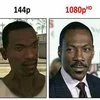
Resolution Comparisons are image macros that pair a blurry or pixelated depiction of a subject alongside a clearer, higher-quality lookalike, with each image labeled by a video resolution like "144p" or "4K." The format originated on Imgur in August 2016 and spread through Facebook and Reddit over the following year. It works because anyone who's fiddled with a YouTube quality slider instantly gets the joke: one image is the budget version, the other is the premium upgrade.
Overview
The premise is dead simple. Two images sit side by side or stacked vertically, each tagged with a video resolution label. The "low-res" image shows a crude, blocky, or cartoonish depiction of something, while the "high-res" image presents a real-world counterpart or more detailed rendering that looks like the same subject with a graphics upgrade. Common resolution labels range from 144p (the lowest YouTube quality option) up through 240p, 480p, 1080p, and 4K, borrowed directly from the video quality menus everyone recognizes from streaming platforms.
No setup text or caption is needed beyond the resolution tags. The images do all the talking, and viewers fill in the comparison on their own.
Gallery
Origin & Background
How It Spread
How to Use This Meme
Creating a Resolution Comparison typically follows a straightforward formula:
Find two images where one looks like a lower-quality version of the other. Classic pairings include video game characters next to real-world actors, cartoon drawings alongside live-action counterparts, or two photos of the same subject at wildly different quality levels.
Add resolution labels. Tag the cruder image with a low resolution (144p, 240p, 480p) and the sharper image with a higher one (1080p, 4K). Place the labels prominently on or near each image.
Arrange the images side by side or stacked vertically. Low-res on the left or top is the common convention.
Fun Facts
The original 2016 post used a PS2-era game character, setting the tone for the many gaming-to-reality comparisons that followed.
The r/MemeEconomy post from March 2017 treated the format like a stock pick, calling it a "steady climb" and effectively signaling to other memers that the template was worth adopting.
SpongeBob SquarePants appeared in both the 2017 Reddit wave and the 2020 Twitter revival, making the cartoon the format's most recurring subject1.
The Race Bannon vs. Mike Pence comparison hit a 98% upvote ratio on r/dankmemes, one of the format's highest-rated individual posts2.
Frequently Asked Questions
References (2)
- 1I don't know herencyclopedia
- 2Resolution Comparisons - Know Your Memeencyclopedia