Tentacle Erotica
Published October 1, 2026
Tentacle Erotica, also known as Tentacle Rape or shokushu goukan, is a Japanese erotica trope built around tentacled creatures sexually assaulting human characters. The theme traces to an 1814 woodblock print by Katsushika Hokusai and re-emerged in late-1980s anime and manga, growing into one of the most recognized tropes exported from Japanese adult media to the wider internet.
Overview
Tentacle Erotica, also known as Tentacle Rape, Tentacle Hentai, or shokushu goukan (触手強姦), is a recurring theme in Japanese adult novels, manga, and animation in which a creature uses its tentacles to sexually violate a human character3. The aggressor is usually an octopus, demon, alien, or malfunctioning machine, and the tentacles themselves are drawn as phallic stand-ins that let artists depict explicit acts without literally drawing human genitalia, a workaround for Japan's obscenity laws around depicting sex organs4.
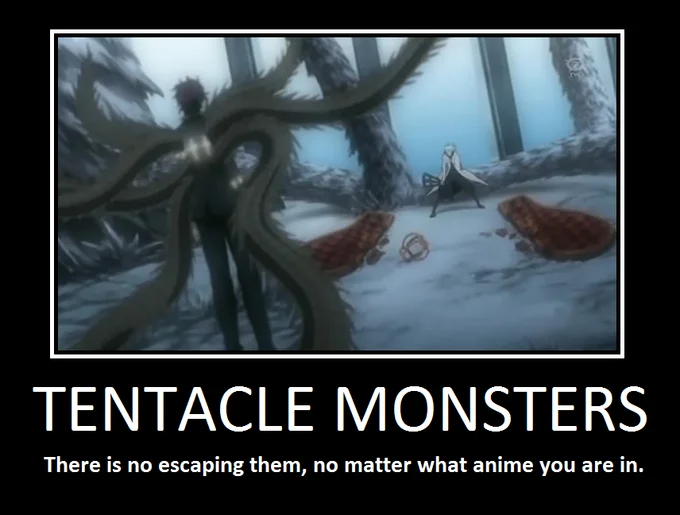
The trope shows up in both mainstream horror anime and hardcore hentai, ranging from body-horror sequences with no direct sexual framing to explicit adult OVAs built entirely around the concept3. Online, the phrase 'tentacle rape' is used as a shorthand tag on hentai boards, fanfic archives, and imageboards, and the imagery is often invoked as a punchline about how strange or extreme Japanese erotica can get to Western viewers4.
Origin & Background
How It Spread
Timeline
1814
Katsushika Hokusai publishes 'The Dream of the Fisherman's Wife' in the shunga book 'Kinoe no Komatsu', now cited as the earliest known example of the trope.
1986
The horror OVA 'Guyver: Out of Control' features an early anime tentacle-attack sequence, though without explicit sexual content.
1989
'Demon Beast Invasion' launches as a hentai manga and OVA and is credited as the first modern Japanese erotica series built around tentacle rape as a central premise.
2003-09-02
Urban Dictionary user otakukiller submits an entry for 'Tentacle Rape', formalizing the English-language slang.
How to Use This Meme
The format typically pairs a female (occasionally male) character with a non-human creature whose tentacles substitute for human anatomy. Common conventions include a monstrous or alien attacker, restraint imagery, and either horror-tinged or explicitly pornographic framing depending on the work. Online, the phrase is often used ironically as shorthand for 'weird Japanese porn' rather than as a description of a specific image4.
Frequently Asked Questions
References (5)
- 1
- 2
- 3
- 4
- 5