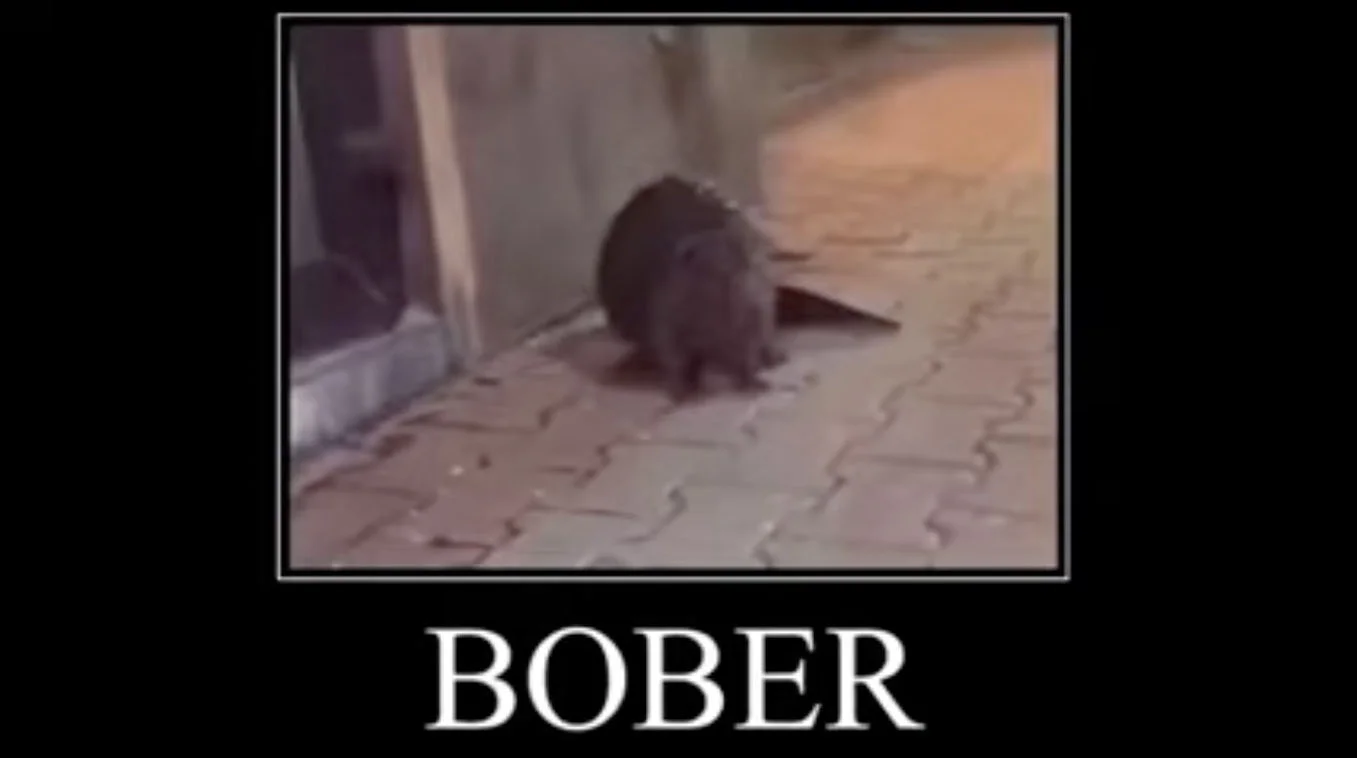
Bober
Published October 24, 2026
Videos of Polish men chasing and swearing at wild beavers became a running Slavic-humor joke centered on the Polish word for beaver. Clips circulated on YouTube starting in 2012, reached iFunny in late 2018, and in 2023 TikTokers rediscovered the audio, with one edit gathering 31 million plays.
Overview
A typical Bóbr, also known as Kurwa Bóbr or Bobrze, clip stars one or two Polish speakers whispering, muttering, or shrieking at a beaver that mostly ignores them from a reed bed or riverbank. The audio turns on the Polish expletive 'kurwa' alongside 'bóbr' (beaver) or the vocative 'bobrze' (hey beaver), a rhythm non-Polish viewers quote back without needing translation 4.
Later edits lift that audio and overlay it on cartoon faces, video-game clips, or wildlife footage of unrelated animals. By 2023, TikTok captions were labeling raccoons, wombats, and groundhogs as the mythical Polish beaver, with comment sections replying in broken Polish 8.
Gallery
Origin & Background
How It Spread
Timeline
How to Use This Meme
A standard Bober edit opens with the Fred Pierwszy Wielki shout, usually isolated as a one or two second audio clip. Creators typically sync it to footage of any animal that could pass for a beaver at a glance, often adding a broken-Polish caption such as 'kurwa bóbr' or 'o kurwa, bobrze' 8.
Frequently Asked Questions
References (8)
- 1
- 2
- 3
- 4
- 5
- 6
- 7
- 8