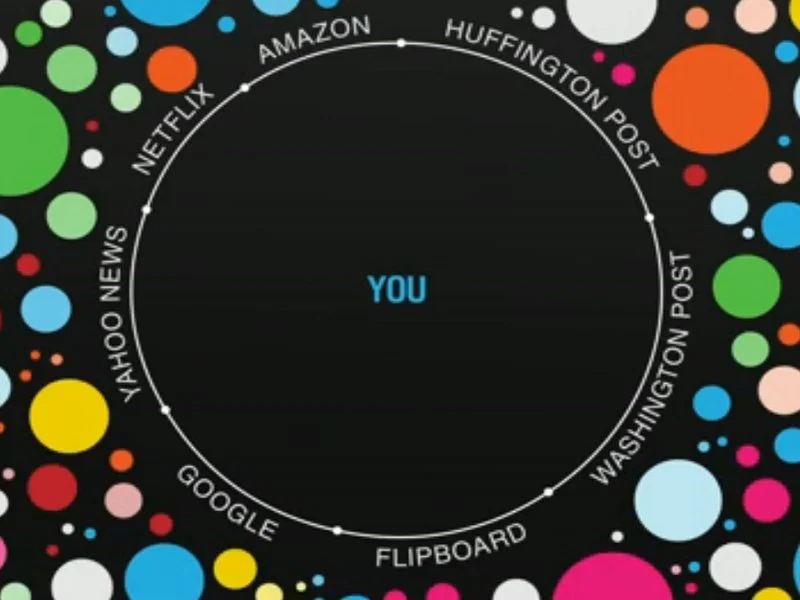
Filter Bubble
Published November 15, 2026
Filter Bubble is a term coined by activist Eli Pariser in 2010 to name how personalized web algorithms wall users inside echo chambers tailored to their clicks, searches and location. Pariser popularized the idea through a 2011 TED talk and a Penguin Press book, and by 2013 it was shorthand in tech journalism for debates about partisan news feeds and recommendation systems.
Overview
Writers and researchers use Filter Bubble to flag how services like Google Search, Facebook's News Feed and YouTube recommendations tune results to each user's past behavior, so two people running the same query see different webs. Critics argue this narrowing blocks exposure to opposing viewpoints and feeds political extremism1. Journalists and academics picked up the phrase in coverage of partisan news feeds, misinformation and recommendation engines after Pariser's book put a name on the concern4.
Typical usage of Filter Bubble treats it as a diagnosis rather than a joke format. Opinion writers invoke it to argue that a user's feed reflects their history more than reality, while computer scientists use it to describe a research problem, including designing systems that deliberately surface unfamiliar content1.
Origin & Background
Eli Pariser, the former president of the liberal non-profit MoveOn.org, introduced the phrase at the Personal Democracy Forum 2010 conference in June 2010 during a talk called "Filter Bubble, or How Personalization is Changing the Web"3. Pariser warned that personalized algorithms were "subtly destroying the notion of common public space"4.
How It Spread
Timeline
Frequently Asked Questions
References (5)
- 1
- 2
- 3
- 4
- 5