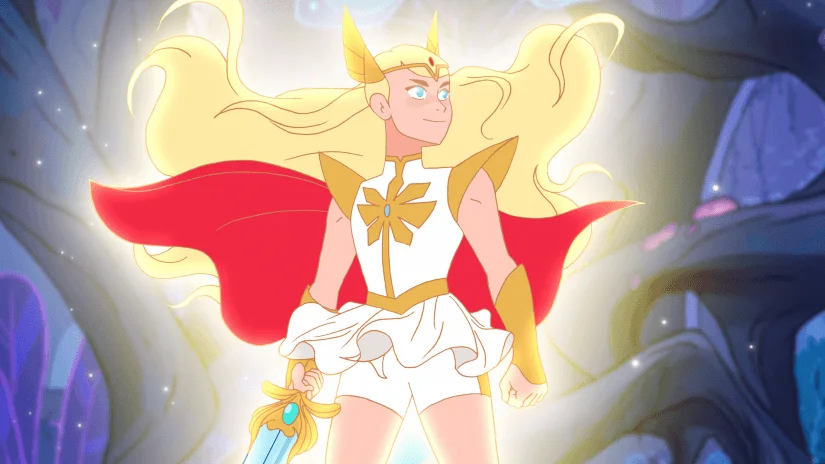
She-Ra Reboot Controversy

2018eventclassic

Published September 27, 2026

The She-Ra Reboot Controversy was a 2018 online argument over the redesigned lead character in Netflix and DreamWorks' She-Ra and the Princesses of Power, with critics calling the new Adora too muscular, too boyish, or too 'CalArts' compared to the 1985 original. The backlash and counter-backlash bounced between YouTube, Twitter and mainstream outlets, becoming an early flashpoint in the debate over how female cartoon characters get modernized for streaming reboots.

Overview

She-Ra Reboot Controversy refers to the 2018 fight over Adora's updated look in Netflix and DreamWorks Animation's She-Ra and the Princesses of Power, developed by Eisner-winning Lumberjanes writer Noelle Stevenson2. Detractors argued the new Adora looked younger, flatter chested and more 'battle ready' than the 1985 Princess of Power, whose skimpy strapless dress and pinup proportions were part of the toyetic original1. Supporters countered that a kids' show could hand its lead a full costume and visible biceps without apologizing for it.

Origin & Background

Platform
Facebook / Twitter (viral spread)
Date
2018

Netflix and DreamWorks Animation Television announced the She-Ra reboot on December 12th, 2017 as part of a six-show slate, describing it as 'a modern take on the '80s girl power icon' from executive producer Noelle Stevenson4. The catalyst event for the meme, though, was Netflix's July 16th, 2018 release of the first official character screenshots, which showed Adora, Glimmer, Bow and Catra in the new house style1. Complaints started the same day: Twitter user @iamaconsumer posted images of the new design with pointed criticism, and other users filed in with fan art defending it the following day5. Earlier warning shots included a July 14th, 2018 Clownfish TV YouTube video comparing She-Ra to 'Ben 10 with a wig' and a July 15th Diversity & Comics video framing the redesign as 'boyish lesbian re-imagines She-Ra as a boyish lesbian'5.

How It Spread

The argument moved fast from fan pages to national coverage. Vox framed it as another cycle of 'a certain contingent of fans' being angry that a female cartoon character was, in their eyes, less sexy than before, comparing the outcry to backlashes over red Starbucks cups and rebooted franchises3. Polygon zeroed in on the animation-style complaint, noting that critics grouped She-Ra with the so-called 'CalArts style' of thin-framed modern cartoons and cataloged tweets attacking the design as 'too boyish' or no longer 'attractive'2. The Daily Dot's write-up, headlined that the new She-Ra 'isn't sexy enough for some men,' fed the counter-narrative that the loudest critics were adult men mad about a kids' show5.

YouTube did a lot of the amplifying. Alternative Mindz had already uploaded a December 21st, 2017 video defending the earliest leaked art after He-Man.org's Facebook post drew hostile comments, so by the time the July 2018 screenshots dropped, a reaction-video ecosystem was primed5. Clownfish TV and Diversity & Comics gave the 'She-Ra looks like a man' framing its most-quoted lines, and fan artists on Twitter responded with pro-redesign illustrations that circulated alongside the critical screenshots5. Coverage in Polygon, Vox and The Daily Dot the following week pushed the fight from animation Twitter into general pop-culture press23.

Frequently Asked Questions