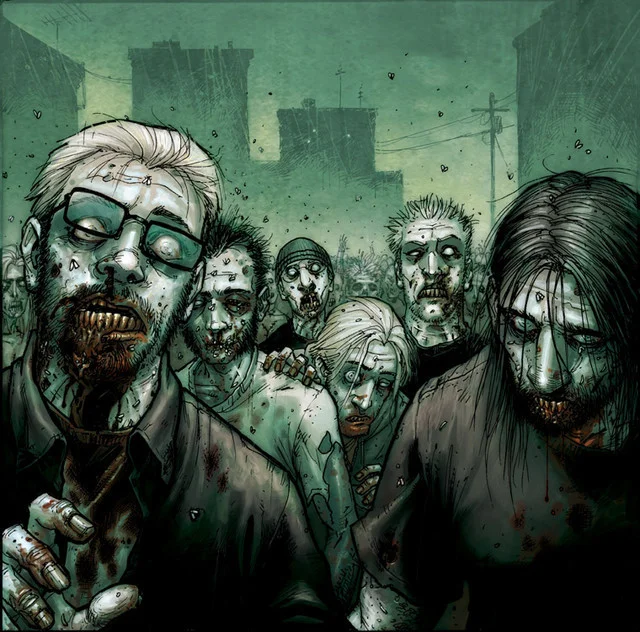
Zombies
Published November 21, 2026
Zombies are flesh-eating undead monsters that grew out of Mesopotamian myth and Haitian folklore before George A. Romero's 1968 film Night of the Living Dead fixed the modern template of slow, mindless reanimated corpses1. A second boom arrived in the early 2000s with 28 Days Later, Dawn of the Dead and Resident Evil, and by 2011 the US Centers for Disease Control was releasing a zombie-themed emergency preparedness comic4.
Overview
Three recognizable variants circulate in modern usage: the Voodoo zombie, a living person stripped of free will; the viral zombie, a reanimated corpse driven by infection; and the Chinese jiangshi, a hopping spirit marked with a yellow talisman on its forehead6. Horror fans treat these categories with mock seriousness, while survivalist communities use the viral variant as a stand-in for any sudden collapse scenario. Posts about zombies range from costume photography to deadpan preparedness checklists, with the humor usually placed between genuine horror fandom and apocalypse-prep parody6.
In film and video games, the viral type is dominant: a shuffling or sprinting corpse that bites, infects and multiplies1. Romero's rules, slow movement, mass numbers and the headshot-only kill, still define the baseline, while Danny Boyle's 2002 film 28 Days Later popularized the faster, rage-infected variant that drove the 2000s genre revival1.
Gallery
Origin & Background
How It Spread
Timeline
How to Use This Meme
Zombies work as a flexible setting rather than a fixed joke format. Common conventions include deadpan survival gear checklists, costume photography staged as outbreak footage, and group zombie walks where participants shamble together through a public space in makeup3. Horror-genre posts often reference Romero-style rules, slow movement and headshot kills, while viral-outbreak posts riff on 28 Days Later or Resident Evil1.
Frequently Asked Questions
References (6)
- 1
- 2
- 3
- 4
- 5
- 6