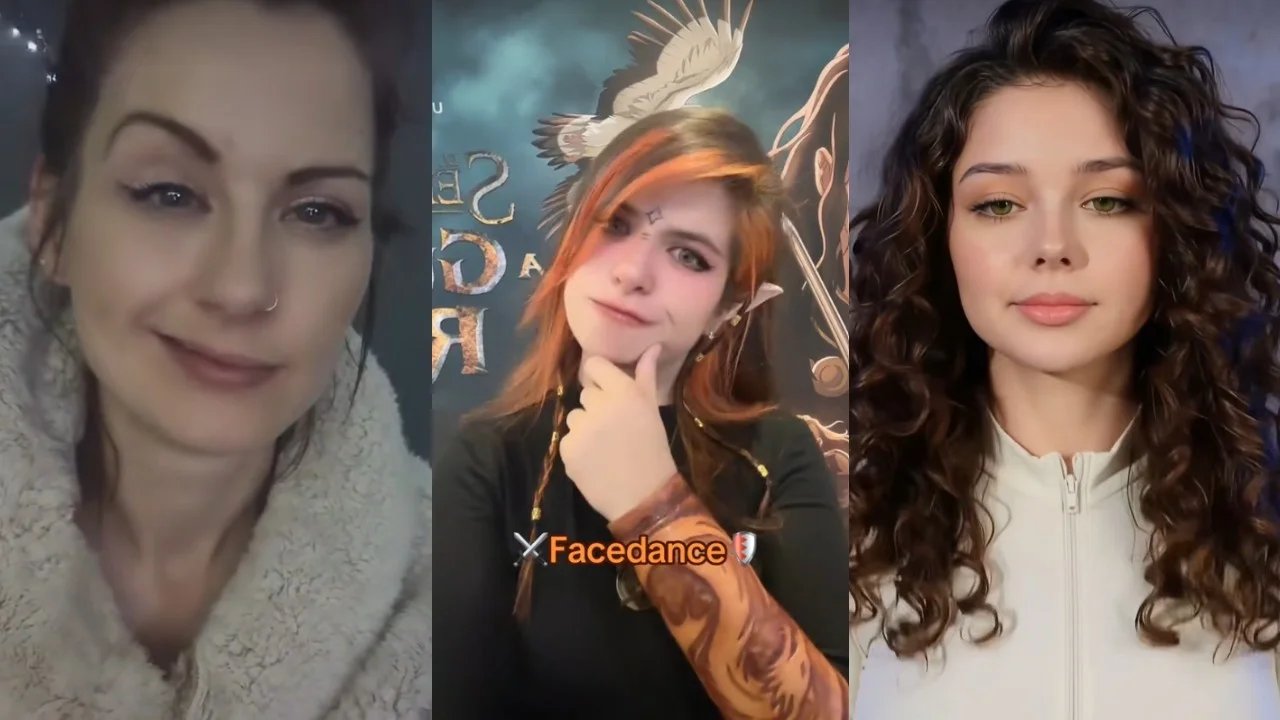
Face Dancing

2017viral videotrending

Published September 2, 2026

Face Dancing is the practice of rhythmically contorting your face in exaggerated ways while lip-syncing to music, a style that traveled from a 2017 Asian mobile rhythm game to Bella Poarch's record-breaking 2020 TikTok and, in August 2026, exploded into fresh discourse around TikToker Miny Naranja.

Overview

Face Dancing, also written Facedancing, describes the act of pulling rapid, exaggerated facial expressions in time with a song's beat, usually paired with lip-syncing so the face itself looks like it is dancing1. The style leans on wide eyes, puffed cheeks, jaw pops and quick mouth shapes hit exactly on the downbeat, which is what separates it from a normal lip-sync clip.

The format sits next to a closely related TikTok subgenre called wordchewing, where creators over-articulate lyrics with their mouth and tongue rather than their whole face7. Both share the same fandom on Reddit's /r/Wordchewing community, and clips often get cross-posted between the two labels7. Viewer reactions split hard: some find the clips hypnotic and skillful, while others say they trigger secondhand embarrassment, a divide that fueled the August 2026 argument around Miny Naranja56.

Origin & Background

Platform
Face Dance Challenge app (origin) / TikTok (viral spread)
Date
2017

The exact first face-dancer is not documented, but the earliest widely-cited reference is the Face Dance Challenge mobile app, a rhythm game released in August 2017 that asked players to match specific facial expressions to a song and went viral across Asian social media1. A gameplay demo of the app is preserved on YouTube2.

The practice broke out of the app and onto short-form video in 2020. On May 22nd, 2020, TikToker @reitergrace posted one of the earliest known off-app face-dancing clips, which pulled over 12,000 likes over the following years3.

How It Spread

Face dancing hit mainstream scale on August 17th, 2020, when TikToker Bella Poarch posted her lip-sync to Millie B's 'M to the B.' The clip reportedly passed 500 million views before being deleted and is widely credited with pushing the exaggerated-face style into the TikTok mainstream1.

TikToker @minynaranja became the format's defining performer through the 2020s. Her October 28th, 2022 face-dancing video pulled north of 43 million views on TikTok4, and she kept posting in the same style through 2023 and beyond. On May 2nd, 2025, TikToker @abbyvatterott joined the wave with a face-dancing clip that pulled over 2.2 million views1.

The trend spiked again in late August 2026 after X user @ElMichalito posted a clip of Miny Naranja face dancing at a live event on August 24th, writing that the video made him deeply uncomfortable; the post cleared 18,000 likes in a week5. The next day, @DTM_Woodworks quote-tweeted in her defense, noting she has 1.6 million Instagram followers and telling critics, 'If it's not your thing, don't watch it,' picking up over 2,300 likes6. The back-and-forth pushed face dancing back into wider discourse and drew fresh eyes to /r/Wordchewing, the subreddit started in 2022 that collects similar clips7.

How to Use This Meme

To make a face-dancing video, creators typically pick a track with a clear, punchy beat, film in close-up on the face, and hit exaggerated expressions, wide eyes, cheek puffs, jaw drops, tongue flicks, exactly on each beat while lip-syncing the lyrics. A common convention is to loop or speed-ramp the strongest four to eight seconds so the facial hits line up cleanly with the drop.

Frequently Asked Questions