Fusking
Published November 27, 2026
Fusking is a technique for pulling private photos out of free image hosts by guessing sequential filenames in their URLs. Danish coder Mikkel Eriksen shipped the first Fusker script in March 2002, but the practice exploded in 2006 when users realized Photobucket's 'private' albums could be scraped the same way. By August 2012, the Daily Dot and Huffington Post were documenting DMCA takedowns against fusker subreddits like /r/PhotobucketPlunder.
Overview
At its core, fusking is pattern matching against predictable filenames. Cameras and phones save images with sequential names like IMG_0001.JPG, DSCF1234 or PICT0098, and most image hosts kept those names when users uploaded albums1. A fusker script walks through the number range on a given directory and returns every file that answers, pulling down photos the owner thought were hidden behind a privacy flag2. The original tool was a Perl CGI script written in the style of a Unix cURL command, hosted at cannedtunes.net/fusker in 20023.
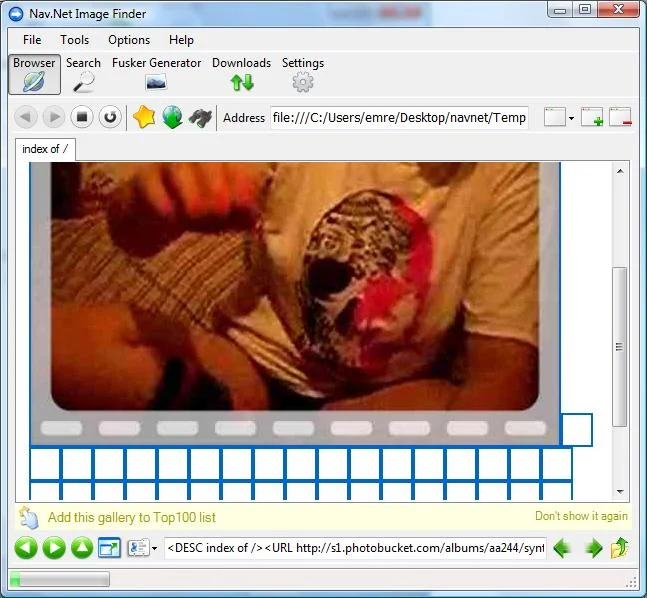
On Photobucket, fuskers leaned on a specific weakness: private albums restricted the album index page, but individual image URLs stayed publicly reachable if you knew them4. Guess a username's directory, iterate through the common camera filename sequence, and the 'private' label did nothing5. Later aggregators like FuskerFind let users tag previously fusked URLs so others could browse the results as a searchable library2.
In tone, the surrounding community sat somewhere between hobbyist scripting culture and outright creep forum. CarthagTuek himself framed Fusker as a joke about scraping porn sites' free preview galleries, and the Danish word 'fusker' already meant someone working on the sly outside their trade6. By the Reddit era, that playful framing was gone and the subreddits were just dumping ground for strangers' nudes7.
Origin & Background
How It Spread
Timeline
Frequently Asked Questions
References (14)
- 1
- 2
- 3
- 4
- 5
- 6
- 7
- 8
- 9
- 10
- 11
- 12
- 13
- 14