Script Kiddie

1998catchphraseclassic

Published September 26, 2026

Script Kiddie is a pejorative label hackers use for unskilled attackers who lean on prewritten exploits and tools instead of writing their own code. The term surfaced in the hacker zine Phrack in December 1998 and hardened into standard security vocabulary through papers, panels and one very popular DayZ video that put the insult in front of millions of gamers.

Overview

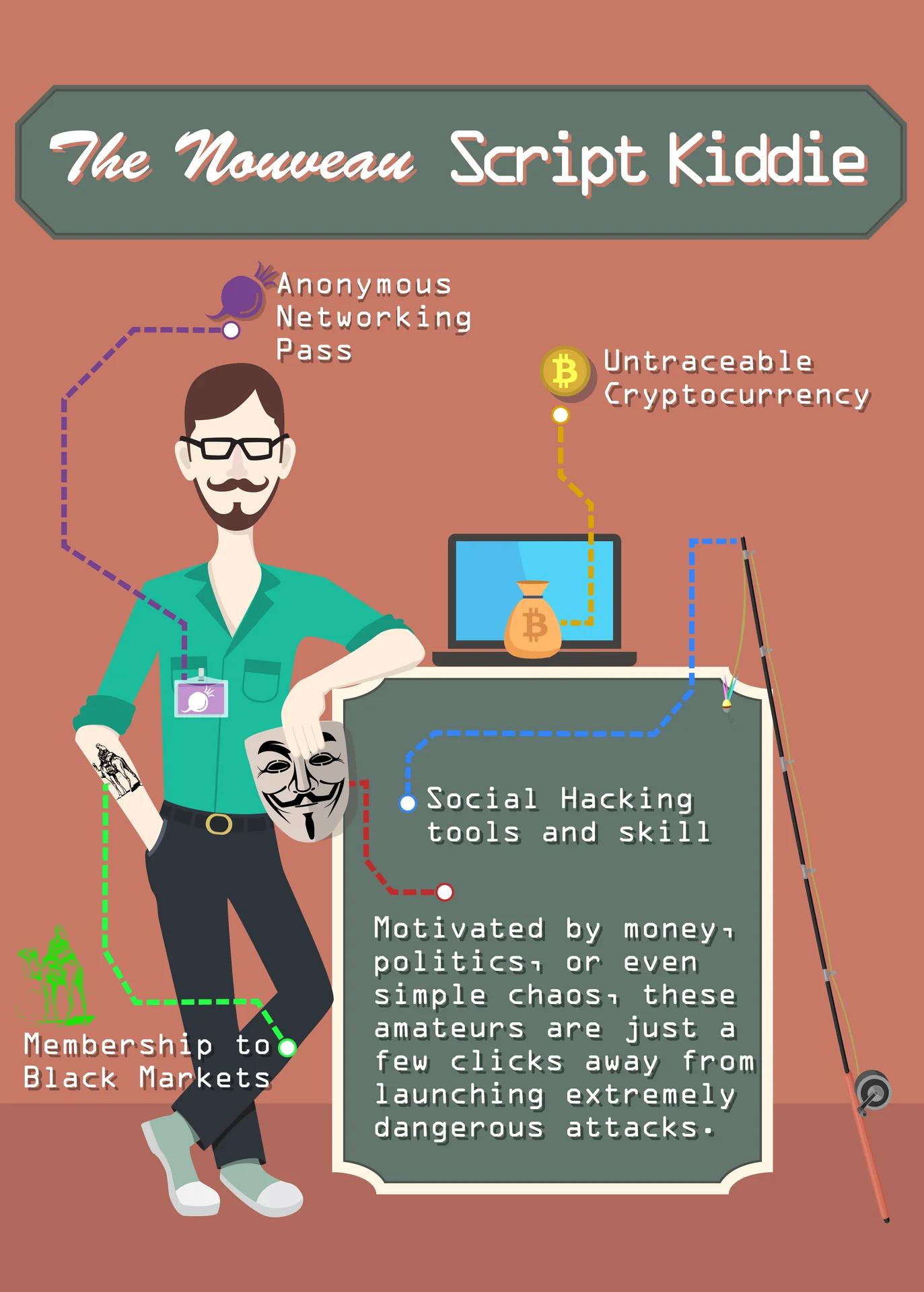
Script Kiddie, also spelled Skiddie and sometimes softened to Script Bunny or Script Kitty, is hacker slang for someone who downloads a ready-made exploit and points it at a target without really understanding what the code does3. The insult carries a very specific charge inside security circles because it separates people who can find and write vulnerabilities from people who just run other people's work1. It gets used against DDoS launchers, website defacers, botnet renters and teenagers who paste a payload from a forum and take credit for the breach3.

The label is not just about age or inexperience. Security researchers use it to flag a threat profile: noisy, opportunistic and dependent on public tooling, but still capable of causing real damage when the tool is powerful enough7. That tension between low skill and high blast radius is what makes the term stick in professional writing as well as in gamer trash talk6.

Origin & Background

Platform
Phrack zine (coinage) / YouTube and Reddit (popular spread)
Date
1998

The exact coinage is unknown, but the earliest widely cited use appears in the hacker zine Phrack, Volume 8, Issue 54, published on December 25th, 1998, inside a piece on remote OS detection via TCP/IP stack fingerprinting2. The article treats "script kiddie" as already-existing jargon rather than a new coinage, meaning the term was already circulating on IRC and BBS-adjacent hacker circles before Phrack committed it to print6.

The term picked up formal weight when security professional Lance Spitzner released the paper "The Tools and Methodologies of the Script Kiddie" on July 21st, 2000, defining the archetype for a wider infosec audience6. Urban Dictionary followed on November 1st, 2001, when user Keith Jesus Wilcox submitted an entry describing a script kiddie as someone who downloads exploits without understanding or respecting them6.

How It Spread

After Phrack put the term in print in 19982, it moved into academic and industry writing over the next decade. In November 2005 the Software Engineering Institute at Carnegie Mellon University published the technical report "Security Quality Requirements Engineering," which framed script kiddies as immature but often just as dangerous as more skilled attackers6. On November 4th, 2008, the technology blog Dow.ngra.de posted "Script kiddies have awesome tools," walking readers through eleven layers of base64 and gzip that unpacked a 2500-line cross-platform PHP shell dropped on a hacked WordPress site7. That same week the post was submitted to the r/programming subreddit6.

The insult broke out to a mass audience through gaming. On January 26th, 2013, YouTuber jackfrags uploaded "Understanding Script Kiddies," narrating clips of DayZ players using cheats and third-party tools on public servers8. The video pulled more than 3.4 million views and 3,400 comments in its first two years, cementing "script kiddie" as the go-to slur for a certain kind of cheater6.

The security community kept the term alive at conference level. On November 16th, 2013, the HackersOnBoard channel posted the Defcon talk "Defense by Numbers: Making Problems for Script Kiddies and Scanner Monkeys," pitching low-cost defensive tricks aimed specifically at attackers running off-the-shelf scanners9. Between the DayZ audience on one side and Defcon on the other, the same word ended up doing double duty as gamer insult and professional threat model1.

How to Use This Meme

The word is typically deployed as an insult inside hacking, gaming and infosec communities to dismiss someone claiming credit for an attack. Common convention pairs it with a specific behavior: bragging in chat, using a public DDoS booter, running Metasploit modules without knowing what they do, or getting caught because the borrowed tool logged something obvious3. In security papers the tone flips and the term becomes a threat category rather than trash talk6.

Frequently Asked Questions