The Heartbleed Bug
Published October 1, 2026
The Heartbleed Bug was a critical OpenSSL flaw announced in April 2014 that let attackers pull private data straight from server memory. Security expert Bruce Schneier called it "catastrophic" and rated it an 11 on a 1-to-10 scale, and the vulnerability was packaged with its own branded website and bleeding-heart logo that turned a dry CVE entry into a mainstream news story.
Overview
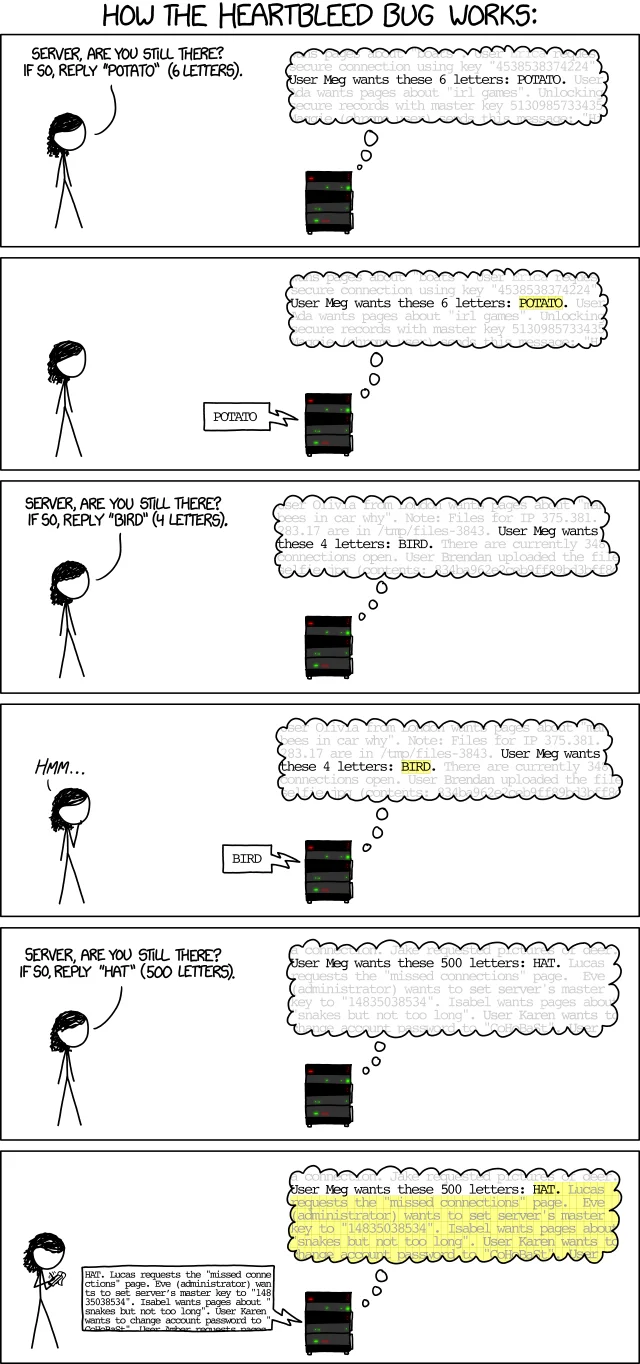
The Heartbleed Bug sat inside OpenSSL's Heartbeat Extension and let an attacker send a crafted request that tricked the server into returning random chunks of memory, up to 64 KiB per hit2. Those memory dumps could contain anything the server was handling at the moment: session cookies, usernames and passwords, personal data, or even the private encryption keys that identified the service itself1. Roughly two-thirds of websites used OpenSSL for encryption, and around half a million sites were thought to be affected1.
Part of what made The Heartbleed Bug stick in internet memory was its packaging. A dedicated Heartbleed.com site, complete with a bleeding-heart logo, laid the problem out in plain language and gave journalists an easy visual hook2. The branding turned a CVE entry into a cultural reference point, and later high-impact vulnerabilities (Shellshock, POODLE, Logjam) borrowed the same playbook of a catchy name and a landing page3.
Origin & Background
How It Spread
Timeline
2014-04-07
Google security researcher Neel Mehta privately reports the OpenSSL flaw; OpenSSL team begins a coordinated response and publishes its security advisory[3].
2014-04-10
Public disclosure of The Heartbleed Bug; CVE-2014-0160 is registered and Heartbleed.com launches with the bleeding-heart logo[2].
2014-04-10
BBC and other mainstream outlets publish explainers, with Bruce Schneier calling the bug "catastrophic" and rating it an 11 out of 10[1].
2014-04
Online checker tools appear so users can paste a URL and verify whether a site is still vulnerable; most affected hosts patch within weeks[3].