Internet Bot

1978internet cultureclassic

Published September 1, 2026

Internet Bot is the catch-all label for software that runs automated tasks online, from game grinders and chatterbots to web crawlers and botnets used in DDoS attacks1. The idea goes back to the late 1970s in Multi-User Dungeons, and every era since produced its own bot fight, from the WoW gold-farming bot Glider to Cleverbot and its Turing-Test cousins fooling live audiences at intelligence contests2. YouTube clips of Counter-Strike and World of Warcraft matches taken over by bots turned the whole thing into a spectator genre3.

Overview

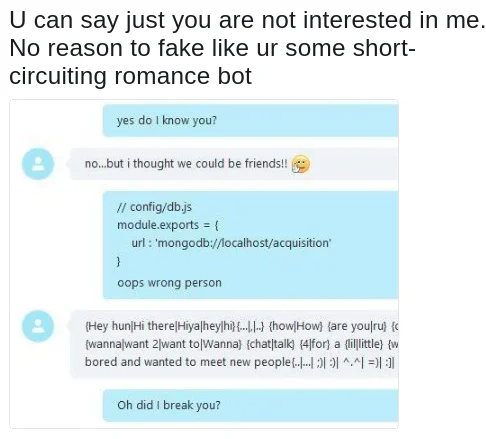
Bots split into a handful of families that share little beyond being scripts. Game bots handle grinding, aiming, and gold-farming inside titles like World of Warcraft and Counter-Strike: Source, with recorded matches showing bot-controlled players walking into walls or getting kited for hours1. Chatterbots try to fake conversation well enough to pass the Turing Test, an old target the Cornell Creative Machines Lab pushed further in 2011 by recording two of them arguing on camera2.

Web crawlers do the quieter work of walking pages and building indexes, a use case Matthew Gray kicked off in June 1993 with the World Wide Web Wanderer, and botnets sit at the ugly end, pools of hijacked machines wired together to blast DDoS traffic at a target or push spam in bulk4. Slang uses drifted too, with Urban Dictionary posts calling 'internet bot' a jab at users who cannot tell a browser from a search engine5.

Origin & Background

Platform
Multi-User Dungeons / IRC (early), YouTube (viral spread)
Date
1978

The oldest Internet bots go back to the late 1970s, when players hooked modified Telnet clients into Multi-User Dungeons and wrote scripts that fired commands at the game server for a competitive edge4. The chatterbot line began in 1981, when British programmer Rollo Carpenter coded a program built to trick users into thinking they were talking to a human, then shipped it online as Jabberwacky in 1997; two Jabberwacky characters, George and Joan, won the Loebner Prize in 2005 and 20062.

Game botting hit a legal wall in June 2005 with Glider, an MDY Industries product for World of Warcraft that could grind gold and levels while a player was away from the keyboard3. Blizzard sued and won a $6 million judgment in July 2008, and in December 2010 the Ninth Circuit ruled that Glider violated the DMCA4.

How It Spread

Bot culture spread on video mostly through gaming clips. On June 1, 2011, YouTuber BosmouZ Valve posted footage of a bot playing an online match of Counter-Strike: Source, an early viral look at what an unattended bot round actually looks like1. On January 22, 2015, YouTuber ZybakTV uploaded footage of a World of Warcraft battleground overrun with bots, showing what a large PvP match looked like when almost no one in it was actually human3.

Chatterbots took a separate path. On August 26, 2011, Cornell Creative Machines Lab uploaded footage of two chatterbots holding a conversation, and the clip pulled in more than 4.7 million views over the next five years2.

The term also picked up slang uses along the way. Urban Dictionary posts riff on 'internet bot' as a dig at users who cannot tell a browser from a search engine5.

Frequently Asked Questions