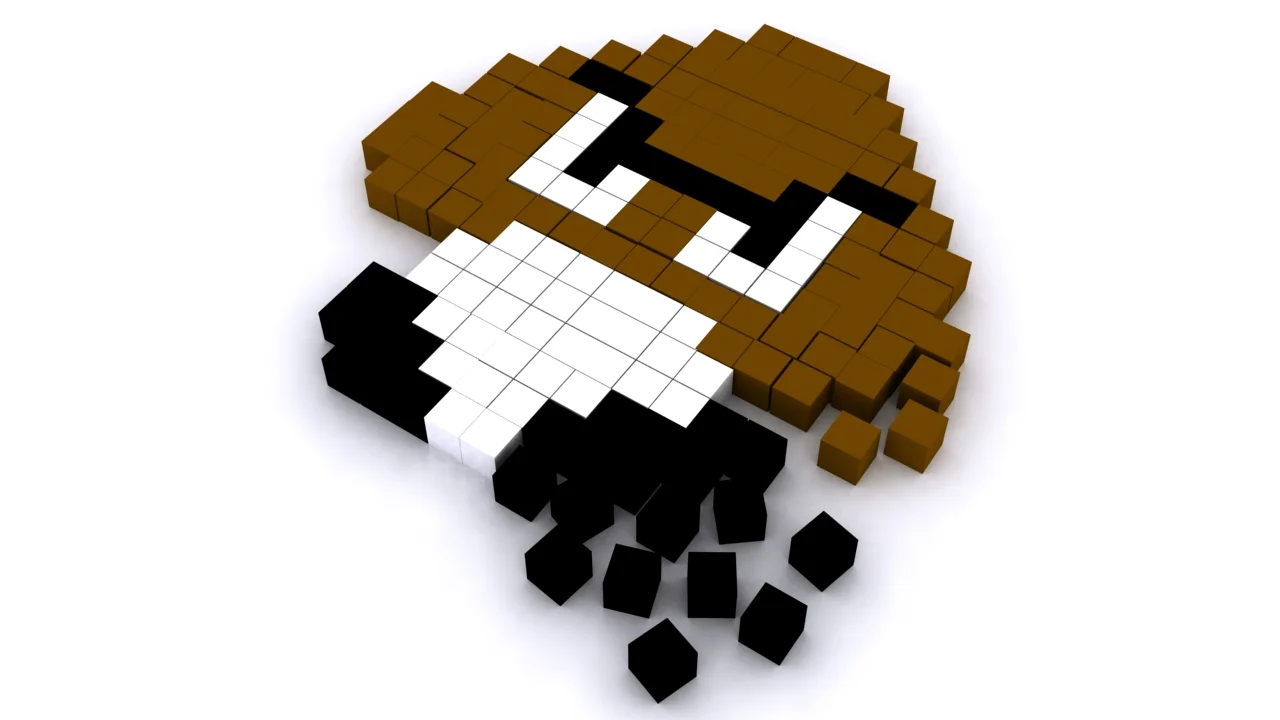
Pixel Art
Published September 21, 2026
Pixel Art is a style of digital art built on a grid of square pixels, closely tied to 8-bit and 16-bit games of the 1980s and early 1990s. The term was coined in a 1982 ACM paper by Xerox PARC researchers, and by the 2000s the format had jumped out of gaming into isometric web art, sprite webcomics, and Reddit critique threads. The scene now drives an entire indie game aesthetic and a demake subculture that redraws modern blockbusters in retro form.
Overview
Pixel Art works by placing each colored square deliberately on a grid, using limited palettes to imply detail rather than paint it in. Modern pixel art is not stuck to the classic 8-bit 256-color palette7. Recognizable subgenres include the isometric "pixorama" cityscapes popularized by eBoy2, sprite comics that recycle game character art such as 8 Bit Theater1, and "demakes" that redraw modern games in retro pixel form3.
The style ranges from 16x16 avatars to poster-sized illustrations packed with thousands of tiny figures. Communities like /r/PixelArt and PixelJoint host daily challenges, palette studies, and critique threads, and the format is a load-bearing part of indie game development where the visual language reads instantly as retro4.
Gallery
Origin & Background
How It Spread
How to Use This Meme
Pixel art typically starts with a fixed canvas size and a locked palette of a few dozen colors. Artists work at 1:1 zoom, placing individual pixels to imply anti-aliasing and shading rather than using software brushes. Common conventions include isometric perspective for cityscapes2, sprite sheets for game characters, and demakes that reinterpret modern games in retro form3.
Frequently Asked Questions
References (7)
- 1
- 2
- 3
- 4
- 5
- 6
- 7