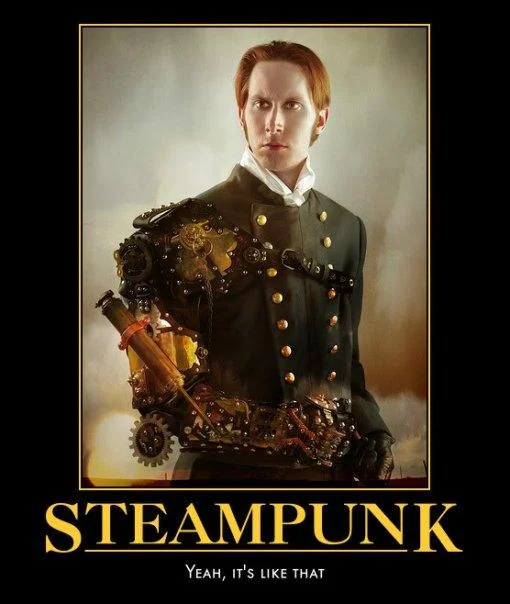
Steampunk

1987aesthetic subcultureclassic

Published September 29, 2026

Steampunk is a retrofuturistic aesthetic and fiction sub-genre that swaps silicon and electricity for brass, cogs, and Victorian steam power. Author K.W. Jeter coined the label in a 1987 letter to Locus magazine to describe alt-history novels he was writing with James Blaylock and Tim Powers. What started as a niche fiction tag grew into a decades-long craft scene, convention circuit, and internet shorthand for any goggles-and-gears makeover.

Overview

A finished steampunk piece typically pairs Victorian dress, monocles, top hats, corsets, and frock coats with imagined engineering: brass keyboards, clockwork phones, hand-cranked laptops, airships, and dirigibles powered by steam7. The look leans warm and industrial with polished wood, aged brass, exposed rivets, and a general 'mad-scientist' air5. Boutique makers like Datamancer built entire businesses out of dressing modern PCs and peripherals in Victorian, Art Deco, and Gothic housings8.

Online, the label is used as both a design vocabulary and a self-descriptor. Fans mod everyday electronics with soldered brass plates, oxidized patinas, and interlocking gear buttons, then post the results as build logs and costume photos6. The tone is optimistic and playful, often satirized in mainstream writing, as when McSweeney's ran a mock coming-out letter titled 'Mom, Dad, I'm Into Steampunk' cataloging exactly these kinds of mods6. Sub-branches include steampunk horror, which keeps the Victorian silhouette but pushes into macabre territory10.

Origin & Background

Platform
Locus magazine (print) / conventions and web (viral spread)
Creator
K.W. Jeter
Date
1987

The word 'steampunk' was invented by American science-fiction and horror author K.W. Jeter in a letter printed by Locus magazine in April 19871. Jeter suggested the tag, riffing off cyberpunk, to describe the Victorian fantasies he and fellow authors James Blaylock and Tim Powers had been writing since roughly 19794. His actual pitch: 'Victorian fantasies are going to be the next big thing, as long as we can come up with a fitting collective term for Powers, Blaylock and myself. Something based on the appropriate technology of that era; like steam-punks, perhaps'1.

The genre's DNA runs back further. Nineteenth-century writers H.G. Wells and Jules Verne provided the science-fantasy template of imagined super-machines2, and Mervyn Peake's 1959 novel Titus Alone is often cited as the earliest known novel to pursue the alternate-technology timeline that later defined the label9. Steampunk pulls specifically from the Victorian era of 1837 to 1901, the English window in which the telegraph, telephone, elevator, light bulb, and steam-powered ship all arrived within a couple of generations5.

How It Spread

The label sat mostly among sci-fi readers until 1990, when William Gibson and Bruce Sterling published The Difference Engine, an alt-history novel imagining a Victorian Britain running on Charles Babbage's mechanical computers3. The book was nominated for the British Science Fiction Award and pulled critical attention to the genre for the first time3. Through the 2000s, steampunk jumped from fiction into physical craft: modders were building brass-cased keyboards, monitors, and mice as boutique commissions8, and clothing sellers like Historical Emporium packaged frock coats, adventurer's gear, and brass goggles as ready-to-wear kits for conventions and themed weddings7.

By the late 2000s the aesthetic was mainstream enough that Tor.com ran a 'Steampunk 101' primer in October 20092. Academic-flavored blogs like Steampunk Scholar started tracing the movement's history in long-form essays around the same time4. Dedicated conventions arrived in parallel; AnomalyCon in Denver, for example, has run multi-day programming around steampunk fiction, fashion, and tech11.

Satirical pieces followed, including McSweeney's 'Mom, Dad, I'm Into Steampunk', which reads as both mockery and a fairly accurate inventory of the actual scene, right down to the ammonia-and-salt brass patinas6. Sub-communities kept splintering online, with outlets like Steampunk Tribune covering the darker sibling of the movement, steampunk horror, which pushes into macabre territory while keeping the Victorian silhouette10. Reference explainer videos, including the primer embedded on the Know Your Meme entry, still get shared on YouTube12. Specific dated fan build posts are not archived in the available sources for this article, so early web spread is documented through boutique makers, convention pages, and press writeups rather than individual viral posts.

How to Use This Meme

A steampunk build typically starts with a modern object, a phone, a laptop, a keyboard, or a lamp, then hides the plastic behind brass plating, aged patinas made from ammonia and salt, and exposed clockwork parts6. Costume kits pair the same object logic with Victorian tailoring: frock coats, corsets, top hats, monocles, and welder's goggles7. The unwritten rule is that the piece should look like it could plausibly have shipped from an 1890s workshop, even if the guts are a Dell motherboard6.

Frequently Asked Questions