Home›Memes›Dancing Hamster

Contents

  • Overview
  • Gallery
  • Origin
  • How It Spread
  • How to Use
  • Cultural Impact
  • Fun Facts
  • Derivatives
  • FAQ
  • References
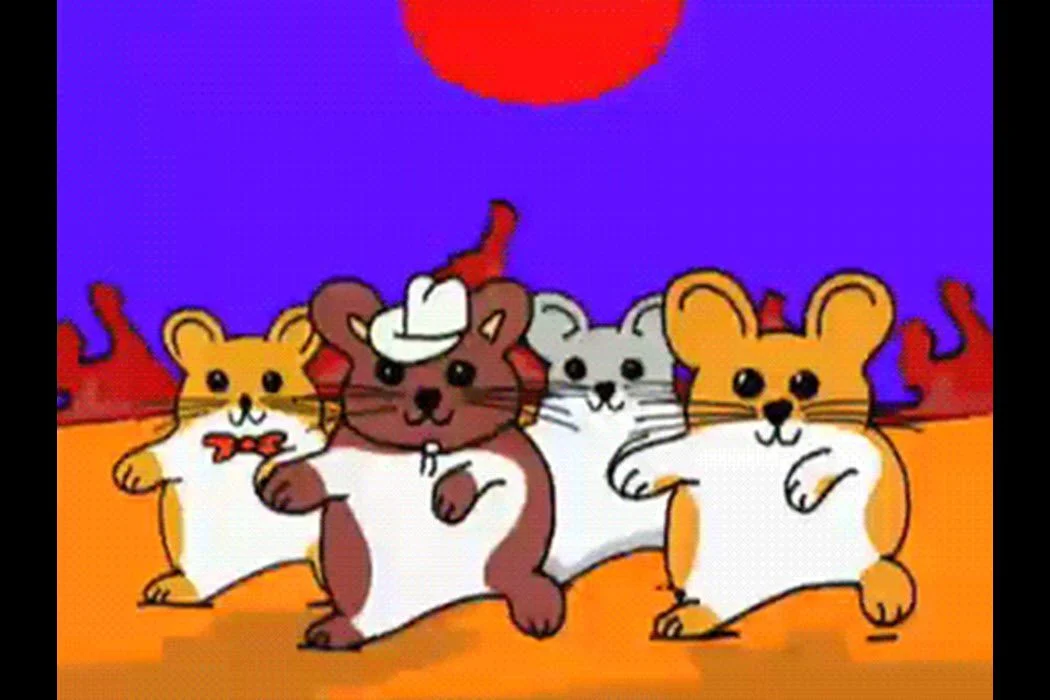
Colorful cartoon illustration of three dancing hamsters in yellow, brown, and white against vibrant purple and orange flame-bordered background.

Dancing Hamster

1998Viral website / earworm / animated GIFclassic

Published March 10, 2026 · Updated March 23, 2026

Also known as: Hampster Dance · The Hamster Dance · Hampton the Hampster

The Dancing Hamster, more commonly known as the Hampster Dance, is one of the earliest viral internet memes1. Launched as a GeoCities webpage in 1998, the site featured rows of animated hamster GIFs bouncing and grooving to a sped-up, looping music clip. The earworm tune proved so infectious that it eventually spawned a novelty music single and a full album released under the name "The Hamsters"2.

early internet memes earworm memes geocities memes meme to music pipeline gif memes

Overview

The Hampster Dance was a single-page website packed with rows of tiny animated hamster GIFs. Each hamster performed a different looping animation: some nodded, some spun, some kicked. The whole page ran to a sped-up sample of "Whistle Stop" by Roger Miller, a track originally from Disney's 1973 animated Robin Hood. The combination of cute, repetitive visuals and an impossibly catchy audio loop made the site almost impossible to close without the tune stuck in your head for hours. The deliberate misspelling of "hampster" became part of the meme's identity1.

Gallery

Origin & Background

Platform
GeoCities (website), early web forums (viral spread)
Creator
Deidre LaCarte
Date
1998

Canadian art student Deidre LaCarte created the original Hampster Dance page in 1998 as part of a competition with her friend to see who could drive the most traffic to a personal website. She built it on GeoCities, the free web hosting platform where millions of amateur pages lived in the late 1990s. The page was bare-bones by design: just a tiled background of hamster GIF animations and an auto-playing MIDI-style audio loop. The site initially attracted minimal traffic.

How It Spread

Through late 1998 and into early 1999, the Hampster Dance link started circulating via email forwards, early web forums, and link aggregators. The page was exactly the kind of bizarre, lightweight content that thrived in the dial-up era: it loaded fast, needed no explanation, and begged to be shared. By mid-1999, the site was logging millions of visits.

The meme crossed into the music industry when a novelty dance single based on the Hampster Dance audio was produced and commercially released2. A full album followed, credited to "The Hamsters," turning a silly web page into an actual discography2. The track charted in several countries, making it one of the first internet memes to generate real revenue outside the web.

The site also triggered a wave of imitators. Copycat "dance" pages for other animals popped up across GeoCities and Angelfire, but none matched the original's viral pull. The Hampster Dance was listed among the earliest known internet memes alongside other late-'90s single-serving sites1.

Platforms

RedditTwitterTikTokInstagram

Timeline

1998

Dancing Hamster first appears online

1998

Gains traction on social media

1999

Reaches peak popularity

2000-01-01

Dancing Hamster reached mainstream popularity and media coverage

2001-01-01

Brands and companies started using Dancing Hamster in marketing

2003-01-01

Dancing Hamster entered the broader pop culture conversation

View on Google Trends

How to Use This Meme

The Hampster Dance isn't a traditional meme template. People typically engage with it in a few ways:

- Sharing the link as a nostalgic throwback or as a lighthearted prank (similar to Rickrolling) - Referencing the tune by humming or typing out the melody ("dee da dee da dee da doh doh") - Using the hamster GIFs in forum signatures, profile decorations, or retro-styled web pages - Remixing the audio into mashups, usually by layering the sped-up loop over other content

The meme works best as an earworm delivery device. Send the link, wait for the victim to click, and let the song do the rest.

Create Your Own

Cultural Impact

The Hampster Dance was a landmark moment for internet culture. It proved that a webpage with zero production value could attract millions of visitors purely through word-of-mouth sharing. This was years before YouTube, Twitter, or any modern social platform existed.

The commercial music release showed the entertainment industry that internet virality could translate into real sales2. The novelty single charted internationally, foreshadowing the meme-to-music pipeline that would later produce hits like "Harlem Shake" and "Baby Shark."

The meme also helped popularize the concept of the "single-serving site," a webpage that did exactly one thing. The Hampster Dance, alongside Million Dollar Homepage and similar projects, defined a genre of internet content that was pure, purposeful, and absurdly simple.

Fun Facts

The audio loop is a sped-up snippet of "Whistle Stop" by Roger Miller, written for the 1973 Disney film Robin Hood. Most fans of the Hampster Dance have no idea they're listening to a Disney soundtrack.

The original site misspelled "hamster" as "hampster." This was unintentional but became a defining feature of the meme1.

The Hampster Dance is considered one of the first true internet memes, predating most of the platforms and formats that define meme culture today1.

The novelty music album means the Hampster Dance is one of the few early web memes that generated a full commercial product line2.

Derivatives & Variations

The Hampsterdance Song

— A commercially released novelty single based on the website's audio loop, produced as a full dance track with added lyrics and production[2].

Hampton the Hampster

— The fictional mascot character created for the commercial release, which became the face of the franchise[2].

Copycat animal dance pages

— Dozens of imitator sites (dancing cats, dancing cows, dancing babies) appeared on GeoCities and Angelfire in 1999-2000, all following the same template of tiled GIFs with looping audio[1].

Frequently Asked Questions

The Dancing Hamster, usually called the Hampster Dance, is a late-1990s internet meme consisting of a webpage filled with animated hamster GIFs dancing to a sped-up music loop1.

The original Hampster Dance website was created on GeoCities in 1998 by Canadian art student Deidre LaCarte as part of a web traffic contest1.

It doesn't carry a deeper meaning. The meme is pure entertainment: cute hamsters, catchy music, maximum earworm potential2.

The most common use is sharing the link as a nostalgic callback or lighthearted prank, similar to a Rickroll1.

The Hampster Dance is a classic meme. While the original site is no longer active in its GeoCities form, it's widely recognized as a foundational piece of internet culture1.

References (2)

  1. 1
    Hamster (disambiguation)encyclopedia
  2. 2
    Dancing Hamster - Urban Dictionarydictionary

Quick Info

Year
1998
Origin
GeoCities (website), early web forums (viral spread)
Type
Viral website / earworm / animated GIF
Status
classic
Creator
Deidre LaCarte
website creator
Popularity
Niche40/100Viral

Tags

formatvideofunnycatsinternet-culturememe-cultureworkpre-2010

Related Memes

  • end of the world
  • happy tree friends
  • ate my balls
  • peanut butter jelly time
  • bert is evil
  • charlie bit my finger
  • advice animals
  • damn daniel
  • homestar runner
  • bonsai kitten
  • albino blacksheep
  • all your base are belong to us

More Early Internet Memes (Pre-2005) Memes

  • All Your Base Are Belong To Us
  • End of the World Flash
  • Mr T Ate My Balls
  • Habbo
  • Roflcopter
  • I Kiss You
  • Leekspin
  • 14Fcali
  • 911 Tourist Guy
  • Hopkin Green Frog
  • Internet Coke Machine
  • Mojave Phone Booth
View all Early Internet Memes (Pre-2005) memes →
Browse MemesTopicsCreatorsTrendingPlayAboutLegalPrivacy

© 2026 meme.com